Feed the famished







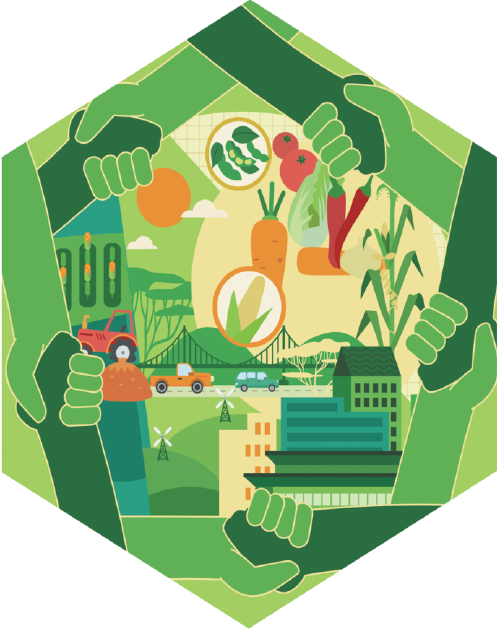
Beefing up cooperation to cushion the impact of the Russia-Ukraine conflict on Africa's food security
The Russia-Ukraine conflict has, since its outbreak, posed traditional and nontraditional security challenges to the international community. The conflict's impact on global food supplies is particularly worrying. For the African continent, food insecurity has become a more pressing problem, jeopardizing the realization of the United Nations 2030 Sustainable Development Goals.
Since the 1980s, around 20-30 percent of the African population has been suffering from hunger, despite African countries' unwavering commitment to fight hunger. According to the Crop Prospects and Food Situation report released by the UN Food and Agriculture Organization in March 2022, among 44 countries in the world that are in need of external assistance for food, 33 are in Africa.
The agrifood systems in African countries are vulnerable to extreme weather-induced droughts, floods, plant pests and diseases, and the impacts of violent conflicts and various types of emergent events. Because of the COVID-19 pandemic, an estimated 322 million Africans faced severe food insecurity in 2021, compared to 264 million in 2019 prior to the outbreak of the novel coronavirus.
Also, African countries are heavily reliant on food imports to fill the gap between domestic supply and demand. Taking the three food staples-wheat, rice and corn-as an example, a tight supply has been a long-lasting problem in Africa. In 2020, the production shortfall amounted to 83.85 million metric tons, or 36.1 percent of the total staples consumption. In a nutshell, African countries suffer from food insecurity combined with a lack of food self-sufficiency. Major fluctuations in global food markets will inevitably have passing-on effects on the African continent.
The Russia-Ukraine conflict is not the cause of Africa's food problems, but has only worsened its already precarious food security.
The Russia-Ukraine conflict has severely disrupted global wheat supply chains. A number of countries have imposed restrictions on wheat exports, covering 21 percent of world trade in the grain. The price of wheat has shot up by over 40 percent in the first three months of 2022. Because of the unstable supply and skyrocketing prices in global food markets, and economic woes caused by the COVID-19 pandemic, cash-strapped African nations are unable to purchase staple crops in the global market. Africans also have lower food purchasing power due to rising unemployment, income losses and other adverse situations caused by an economic downturn.
The Russia-Ukraine conflict has also raised food transport costs and dealt a blow to food transportation chains, undermining the scale and timeliness of food aid to Africa by the international community. For instance, Ukraine used to be the top supplier to the UN World Food Programme. Amid the Russia-Ukraine conflict, the price that the WFP pays for food has gone up by $23 million a month, and transportation costs have risen by an additional $6 million a month, which will lead to "supply unable to keep pace with demand" in food aid to Africa by the international community.
The Russia-Ukraine conflict has become the biggest factor negatively affecting global food security, creating risks and challenges that are beyond the capabilities of African countries. It has, therefore, become extremely important to further advance China-Africa food security cooperation. For now, ensuring food security in quantity is a long-term, basic appeal of African countries. China and Africa should carry out cooperation with a focus on the weak links in Africa's food chain. The goal of China-Africa food security cooperation is not only to help African nations solve the current food shortages conundrum, but also to enhance their agricultural independence and self-reliance. In addition to continuing the ongoing technology transfer and cooperation in such areas as hybrid rice and smart agriculture, China should focus on helping African countries reduce post-harvest crop losses and waste by assisting the construction of food storage and basic processing facilities.
Furthermore, South-South and North-South cooperation in promoting African food security should be further strengthened. China-Africa food security cooperation is part of the South-South cooperation and a crucial part of global governance of African food security. China will continue to bolster bilateral cooperation in this regard. For instance, Phase III of the FAO-China South-South Cooperation Programme was officially launched in January, with a focus on enhancing African partners' capabilities in the food production chain, value chain and trade supply chain, strengthening their risk-resistance capacity building such as emergency response, providing support for African countries to achieve a sustainable transformation of agrifood systems, and contributing to the implementation of the goals of "no poverty" and "zero hunger" included in the UN's 2030 Agenda.
In the meantime, China could further expand triangular and multilateral cooperation with developed nations on African food security. For instance, China could, based on African countries' demand for development, use the FAO's South-South and Triangular Cooperation mechanism to coordinate with other countries' programs, such as Japan's Coalition for African Rice Development initiative, the United States' Feed the Future initiative, and Brazil's school feeding program.
In the field of investment, China could piggyback on existing third-party market cooperation mechanism with nearly 20 countries, including France, Japan and Italy, to tap potential investment opportunities in such areas as the production and processing of African green agricultural products, modern grain storage and transport facilities, among other things. This could further boost common interests and inject fresh momentum into African food security governance.
The author is a research fellow with the Institute of West-Asian and African Studies (China-Africa Institute) at the Chinese Academy of Social Sciences.