Restoration and protection
Effective ways must be found and shared to conserve mangrove forests in Southeast Asia







Effective ways must be found and shared to conserve mangrove forests in Southeast Asia

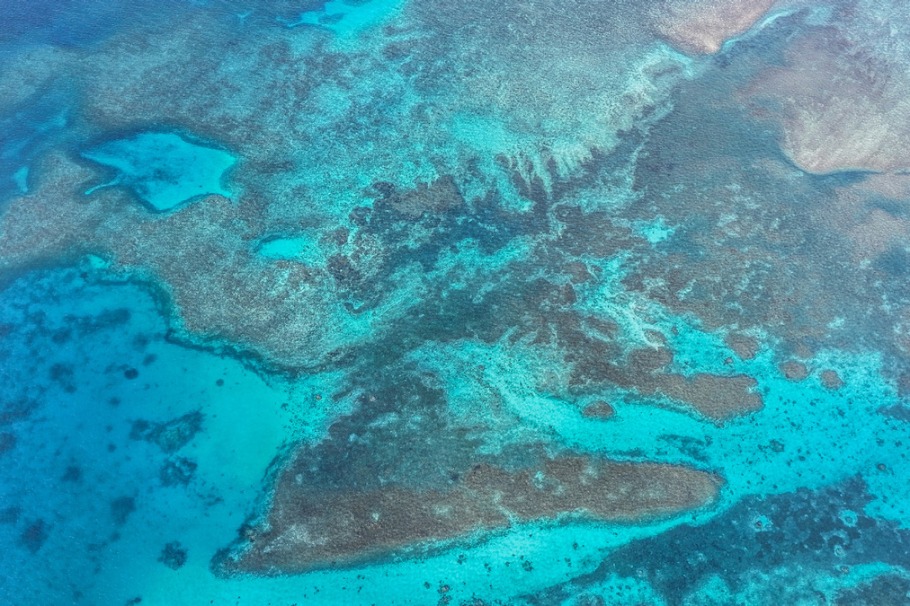
About 33 percent of the world's mangrove forests are located in the ASEAN-China region. In 2020, they were spread across more than 4 million hectares. These mangrove forests serve as essential habitats for thousands of species, especially rare and endangered ones ranging from the hawks-bill sea turtle to the Bengal tiger, and support the livelihoods of local people.
Mangroves also serve as a buffer to protect shorelines from extreme climate disasters, including tropical storms, typhoons and tsunamis. Mangroves are also powerful carbon sinks, storing up to four times as much carbon as other tropical forests.
However, human activities are destroying the world's mangrove forests. According to a Food and Agriculture Organization report, since 1980, the world has lost around 3.6 million hectares of mangroves, equivalent to an alarming 20 percent of the total mangrove area. Current data suggest an average global mangrove loss of 21,200 hectares annually. The countries of the Association of Southeast Asian Nations are losing mangrove forests at the rate of 0.25 percent to 20 percent per year, driven by human activities, such as aquaculture, rice plantation and palm oil production.
Nevertheless, China is one of the few countries registering a net increase in mangrove forest cover. Mangrove cover in the Chinese mainland had increased from 22,000 hectares in 2001 to about 29,000 hectares in 2019, with an average annual increase of 1.8 percent. As of 2019, about 55 percent of the country's natural mangrove forests have been included within nature-protected areas, making mangrove forests the most protected natural ecosystems in China.
Credit for mangrove rehabilitation and restoration in China goes to a series of effective regulations and policies. For example, at the provincial level, the Guangxi Zhuang autonomous region and Hainan province-the main mangrove-rich regions in China-developed their own mangrove conservation regulations to ban the destruction of mangrove ecosystems and protect and manage the natural resources.
At the national level, the Mangrove Protection and Restoration Action Plan (2020-25) issued by China's Ministry of Natural Resources and the National Forestry and Grassland Administration states that China will include all mangrove forests and even mangrove suitable restoration areas in the ecological protection redlines for strict protection and conserve and restore 18,800 hectares of mangrove forests by 2025.With stable mangrove restoration work carried out in the past two decades, China has successfully demonstrated how joint efforts by governments at all levels and relevant departments can save mangrove forests, an experience that can be shared with the ASEAN countries experiencing severe mangrove degradation and deforestation.
While governments play a significant role in mangrove conservation, it is worth noting that local community involvement in mangrove ecosystem management can also be critical. Community-level participation has been a key factor in the conservation of mangroves in Indonesia, for example. Through signing conservation agreements and working contracts with community groups, YAGASU, an Indonesian charity, has successfully generated an integrative community-based mechanism of mangrove conservation and socio-economic development. Local people have benefited directly from mangrove protection and restoration, such as seedling nursery and planting, eco-tourism, and even food production.
Sustainable economic development and well-being improvement have effectively suppressed illegal fishing and mangrove trimming and reduced the over-dependence on marine resources, a valuable reference for China to explore a compatible, sustainable method of community-based mangrove conservation and community development. As a Chinese organization working in ASEAN countries, the Global Environmental Institute has conducted several mangrove conservation pilot projects in Myanmar, Indonesia and Thailand, providing a referential experience for China's mangrove conservation. In these projects, GEI encourages local communities to participate in mangrove conservation while working with local and central governments to strengthen mangrove protection regulations and expand protected areas.
In China, diverse community and economic development models are essential to facilitate mangroves' effective management and protection. For example, eco-friendly pond aquaculture should be promoted through the market supply chain to increase fishers' incomes by optimizing the farming scale and increasing the output value. If the surrounding fishery communities can benefit from mangrove protection, they will be more inclined to voluntarily protect the forests and simultaneously achieve long-term sustainable economic development and improved livelihood.
To promote a more diverse approach to regional environmental cooperation, provide an example for multi-stakeholder cooperation on nature-based solutions, and explore how we can better protect and maximize mangroves, a group of entrepreneurs, philanthropic foundations, research institutions, and civil society organizations from China, Vietnam, Myanmar, the Philippines, Thailand and Indonesia jointly planned to establish the ASEAN-China Mangrove Conservation Network and officially launched the ASEAN-China Mangrove Conservation Initiative at the 15th Meeting of the Conference of the Parties to the Convention on Biological Diversity in Kunming in 2021.
The initiative, initiated by the Global Environmental Institute, SEE Foundation and Mangrove Conservation Foundation, commits and calls on all sectors of society to actively participate in mangrove conservation actions, practice corporate social responsibilities, and aim to conduct international conservation actions and exchanges, especially the on-site pilot projects at the community level. The launch of the Initiative has turned a new page for the ASEAN-China mangrove conservation.
The ASEAN-China region is the main mangrove distribution area. Mangrove rehabilitation is conducive to biodiversity conservation and sustainable economic development of coastal communities. China's mangrove conservation strategies, shifting from tree planting to ecosystem restoration and protection, and mangrove policies specifically tailored to local conditions, could be referential to ASEAN countries; meanwhile, the systematic, comprehensive community-involved mangrove conservation mechanism well-demonstrated by ASEAN NGOs is also worthy of our reference. Successful mangrove conservation in the region is a long-term process with support and participation from all stakeholders.
Chen Yunzhu is a senior program officer in the Ecosystem Conservation and Community Development program at the Global Environmental Institute. Long Dongquan is an external relations officer at the Global Environmental Institute. The authors contributed this article to China Watch, a think tank powered by China Daily.
Contact the editor at editor@chinawatch.cn