China must guard food security amid climate change







This summer has been the hottest in China since 1961. Intensification of subtropical highs and heat waves in the middle and lower reaches of the Yangtze River have raised temperatures above 40 degrees Celsius in many places along the river.
Thanks to the heat waves, southern China has not seen much rain in the past month (especially after the deluge in Fujian province, and parts of Guangdong province and the Guangxi Zhuang autonomous region) with the rainfall shortage in the Yangtze River basin being 45 percent year-on-year. In contrast, northern and northeastern China has been witnessing frequent downpours, even thundershowers. And with heavier rainfall forecast for North China, the region is likely to get 20-50 percent more rainfall than usual.
Some studies suggest that due to the combined influence of warmer oceans, subtropical highs, and the El Nino and La Nina climatic events, China could see the belt of rain moving north with precipitation increasing in the north and decreasing in the south.
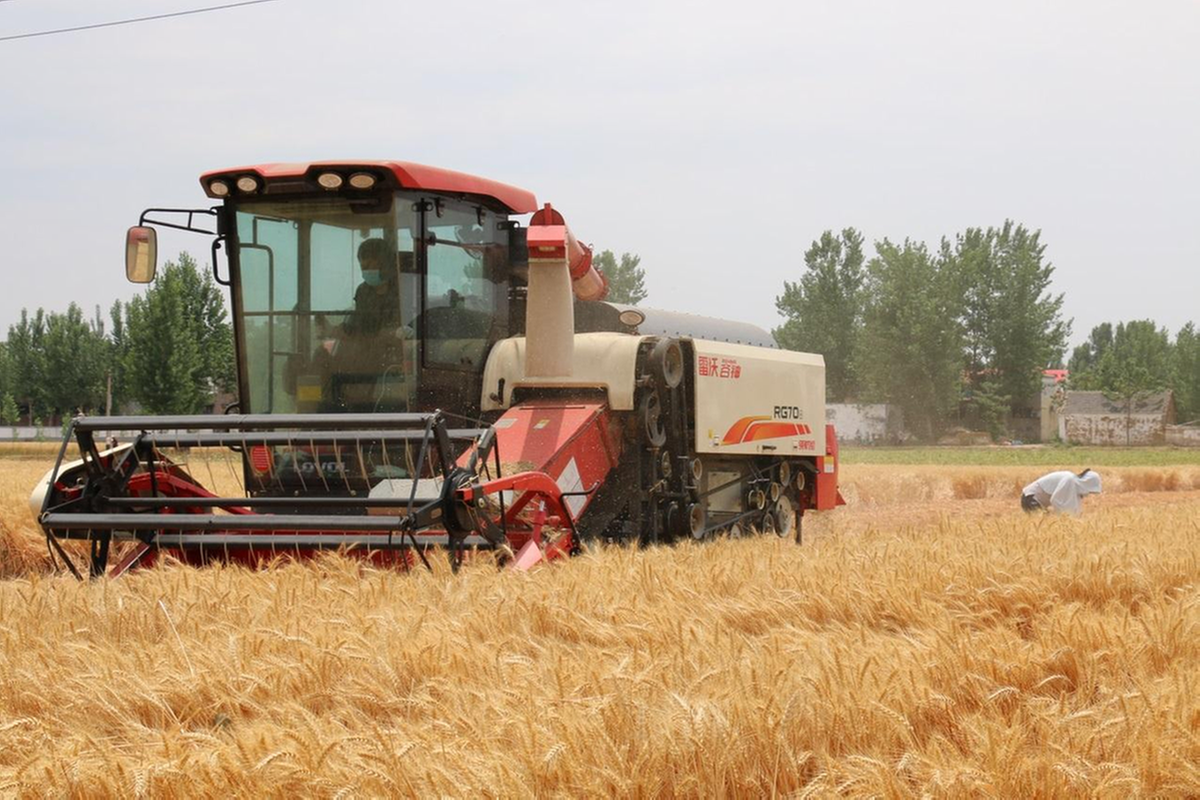
Unusually heavy rainfall in Shaanxi and Henan provinces last year sounded the alarm for the country. Given these factors, along with the drought in the Yangtze River basin and flooding in many places in the north, it has become even more important to boost grain production and strengthen food security.
To begin with, the authorities should take precautionary measures against droughts and flooding. Meteorologists, for example, should pay closer attention to the changes in the weather pattern in the upper, middle and lower reaches of the Yangtze, and regularly update information on precipitation and the volumetric flow rate of the river at different points, as well as issue warnings in advance against droughts and dry spells, so farmers can take necessary measures to deal with them.
In order to reduce the impacts of extreme weather events such as floods, storms and cloudbursts on food production, the government should improve the drainage system to reduce the chances of flooding, build stormwater basins to hold rainwater and strengthen dams and dykes to prevent breaches which leads to floods.
Second, areas vulnerable to extreme weather events should take special precautionary measures including saving water, dredging, pumping and digging wells to secure water supply, and guarding against pests and diseases to withstand droughts and ensure healthy food production.
Third, there is a need to improve farming by using technology and improving the health of the farmlands, so farmers can bear the impacts of droughts and flooding. For example, Jiangsu and Zhejiang provinces, through which the Yangtze River flows, have not been that affected by the drought this time because of their highly efficient irrigation network and water infrastructure.
But apart from promoting water conservation and improving the drainage system, the authorities should also increase the fund allocation for research on seeds, and ways to reduce the threat of pests and diseases, in order to strengthen food security.
Fourth, China must remain vigilant against global warming and expedite high-tech development. As the changing weather pattern and frequent extreme events are the results of global warming, China should continue to reduce greenhouse gas emissions, which will also help it to peak carbon emissions before 2030 and achieve carbon neutrality before 2060.
It is also necessary to reform the research and development sector in a way that it spurs innovation and develops technologies that can help reduce emissions at a faster rate, as well as strengthen laws and regulations to better protect intellectual property rights, especially on low-carbon technologies. This will help China mitigate and better adapt to climate change, which in turn will help boost food security.
Cui Ningbo is a professor at the College of Economics and Management, Northeast Agricultural University; and Zhao Duanyang is a doctoral candidate at the same university.
The views don't necessarily represent those of China Daily.
If you have a specific expertise, or would like to share your thought about our stories, then send us your writings at opinion@chinadaily.com.cn, and comment@chinadaily.com.cn.