Better governance needed to tackle water crisis







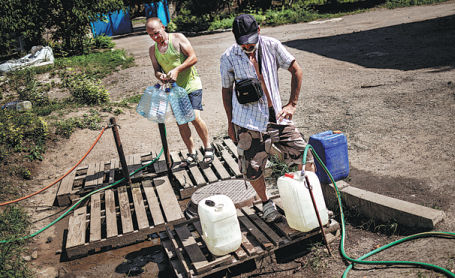
Water is a basic human right-but it is also a finite resource. Water scarcity is a growing problem, with one in every four people living in water-scarce areas.
The global water crisis undermines our ability to produce food, protect livelihoods and build strong economies. This crisis is accelerating, with water demand expected to outstrip supply by 40 percent by 2030. Poor and vulnerable groups will be disproportionately affected, resulting in growing inequality. And the need for effective and collaborative water management will only grow as the effects of climate change put increasing pressure on global resources.
Achieving a water-secure world for all requires bold policy actions and investments at all levels. This starts with understanding how we value and manage this scarce resource-the theme of this year's "World Water Week", the leading conference on global water issues, which was held in Stockholm, Sweden, from Aug 23 to Sept 1.
As a public good, water is undervalued, underpriced and often poorly managed, and in need of better investments. How we value water is reflected in governments' water management policies. Given that water is at the heart of development, it is crucial that a wide range of perspectives be represented in policies. Well-designed governance and fiscal reforms, along with autonomous and accountable institutions, are key to improving the management of water resources.
Good governance-institutions and systems that use and manage water efficiently, cost-effectively, and transparently-ensures water is effectively managed and fairly allocated, avoiding disputes. This is particularly important for managing trans-boundary waters, given the increasing pressure on common sources of water supply. Good governance is also vital for achieving the Sustainable Development Goals beyond clean water and sanitation for all, such as reducing poverty and increasing food security. With 2 billion people still lacking safe drinking water and 3.6 billion people lacking safe sanitation, urgent and renewed action is needed to tackle the global water challenge.
Ensuring that water is equitably and sustainably shared requires an inclusive approach. Women, the youth, indigenous groups, people with disabilities, and others are still underrepresented among those who provide or receive services, make decisions, and control water resources. These groups need to have a voice, access to, and job opportunities in the water sector.
Their inclusion has wide-ranging benefits. For example, women's involvement in the water sector has been shown to improve the transparency and sustainability of water management. And greater citizen engagement and accountability at all levels can help communities avoid settling in the flood plains, improve the effectiveness of disaster early-warning systems, create more efficient services, and contribute to more profitable farming, fishing or tourism opportunities.
Good governance needs to be supported by adequate investment. Water security is far from being realized in many countries, with an estimated $150 billion needed each year to deliver universal safe water and sanitation globally. Droughts, floods, and other water-related hazards are becoming more intense, groundwater is overexploited and polluted, and cities and farms face acute water shortages. These events will undermine development gains and require further investment in water solutions.
The scale of investment needed requires the involvement of the private sector and innovative financing mechanisms to complement limited government resources, transforming efficiency and resilience in water-dependent sectors such as agriculture, energy, and industry-and in urban water supply.
Overcoming the world's water challenges requires governments, businesses, and civil society to innovate and solve problems together. The World Bank Group partners with the public and private sectors and civil society to enhance stakeholder engagement, provide water and sanitation solutions, and mobilize public and private investment in areas ranging from improved water supply and sanitation services to integrated water resources management, social inclusion and dam safety.
With water investments of nearly $30 billion and hundreds of water experts across the world, the World Bank Group is uniquely positioned to help countries tackle the water crisis, developing global knowledge and ground-breaking, evidence-based water projects, while amplifying the impact of lending through technical assistance on the ground. Our analytical work provides the foundation to scale up our collaboration with countries and partners at the national and river basin levels to achieve water security and universal access to water and sanitation services.
Together, we can ensure access to safe drinking water and sanitation for all, and meet the challenges of the climate transition.
The author is global director of Water Global Practice, World Bank.
The views don't necessarily reflect those of China Daily.
If you have a specific expertise, or would like to share your thought about our stories, then send us your writings at opinion@chinadaily.com.cn, and comment@chinadaily.com.cn.