How to ensure high-quality growth of all counties







Counties have always played an important role in promoting urbanization and revitalizing rural areas in China. According to the Ministry of Civil Affairs, China had 1,870 counties as of April 2021, and their GDP has grown steadily, accounting for more than one-third of the national total.
The finances of the counties have been increasing, too, contributing 12 to 14 percent of the country's revenue for the public budget. The counties in eastern China are richer than those in other regions and therefore vital to national economic growth.
In the future, China's counties will play a bigger role in boosting the "dual circulation" development paradigm and achieving the goal of common prosperity. Dual circulation refers to an economic pattern in which domestic development (or the domestic economy) is the mainstay, with domestic and international development reinforcing each other.
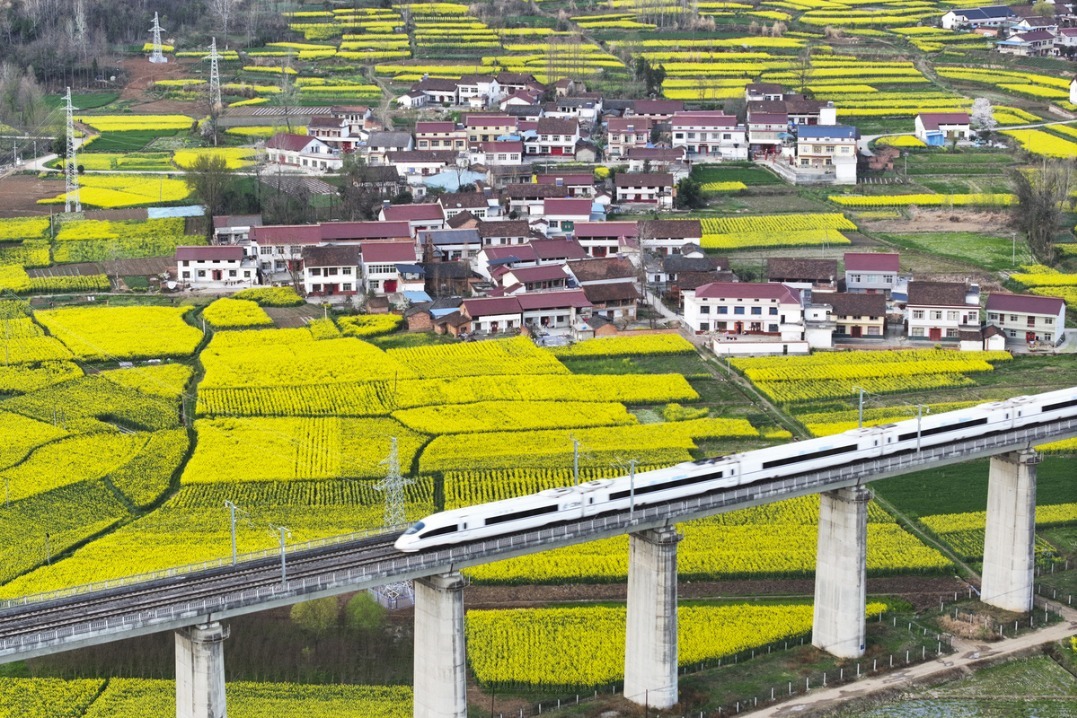
Connecting urban and rural areas, counties can stimulate economic circulation both within their jurisdiction, and between urban and rural areas. In 2019, the counties' population accounted for about 63.9 percent of China's total. They also account for more than half of total retail sales of consumer goods in the country. So advancing the development of the counties will greatly boost overall consumption.
Besides, counties, as the link between cities and villages, can speed up the flow of the factors of production across the country, and help narrow the urban-rural gap.
Yet many counties in China are still relatively less developed despite their growing importance to the national economy. For instance, many counties are not yet able to closely connect cities and villages. Many are less competitive because they have fallen behind in industrial development or lack the needed industrial scale and/or structure, and technologies compared with urban areas to boost their development.
Also, given their lack of infrastructure and public services, and inefficient use of resources, many counties can only attract and absorb a limited number of surplus laborers who come from rural areas or migrate to cities for work.
To solve these problems and strive for common prosperity, it is vital to boost the economic growth of counties by promoting the dual circulation development paradigm, and combining county, town and village resources in pursuit of higher productivity. In recent years, the central government has introduced a series of laws and policies to help the counties boost their local economies and help people fulfill their needs for a better life.
Counties need assistance to realize their full economic potential, advance integrated development of the primary, secondary and tertiary sectors, and develop sustainable and green industries, in order to spur their economic growth.
It is also important to improve the conditions for investment, employment and entrepreneurship of counties to attract talents and promote innovation.
There is also a need to build service centers at all levels from villages and towns to counties in a bid to better integrate their resources to promote development.
Besides, it is important to expedite infrastructure development in counties, and take full advantage of the local resources and accelerate the flow of the factors of production between counties and cities to help spur overall economic growth.
The author is deputy director of the Rural Development Institute, the Chinese Academy of Social Sciences.
The views don't necessarily reflect those of China Daily.
If you have a specific expertise, or would like to share your thought about our stories, then send us your writings at opinion@chinadaily.com.cn, and comment@chinadaily.com.cn.