Urgent funds needed to tackle climate crisis in Asia







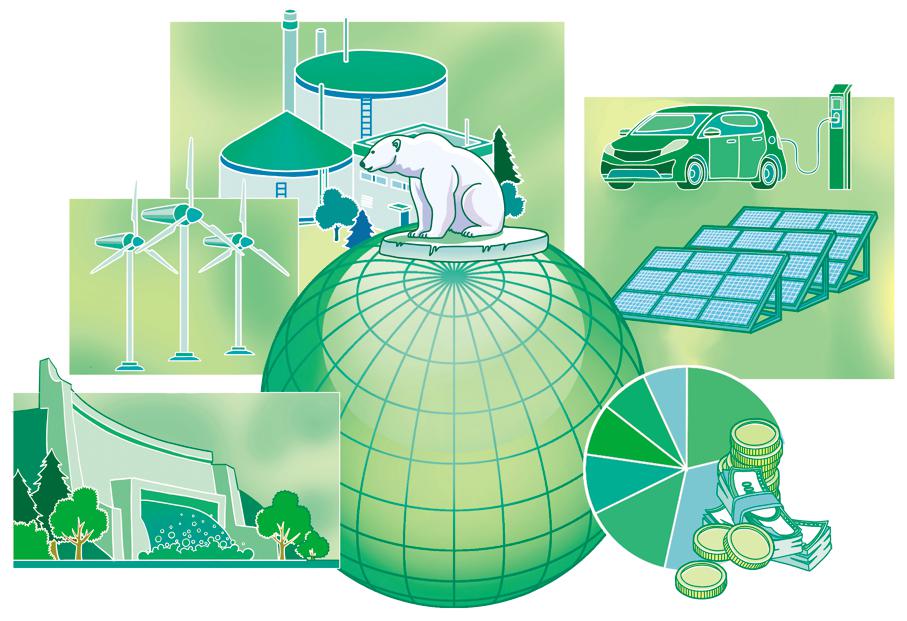
Climate change has become an undeniable reality. It's not just obvious in the poles where ice caps are melting at an unprecedented pace, nor is it an issue of the future. It's what's happening now in our own backyards here in Asia.
In the summer of 2022, China experienced the strongest heat waves — in terms of intensity, impact, scale and duration — since the country began compiling complete meteorological records in 1961. Close to 1 billion people across central, eastern and southern China were exposed to temperatures above 35 degrees Celsius, with 360 million people experiencing temperatures above 40 C.
In Pakistan, after eight failed monsoons, a deadly flood claimed more than 1,600 lives and affected 33 million people, nearly 8 million of which were displaced from their homes.
Earlier, India and Pakistan saw one of the hottest springs in recorded history, with temperatures topping out at 50 C in some places, impacting hundreds of millions of people.
If the world was just, these scenes of surreal and terrifying stories from across the region would be different. Sadly, many more people across the developing world are living through similar stories. Most often, people from marginalized and lower-income backgrounds experience the worst effects of the climate crisis and are the least prepared to deal with the consequences. But those people who have been suffering have done the least to cause this crisis.
Currently, we have "only" seen a temperature rise of about 1.2 C, but the United Nations Intergovernmental Panel on Climate Change — the authoritative scientific body on climate — in its latest report has warned that many of the climate impacts are already becoming irreversible. There will also be greater and greater limits to what people can do to tackle the effects.
As the impacts of climate change escalate so does the cost for communities to adapt. While it has been difficult for many developing countries to accurately state the finance required for them to build climate resilient and green societies, Oxfam's report estimates that the countries in South and Southeast Asia, for which data are available, will require an average of $1,300 billion per year until 2030 to deal with climate impacts and decarbonize their economies.
However, between 2013 and 2020, only about $113 billion in public climate finance from international providers was committed to these countries, equating to an average of just over $14 billion per year. What is worse is that more than half of this amount is being provided in the form of loans, which must be repaid to some degree. Only one-third of the total available funding is for adaptation, which is needed to tackle climate impacts.
The international financial support to build climate resilience and green societies is negligible, and it is clear developing countries in Asia are not able to adapt to current and future climate stressors alone. In the absence of adequate financial support, developing countries are reverting to taking on debt to deal with climate impacts, and risk falling into debt distress.
Because the providers of finance fail to embrace locally led climate finance, local communities on the front line of climate change do not have sufficient say in how the climate finance affecting them is governed. Currently, only about 0.5 percent of the total finance to South and Southeast Asian countries can be estimated to be "locally led".
Forced to invest, on their own, in reconstructing and rebuilding after being hit by climate disasters, developing countries are cutting expenditure on vital public services such as health, education and social protection. As a result, more people are pushed back into poverty.
Already, 50 percent of Asia's population lives below the $5.50 per day poverty line.
Despite this suffering, developed countries, which are historically responsible for the climate crisis, are running away from their responsibilities. Back in 2009, they committed to provide $100 billion per year to developing countries by 2020 through to 2025, which was reaffirmed in the Paris Agreement in 2015. Compared with the investment needed to avoid dangerous levels of climate change, this pledge is almost inconsequential. But the UN Climate Change Conference in Glasgow last year made it clear that developed countries have failed to deliver on this promise and are shifting the goal posts.
We must come together to ease the pain of those suffering the most through solidarity and collaboration. That ball rolls at the Climate Change Conference in Egypt in November.
Governments and the providers of climate finance must urgently ensure that scaled-up and grant-based adaptation finance reaches vulnerable communities at the local level to respond to their actual needs. They should also clearly outline the pathways to meet their commitments including the doubling of adaptation finance by 2025.
Climate change is an urgent and severe threat to humanity. We need to see significantly more commitment and action at the climate conference in Egypt and beyond — a step change away from continued underfunding of climate finance pledges and upholding the past agreements and the vital ambitions therein.
Sunil Acharya is the regional policy and campaigns coordinator at Oxfam in Asia, and Kalina Tsang is the director general at Oxfam Hong Kong.
The views don't necessarily reflect those of China Daily.
If you have a specific expertise, or would like to share your thought about our stories, then send us your writings at opinion@chinadaily.com.cn, and comment@chinadaily.com.cn.