Digital economy expedites quality development







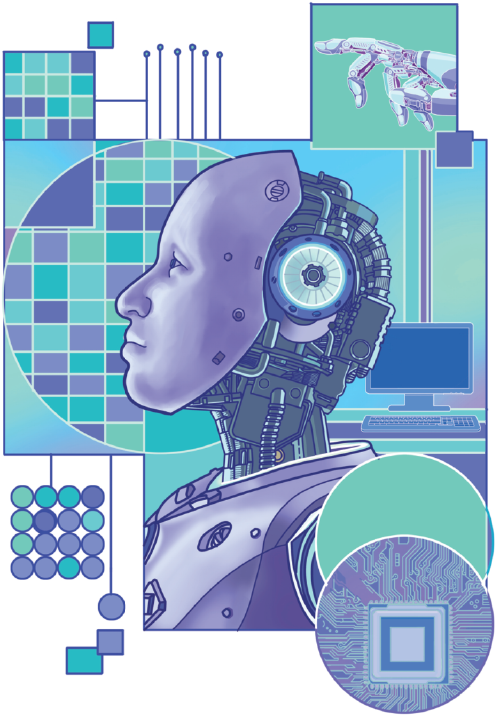
The world is accelerating into the age of digital economy. The World Bank predicts that the share of the digital economy in the world's GDP will increase to 25 percent in 2025. The digital economy has apparently become the key driver for the world economy's recovery, and a growing number of countries are using it to boost their economic competitiveness.
The digital economy is booming in China too. New technologies such as big data, artificial intelligence and cloud computing are playing a bigger role in various fields and economic activities. In particular, with the information and communications technology marching into the 5G era, China, from being a follower, has become a leader in the field of digital technology.
By the end of May, China had the world's largest cyber infrastructures. All its prefecture-level cities have optic cable networks, more than 50 million Chinese people are connected through a 1000M fiber optic network, and about 1.7 million 5G base stations have been established in the country.
Benefitting from a series of favorable government policies and flexible regulations, such massive and advanced digital infrastructure is turning China into a leading global player in the digital economy. As the scale of the digital economy continues to expand, the list of innovations keeps increasing and its contribution to the country's GDP continues to grow.
Data show that from 2012 to 2021, the worth of China's digital economy has grown from 11 trillion yuan ($1.51 trillion) to more than 45 trillion yuan, and its weight in GDP has increased from 21.6 percent to 39.8 percent. In fact, the digital economy has become a core force driving China's high-quality economic development.
Also, during the 14th Five-Year Plan (2021-25) period, government departments are expected to further ramp up efforts to overcome the technological barriers and to expedite the industrialization of the digital economy, in order to unleash its full potential for growth.
The booming digital economy, which is uniquely positioned to improve the speed of transmitting information, reduce the cost of trading and data processing, and more precisely allocate resources, will boost regional economic growth. Compared with traditional industries that depend on natural resources and are restricted by geography, the digital economy can cover much wider areas, providing many less-developed places an opportunity for boosting their local economy.
The digital economy can also help narrow regional disparity and promote common prosperity, especially during pandemics and other disease outbreaks when people have to maintain social distancing and sometimes stay at and work from home, dealing a heavy blow to the transportation, tourism and retail services. Besides, it can help integrate the real economy and the Internet Plus, and advance digitalization across the country.
The digital economy has given birth to some new industries such as fresh food delivery, remote working, livestreaming, online medical care, which have facilitated high-quality economic and social development. And these emerging industries have prompted the government to increase investment in digital infrastructure and technologies such as 5G, AI and industrial internet.
Moreover, the digital technology has played a key role in the prevention and control of the pandemic, and the resumption of work and production, by effectively monitoring and analyzing the novel coronavirus, tracing cases, and helping infected people get medical treatment.
The digital economy can also promote the orderly flow and efficient allocation of resources across departments and regions in a relatively short period of time, even during emergencies, and become a stabilizing factor, cushioning the blow of pandemics and other emergencies.
But since most of China's studies on the digital economy remain stuck in qualitative analysis and policy proposals, the government needs to step up efforts to work out proper policies for the digital economy. And all industries and regions have to adapt to the "dual circulation" development paradigm to accelerate their high-quality development. Furthermore, it is necessary to theoretically explain and analyze new forms and models of the digital economy, explore policy measures to prevent the disorderly expansion of capital, and evaluate the impact of the government policies on the digital economy, so as to promote the digital transformation of the economy and speed up high-quality development in the new era.
The author is co-director of the Digital Economy and Financial Innovation Research Center at the International Business School, Zhejiang University. The views don't necessarily represent those of China Daily.
If you have a specific expertise, or would like to share your thought about our stories, then send us your writings at opinion@chinadaily.com.cn, and comment@chinadaily.com.cn.