Evil tactics to demonize fight against virus







Because of the widespread increase in human activities in heretofore untouched places including natural environs and forests, epidemics caused by unknown viruses and bacteria have become more frequent in recent times. While swine flu broke out in North America in 2009, Middle East Respiratory Syndrome (also caused by a coronavirus) was diagnosed in 2012 and COVID-19 in 2019.
Confronted with such common threats to humankind, all countries should come together to neutralize the threat. However, when COVID-19 broke out, some politicians and media outlets in the West began acting selfishly, which was reflected in their denial of China's contribution to the fight against the novel coronavirus.
China immediately notified the World Health Organization and major countries including the US after the COVID-19 outbreak. It referred its genome sequencing results to the WHO on Jan 12, 2020, which became the key to comprehensively understanding the effects of viruses on humans.
During the first wave of the pandemic, the fatality rate was extremely high with no vaccine in sight. Under such circumstances, China locked down some cities to prevent the spread of the virus, and thus effectively controlled the pandemic. However, Europe and the US were slow to adopt the methods that had proven effective in China to contain the spread of the virus. Some countries didn't even make wearing face masks in public places mandatory.
After containing the pandemic, China provided medical supplies and sent medical teams to other countries. Later, it shared the vaccines it developed with other countries and international organizations, in order to build a community with a shared future for mankind.
In contrast, the US was hoarding vaccines in large quantities at the time, which prompted the WHO to warn developed countries in January 2021 that stockpiling vaccines would cause a "catastrophic moral failure" to help other countries, especially the least-developed ones, contain the pandemic. For example, at a time when vaccines were hard to come by in developing countries, Canada had stockpiled vaccines more than five times its population, while the US destroyed millions of expired vaccines later because it could not use them.
Although vaccines are being administered globally since 2021, their effectiveness remains to be tested, because the Delta variant of the novel coronavirus had a high fatality rate despite the vaccination. In France, for instance, COVID-19 claimed about 64,000 lives in 2020 and 59,000 in 2021 separately. In the US, over 370,000 people died of COVID-19 in 2020 and more than 450,000 in 2021 separately — a total of more than 800,000 deaths with an average of more than 1,000 deaths a day.
Given the high death rate, China had no choice but to take strict prevention and control measures when the West decided that people would have to coexist with the virus.
In 2022, Omicron became the prevalent variant of the virus across the world, but its fatality rate was significantly lower because of widespread vaccination. At that time, however, no country could be certain about the impacts of the Omicron variant, with the European and American medical communities referring to the situation in South Africa to make an informed guess.
That's why, despite having vaccinated more than 90 percent of its population, China persisted with a very cautious approach while closely observing the situations in other countries. It issued 20 new guidelines for easing the strict anti-pandemic restrictions on Nov 11 after determining that the vaccines are effective, and a 10-point plan on Dec 7 to optimize the COVID-19 response to further normalize the situation.
Globally, China may seem to be the last major country to ease restrictions, but it has done so just a few months later than other countries. Take the lifting of entry restrictions for example. Most countries removed restrictions in 2022. Japan, Spain, Syria all did so in October, that is, less than three months before China.
China's anti-epidemic measures not only put people's lives first but also strike a balance between pandemic-prevention and control and economic development. No wonder China is the only major economy to achieve positive growth in 2020, with its growth rate reaching 8.1 percent in 2021. And China's growth rate is widely expected to top the world in 2023.
Yet the Western critics denies China's valuable contributions to the global fight against the pandemic and the global human rights cause and, instead, claims that China has infringed on human rights and curbed people's freedom.
They even questioned China's "motive" for providing medical assistance and vaccine supplies for other countries, calling it "vaccine diplomacy" and geographical expansionism. That's because those people in the West perceive China's development and Chinese people's yearning for a better life as a threat to the West.
But they cannot digest China's economic success perhaps because China achieved the miracle without adhering to the Western development model and has thereby challenged the superiority of the Western model.
Over the past three years, China has fought the pandemic using a different anti-pandemic model and done better than the West in terms of protecting life and promoting economic development. This is something the West has apparently not been able to accept.
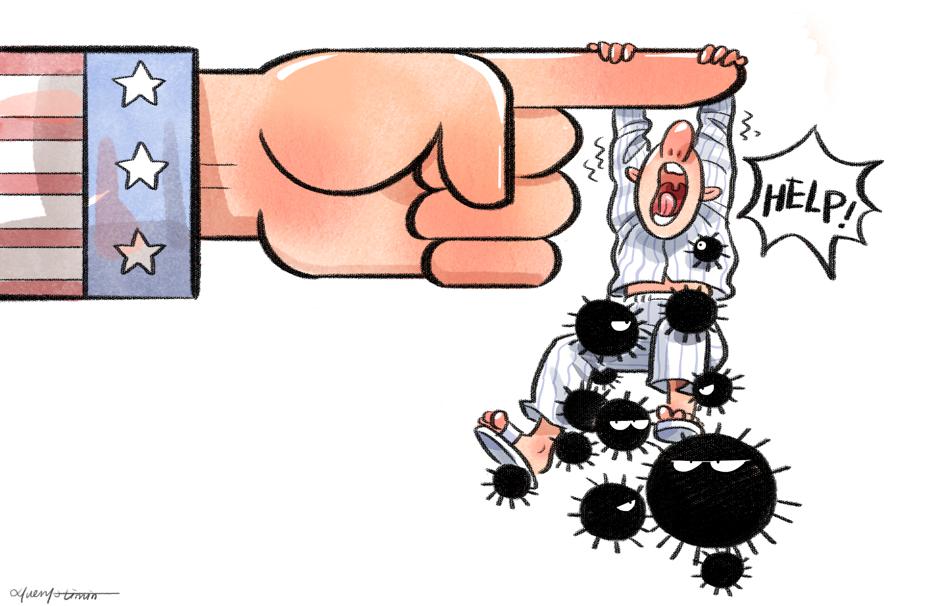
In short, at a time when humankind urgently needs all countries to join hands to overcome a common enemy, the US-led West has chosen to politicize the pandemic and stigmatize a country, and thus weakening the global fight against the virus.
Human beings will face similar challenges in the future, because a pandemic could break out in any country or region at any time. In order to more smoothly contain a pandemic in the future, the world needs to learn valuable lessons from the COVID-19 pandemic.
The author is a researcher at the China Institute, Fudan University. The views don't necessarily represent those of China Daily.
If you have a specific expertise, or would like to share your thought about our stories, then send us your writings at opinion@chinadaily.com.cn, and comment@chinadaily.com.cn.