Turbocharging EV growth
Promoting close industrial cooperation will ensure accelerated regional rollout







Promoting close industrial cooperation will ensure accelerated regional rollout
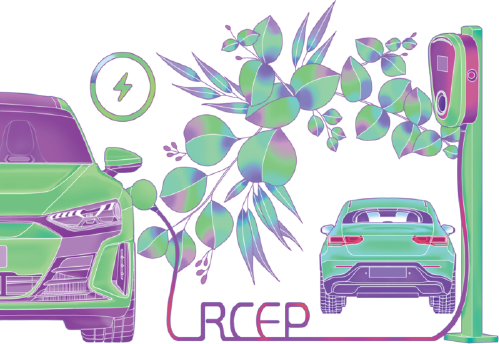
Association of Southeast Asian Nations members are ramping up efforts to promote vehicle electrification, making it the second-largest target market for Chinese electric vehicle makers. Over the past few years, Chinese EV makers have been vigorously exploring the ASEAN market. The Regional Comprehensive Economic Partnership agreement, which came into force on Jan 1, 2022, has greatly reduced trade costs through tariff concessions and cumulative rules of origin. By encouraging the alignment and integration of advanced technologies and advantages in industrialization, the RCEP will also promote trade cooperation and industrial interdependence within the bloc, creating favorable conditions for China-ASEAN cooperation in the EV industry.
ASEAN's EV industry is in a nascent stage. In recent years, auto sales in the region accounted for around 3.5 percent of the global total; however, EV sales account for less than 0.05 percent of the global total and 0.04 to 0.6 percent of the local total auto sales, with the sales volume and rate of penetration much lower than that in China. Currently, only Thailand has a relatively complete industrial chain for EV production, and countries such as Singapore, Myanmar and Laos possess production capacity for EV parts. An EV is priced at $50,000 to $100,000 in ASEAN countries, where the per capita GDP stands at only $4,533, far exceeding the price range of ordinary consumers.
In the meantime, due to outdated power supply systems, scarce charging stations, and unreasonable layout structure, EV consumers in ASEAN countries face severe "charging anxiety". For instance, Indonesia only has 332 public charging stations for EVs. For the time being, the annual cost of driving an EV is as high as $9,582 in ASEAN countries, almost twice as much as the cost of driving a petrol vehicle.
The ASEAN EV market is poised for marked growth, as regional countries are beefing up policy support for the EV industry.
For instance, Indonesia has canceled the financing upper limit for EV and EV parts producers, aspiring to become a global hub for battery manufacturing. The Philippines passed the Electric Vehicle Industry Development Act in April 2022, striving to achieve localization of battery production and supply chains. ASEAN countries such as Malaysia, Singapore and Thailand have set phased targets for popularizing EVs and supporting infrastructure construction for EVs. The ASEAN EV market was valued at around $500 million in 2021 and is expected to reach around $2.6 billion by 2027. By 2035, the sales volume of EVs in ASEAN will surpass that of combustion engine cars.
China has exported 53,100 units of EVs to ASEAN countries, with the export volume to Thailand and the Philippines both exceeding 10,000 units. Currently, 23 car plants in ASEAN are engaged in production for Chinese car brands, among which nine have started or are planning on production for Chinese EV brands.
Japanese and the Republic of Korea's carmakers, which started to explore the ASEAN auto market many years ago, have established a complete supply chain and a localization development strategy. Japanese cars are inexpensive, reliable and fuel efficient, with spacious interiors for small cars; therefore, they are very popular among ASEAN consumers and account for over 90 percent of the ASEAN gasoline vehicle market. However, Japanese car brands are mainly focused on gasoline-electric hybrids, rather than all-electric vehicles. China, on the other hand, has been adhering to the strategy of developing all-electric vehicles, with breakthroughs in localization of technologies for almost all key components. The country is leading the world in power battery technologies and has developed a competitive edge in the field of all-electric vehicles.
However, although China has built the most complete standard system for the EV industry, most ASEAN countries are using European, US or Japanese EV technologies and standards. The difference in standards has substantially raised R&D and certification costs and created problems, including repeated investment, a waste in resources and undermined competitiveness of Chinese EVs. In recent years, China has been pushing for EV industry standards to "go global". China's national standard, "safety requirements for electric buses", has been adopted by the International Organization for Standardization as an international standard. Overall, China-ASEAN EV cooperation still faces standard barriers, especially in the private car sector, which urgently calls for greater connectivity of technology standards among regional countries.
The implementation of the RCEP and China's free trade strategy have increased the export of China's advantageous products including automobiles and auto components, promoting a shift of manufacturing capacity from China to ASEAN countries that boast resource advantages and market demand. The following aspects could be considered to promote close industrial cooperation and ensure Chinese EVs go far in the ASEAN market.
To start with, there needs to be full comprehension of the characteristics of the ASEAN market and product cooperation should be promoted by giving full play to the differential advantage. Chinese carmakers, charging pile manufacturers, and engineering and power companies should seize the investment opportunity in ASEAN countries' infrastructure construction. For example, they could start by making breakthroughs in the exports of all-electric, affordable vehicles and technological cooperation in charging pile products.
Second, we should make the most of China-ASEAN complementarity in economic resources to expand capacity cooperation. The two sides should explore the sharing of industry patterns, bolster capacity cooperation, form synergy in the supply chain system, and help China tackle areas of weaknesses in the industry chain such as auto chips, therefore jointly creating a more favorable environment for the development of the EV industry.
Third, making the most of the economies of scale in the EV industry and advantages in key technologies, we should promote China-ASEAN connectivity in EV standards. In particular, China could advance joint R&D and talent cultivation in auto standards, technical regulations, and testing and certification, in collaboration with countries like Indonesia, Malaysia, Vietnam and Thailand, and vigorously participate in the formulation and revision of EV standards and rules in relevant countries.
Last, Chinese carmakers should seize the opportunities for integration of industries promoted by the RCEP and beef up cooperation with ASEAN countries in joint R&D, technological transfers and talent exchanges, to strive for breakthroughs in core technologies for EVs.
Zhu Qingyi is an assistant research fellow at the Center for International Knowledge on Development. Hao Zhirong is the head of division of Outreach and Cooperation and an associate research fellow at the CIKD. The authors contributed this article to China Watch, a think tank powered by China Daily. The views do not necessarily reflect those of China Daily.
Contact the editor at editor@chinawatch.cn