Demographic dividend for both China and India








The international media have been busy debating the implications of India's possible overtaking China to become the world's most populous country. Many of the Western commentaries have sought to present this inflection point — which has been well known and long in the making — to drive a wedge between New Delhi and Beijing.
However, the fact that they are the most and second-most populous countries does bring the focus of global demographic trends on India and China. After all, the third-most populous country, the United States, has less than one-fourth the population of India and China. But this evolution of global demography is often presented in rather simplistic and zero-sum terms as if India's gains from a larger workforce will trigger a similar, if not bigger, loss for China's growth.
First, China's leaders have been fully aware of this demographic change being in the making. Like most developed countries that, at a certain level of their material development, experienced a decline in population growth, the Chinese leadership must have prepared for such an eventuality following China's unprecedented economic rise. They must have set in motion strategies to deal with such an inevitable but piecemeal demographic change.
Second, the very argument of a rising aging population becoming a burden on a country stands contested. Increasing infusion of modern technologies into everyday life and robust trends of skill development, automation, and the larger drift from manufacturing to internet-driven services becoming the driver of economic growth have already demonstrated the limits of co-relation between an aging population and productivity.
Countries have been revising their definition of senior citizens and raising the retirement age. Plus, advanced economies have always been attractive destinations for the younger workforce of less-developed countries which often sustain the advanced economies' growth rates and eldercare. China could do the same; or it could do even better. So what is the logic of putting two of the most populous countries in an artificial either/or binary?
With the world becoming increasingly intertwined, what is pertinent to ask is what the United Nations' State of World Population 2023 report implies for global growth trajectories and which countries will be driving our shared destiny. Eight countries, the report says, will contribute half of the global population growth up to 2050. Of these, three are from Asia and five from Africa.
Look closely and the three Asian countries — India, Pakistan and the Philippines — already have the world's largest, fifth-largest and 13th-largest populations. This means that the highest population will continue to be from Asia, led jointly by India and China, which have already become the epicenter of global growth and social transformation.
Thus, Asia in the short and medium term till 2050 and Africa in the long run till 2100 will provide the bulk of new global consumers and producers, thereby becoming increasingly influential in determining global food production and consumption, as well as fashion and lifestyles.
This transformation can already be seen in Asia's increasingly leading powerful international organizations and multinational companies, and in Asian leaders becoming central to the global governance structure and process. In fact, ethnic Asians are increasingly becoming an integral part of the ruling elites of advanced Western countries.
The middle-income segment of populations — defined as people who spend between $12 and $120 a day — has been and continues to be the driving force behind global economic trends also in transforming social norms and best practices.
Till the 1980s, more than 70 percent of the world's middle class was located in member states of the Organisation for Economic Co-operation and Development. But before the world was hit by the COVID-19 pandemic in 2020, Asia had already tipped the balance by contributing more than 50 percent to this middle class of 4 billion people while OECD countries' share had shrunk to 40 percent.
So to understand how demographic changes will drive global trends, it makes sense to look at China and India together rather than pitch them against each other.
Today China and India respectively are trying to expand middle-income group to 900 million and 475 million.
Therefore, will the world gain from China and India partnering in addressing their demographic changes or if they are to treat this as one more friction point? Of course, their policy choices are not going to be easy.
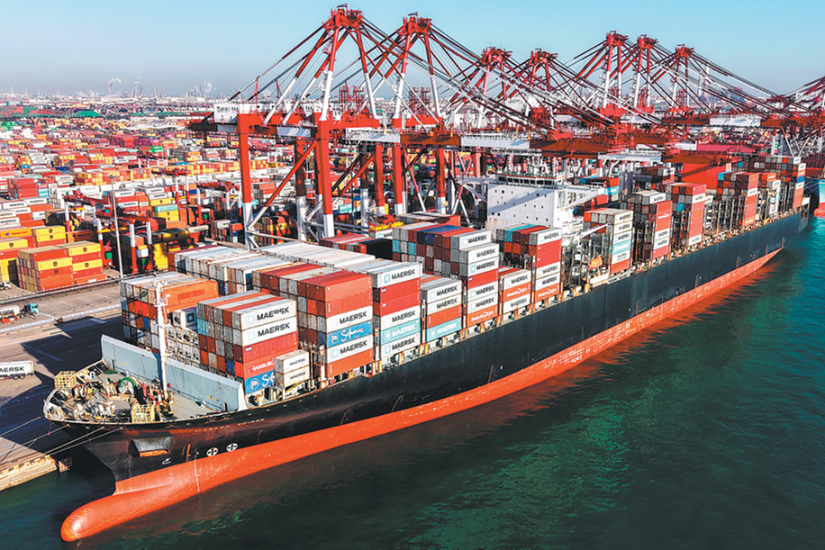
China, and not the United States, today is the largest trading partner for the largest number of countries. But when it comes to India, the US and China have been alternating as India's largest trading partner.
And the fact that India-US trade does not face an enduring and formidable trade deficit that is evident in India-China trade makes the former's proposition promising.
In their respective social fabric as well, compared with 3.2 million people of Indian origin in the US, 50,000 people of Indian origin in China make their elite and street perceptions vulnerable to US interpretations and incentives.
While hoping for more objective analyses, this calls for maximizing outcomes from the limited and skepticism-driven China-India interactions to ensure that the US brinkmanship does not distort their imagination of what these demographic trends entail for Asia's manifest destiny.
The author is a visiting professor at the University of British Columbia (Vancouver) and a professor of international relations at the Jawaharlal Nehru University (New Delhi).
The views don't necessarily reflect those of China Daily.
If you have a specific expertise, or would like to share your thought about our stories, then send us your writings at opinion@chinadaily.com.cn, and comment@chinadaily.com.cn.