Cause and effect
EU's inability to withstand Washington's designs has undermined its efforts to promote stability in Eurasia








EU's inability to withstand Washington's designs has undermined its efforts to promote stability in Eurasia
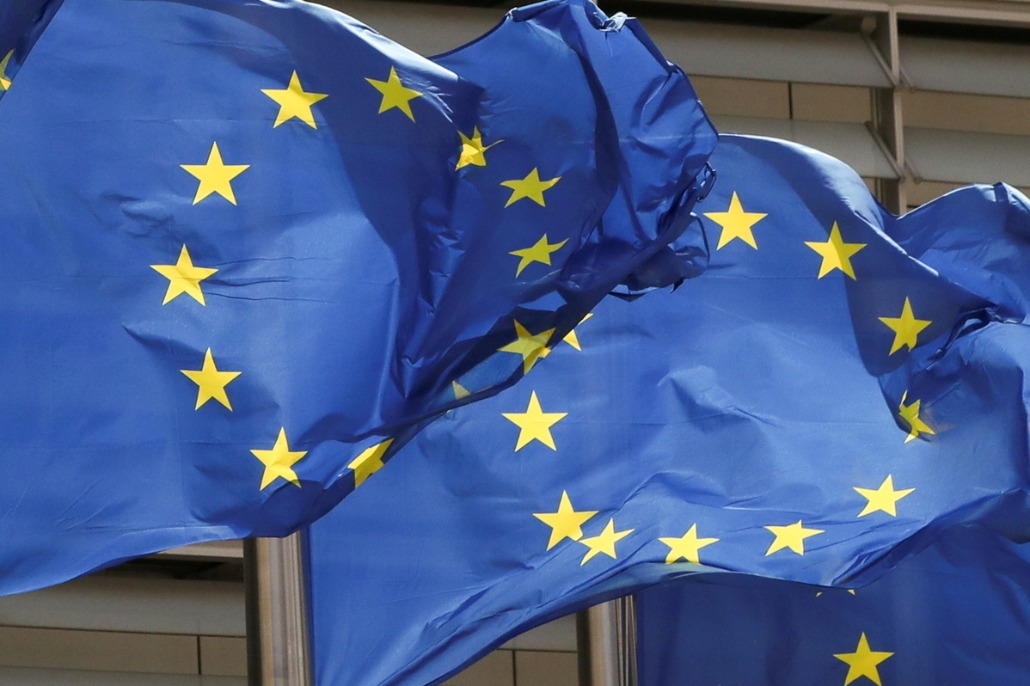
For a long time, the European Union has been committed to strengthening the resilience of its neighboring nations and regions in a bid to stabilize its surrounding situation and create a sound security environment. In the context of the escalation of the Ukraine conflict, the EU's surrounding areas are of greater significance and have a larger impact on the EU's stable development and regional security.
The escalating geopolitical competition in the EU's surrounding areas threatens the stability of the EU's institutional system and the European order. The EU not only needs to leverage economic means to attract neighboring countries to its side, but also needs a new architecture to address the new security reality.
The intra-Europe divisions on the pathways to further European integration are huge. In particular, the European elites have different opinions on how and when Ukraine should join the EU.
In the context of the Ukraine conflict, taking part in regional cooperation in Eurasia has become an extremely challenging task for the EU, most importantly because Russia has chosen a way to reinforce the buffer between itself and NATO in a way that the EU can neither understand nor accept.
From the US perspective, the EU is only a component of its unipolar global strategy which takes the Eurasian continent as the key. As the most important external force shaping the Eurasian order, the United States is using NATO to try and bundle Central and Eastern European countries into building a regional order in Europe, completely excluding Russia from the European regional order, and any power that could challenge its hegemonic position in the Eurasian region.
However, the EU and the EEU have failed to defuse geopolitical tensions between Europe and Russia through contacts or coordination. The two even tried to compete with the Belt and Road Initiative and contain its international influence through the Global Gateway projects. Thus, subject to the US' efforts to maintain its hegemonic system, some European countries have had no alternative but to remain under the grip of the US' strategies, and are therefore incapable of independently drawing up a blueprint for building the Eurasian order.
The EU has also become incapable of balancing its economic interests with the pursuit of geopolitical goals.
For a long time, the EU has had advantages in soft power — such as the European single market and EU assistance and investment. In the context of the Ukraine conflict, to build the Eurasian order, the EU has to flexibly resort to different tools in promoting regional integration and inter-regional cooperation, especially when adjusting the economic and geopolitical logics.
On the one hand, the EU has lost some momentum in driving growth in its neighboring areas.
Intra-Europe divisions on European integration and the structural problems it causes have to a certain degree made the EU lose its appeal. That, combined with a relative decline in the EU's economy and competitive advantage, have caused the EU's efforts to promote the economic integration of its neighboring areas to lose momentum. The EU's sanctions against Russia and Russia's counter sanctions have not only exacerbated global supply chain and industry chain woes and sharply increased challenges to energy and food security, but also pushed up global inflation, put the bloc under greater stagflation pressure, and caused negative spillover effects to other economies across the world.
On the other side of the equation is Europe's geopolitical awakening.
The EU has been emphasizing its geopolitical awakening on the heels of the outbreak of the Russia-Ukraine conflict, aiming to increase its autonomous military strength and its capabilities in formulating security and diplomatic policies as a geopolitical actor. Some Europeans even want to completely abandon the EU's label as a "normative power" amid geopolitical storms. However, a decline in the tractive force of the European economy and the geopolitical awakening have both failed to guarantee the stability and development of the Eurasian order. The Eurasian region is developing into a space where power games and the fusion of different ideas coexist, presenting a complex situation where integration and fragmentation and cooperation and competition coexist.
Therefore, the building of a Eurasian order necessitates effective coordination between stakeholders. As a spacious region with overlapping economic interests and political interests, the Eurasian region has numerous stakeholders. Intra-EU divergences are increasing; the EU, Russia and the US are all exerting influence on the region.
The EU and Russia lack mutual trust and consensus over a systemic design for Europe's security architecture and ways to maintain it. In face of turbulences in the Eurasian order, EU member states are swinging between Europeanism and the Atlanticism. If the latter gains a leading position, the EU will be more susceptible to the US' influence in the construction of a Eurasian regional order, and this will consequently exacerbate its strategic competition with Russia.
China seeks stability and development of the Eurasian order, particularly interconnectivity, mutually beneficial cooperation and common development between Eurasian countries that promote the Eurasian continent to create more cooperation space for security and stability, openness and prosperity, and equality and mutual benefits.
A new regional order in Eurasia after the Ukraine conflict will not materialize out of thin air, but requires strategic planning by key players and concerted efforts to build trust, guarantee strategic stability, push for political dialogue, manage differences and prevent misjudgments.
The author is an associate research fellow with the Institute of European Studies at the Chinese Academy of Social Sciences. The author contributed this article to China Watch, a think tank powered by China Daily. The views do not necessarily reflect those of China Daily.
Contact the editor at editor@chinawatch.cn