Growing hand-in-hand
Unleashing the economic potential of a new cross-border, high-speed railway corridor with China will benefit smallholders in Lao People's Democratic Republic







Unleashing the economic potential of a new cross-border, high-speed railway corridor with China will benefit smallholders in Lao People's Democratic Republic

The economy of the Lao People's Democratic Republic has undergone rapid transformation in the past two decades, with GDP rates increasing and huge investments being made in the natural resources sector and national infrastructure. However, since the onset of the COVID-19 pandemic in 2020, the Lao economy has faced many challenges, including a sharp currency depreciation and high inflation.
The price of food had risen 39 percent by late 2022, hitting poorer households disproportionately harder and forcing disadvantaged families to reduce their consumption of food and fuel. These household challenges, combined with the "5F crisis" (lack of food, feed, fuel, fertilizer and access to finance), threaten to derail the country's efforts — under the United Nations General Assembly plan — to graduate from the least developed country category by 2026.
Agriculture has long been the backbone of the country's economy, employing more than 60 percent of the workforce (64 percent for women). While the agricultural sectors have transitioned toward commercial production of raw products for export, other sectors still face considerable constraints such as limited access to technology, inadequate infrastructure, and lack of financing opportunities. Higher incomes generated from commercial agriculture accounted for 80 percent of the decline in poverty (from 25 percent in 2013 to 18 percent in 2019). In addition, most agriculture workers are self-employed in small-scale and primarily subsistence family farms. Smallholders face a wide range of supply-side challenges that affect their farm-level productivity and market participation. However, the average rural household remains disproportionately affected by poverty, food insecurity, and malnutrition.
To tackle the agricultural and developmental challenges (and bridge the financing gap), the Lao government and the Food and Agriculture Organization of the United Nations (FAO) have jointly launched an agrifood investment initiative under the auspices of the FAO's Hand-In-Hand Initiative. It uses advanced geospatial modeling and analytics, as well as a robust partnership-building approach to accelerate the country's market-based transformation of its agrifood systems. This will help raise incomes, improve the nutritional status and well-being of poor and vulnerable populations, and strengthen resilience to climate change.
As part of the Hand-In-Hand Initiative, a new high-speed railway corridor between China and Laos aims to increase the economic potential of trade between the two countries and will facilitate Lao smallholders' access to markets in China, Thailand and Vietnam. The initiative also aims to mobilize public and private sector financing for the Lao agricultural sector.
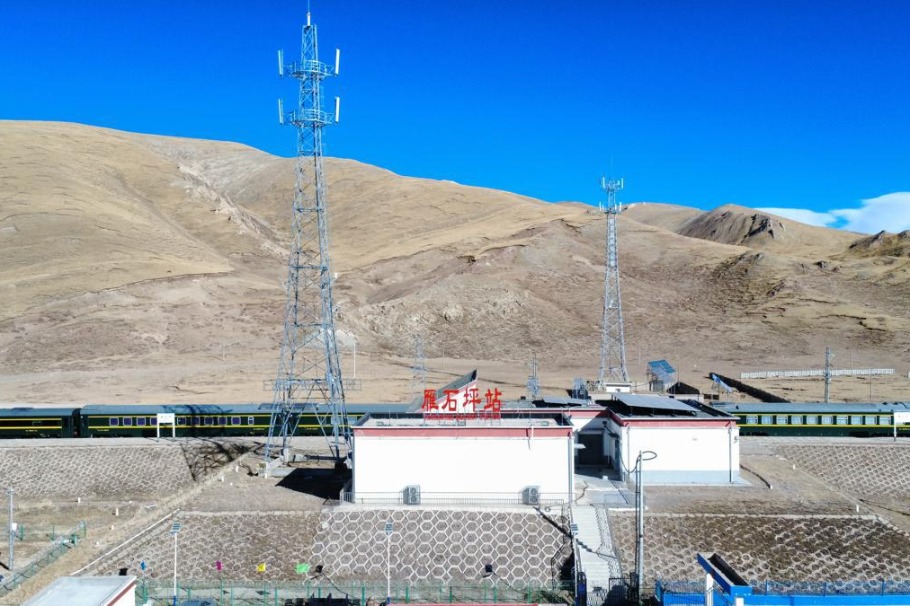
In a recent National Agriculture Investment Forum, jointly organized by the FAO and the Lao government, development partners and investors highlighted the country's potential as a logistics hub for the entire China and Southeast Asia trading area. From being a "landlocked country", Laos is becoming a "land-linked country" thanks to the new rail corridor (informally named the "China-Laos Railway"). It connects the Lao capital of Vientiane with China and beyond.
The opportunities are many. Embracing modern farming techniques, such as precision agriculture and other sustainable practices, can significantly enhance productivity and reduce post-harvest losses. Increased investments in research and development through the National Agriculture and Forestry Research Institute, as well as the adoption of innovative technologies, can empower farmers with knowledge and tools to improve yields and ensure food security.
The lack of proper transportation, irrigation systems, and storage facilities hampers agricultural productivity and impedes access to markets. Hence, strategic investments in rural infrastructure, especially farm-to-market access and irrigation, will facilitate year-long agricultural production, movement of agricultural produce, reduce wastage, and enable farmers to connect with buyers and consumers more efficiently.
Smallholders and rural entrepreneurs often struggle to access credit and financial services, limiting their ability to invest in their farms and agribusinesses. Therefore, encouraging financial institutions to offer tailored financial products, microcredit schemes, and promoting public-private partnerships can provide the necessary capital and resources for agricultural development in rural areas.
Investments in agriculture go beyond cultivation and production; they can create a ripple effect, promoting rural economic diversification and generating employment opportunities. By strengthening value chains, fostering agro-processing industries, and supporting rural enterprises, we can empower local communities and reduce their dependency on subsistence farming alone.
Establishing processing units in rural areas can add value to agricultural products and open new markets. This not only enhances farmers' incomes but also creates jobs along the value chain, ranging from food processing to packaging, marketing, and distribution.
Encouraging entrepreneurship and skill-development programs can empower the rural youth to explore business opportunities beyond traditional agriculture. By equipping them with skills in agribusiness management, marketing, financial literacy and technology, we can foster a new generation of rural entrepreneurs, driving economic growth in remote areas.
Investing in the rural economy should prioritize gender equality and youth empowerment. By providing training, financial support, and equal opportunities for women and young individuals, we can harness their potential as agents of change, fostering inclusive growth and social progress.
Promoting climate-smart practices such as organic farming, agroforestry and water conservation can enhance the sector's resilience to climate change while reducing the environmental footprint. This ensures the preservation of natural resources for future generations.
Investments in agriculture, trade and the rural economy hold the key to sustainable development and inclusive growth. By prioritizing technology, infrastructure, finance, and agriculture trade, we can unleash agricultural potential, create employment opportunities, and reduce rural poverty.
Simultaneously, by promoting economic diversification, sustainable production and climate change adoption will be the key to agricultural development in Laos — and beyond. It's a win-win situation for both the macro economy and the livelihoods of smallholders.
In conclusion, we should make full use of the opportunities for agricultural trade provided by the "China-Laos railway" and vigorously promote agri-trade, as it can increase the agricultural sector's and smallholders' income, and attract investment in agriculture.
Shi Jiaoqun is a special adviser for South-South and Triangular Cooperation of the Regional Office for Asia and the Pacific at the Food and Agriculture Organization of the United Nations. Nasar Hayat is FAO representative to the Lao People's Democratic Republic. The authors contributed this article to China Watch, a think tank powered by China Daily.
Contact the editor at editor@chinawatch.cn