Takaichi bit off more than Japan can chew







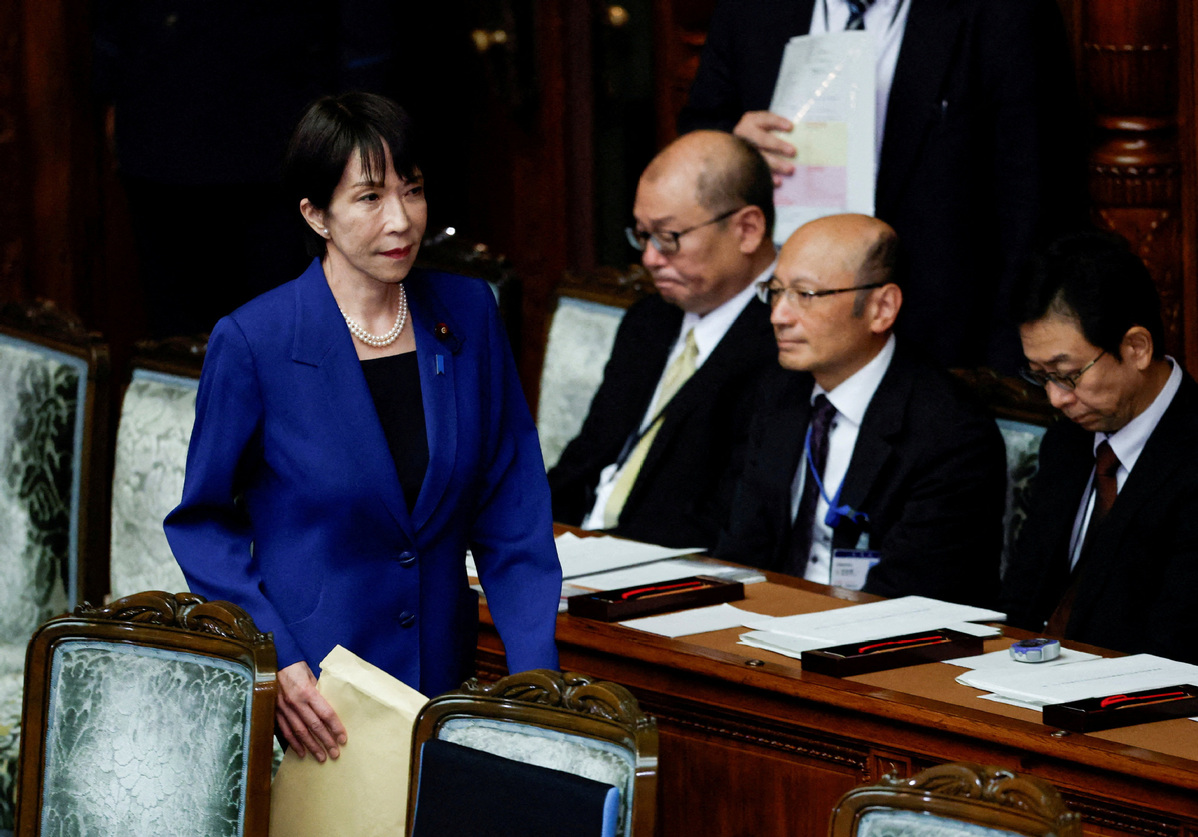
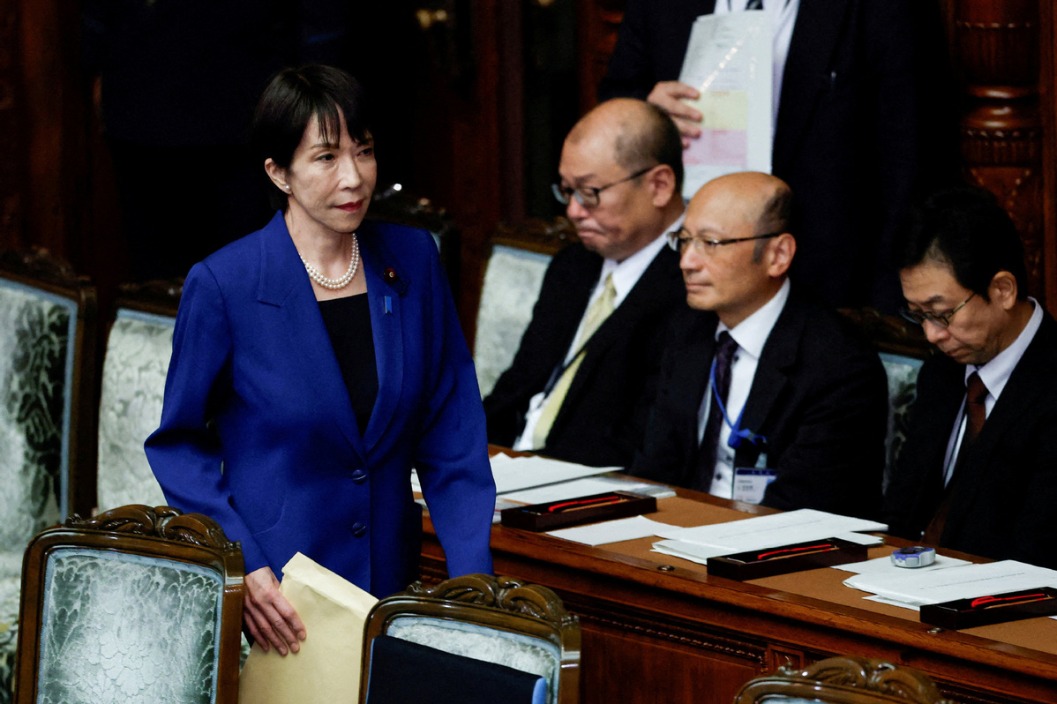
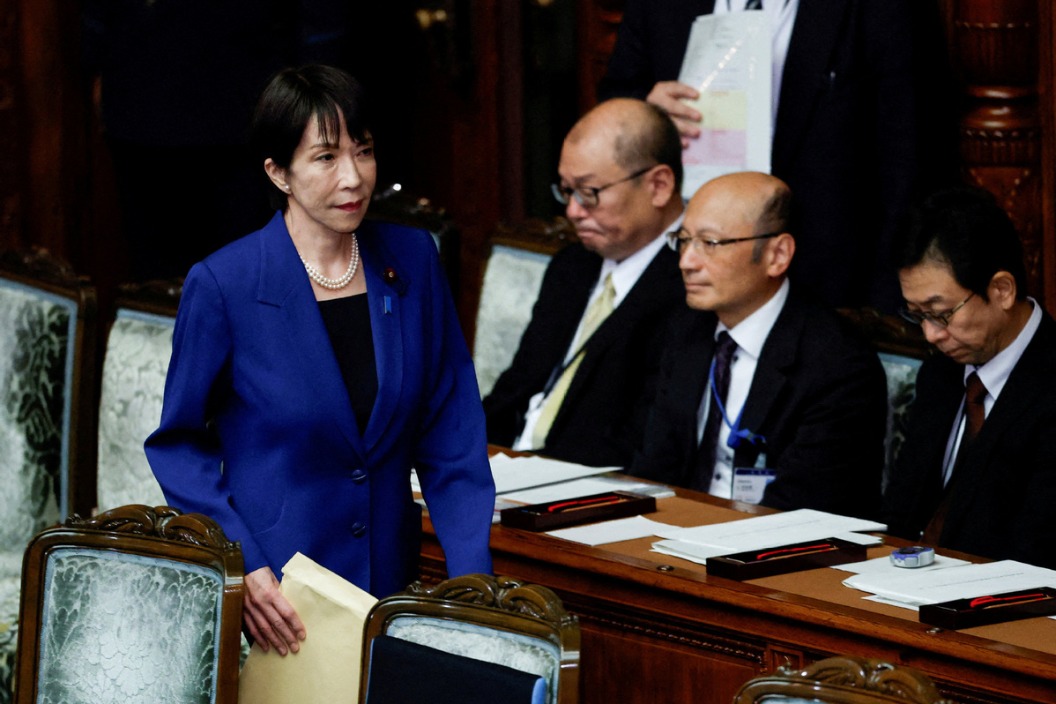
Taiwan — long the most sensitive flashpoint in the intertwined relations in East Asia — has once again become the center of tension following Japanese Prime Minister Sanae Takaichi's remarks in parliament, where she hinted that Japan could consider a military intervention in the Taiwan Strait in a "survival-threatening situation".
China-Japan relations had seen relative calm in recent years thanks to political understandings on regional issues as well as broad economic cooperation. But Takaichi's comments on Nov 7 changed that and rekindled tensions in the region.
China's response was firm: Foreign Minister Wang Yi stated that Takaichi's remarks had "crossed the red line". He described her comments as "shocking", accused her of attempting "military interference" and urged Japan to reflect on its mistakes, correct them quickly and avoid continuing down a wrong path.
Why did Japan's prime minister make such a statement? The rise of Japan's farright explains her stance. Although this is not the first time a Japanese politician has made provocative remarks about Taiwan — former deputy prime minister Taro Aso had said in 2021 that any attack on Taiwan would be an existential threat to Japan — Takaichi's statement marks a sharper and more deliberate departure from Japan's long-held policy of strategic ambiguity on Taiwan. Japanese leaders have avoided publicly specifying how Japan might respond to a Taiwan contingency. Even Japanese former prime minister Shinzo Abe, regarded as Takaichi's political mentor and known for his assertive security stance, never suggested that escalation in Taiwan might justify a direct Japanese military response. Takaichi's words were driven by nationalist, right-leaning ideology aligned with her conservative position. This political stance illustrates that Japan's internal debate over security and defense is becoming more publicized, which may increase uncertainty in regional policy.
Given Takaichi's record, her posture is not surprising. She has visited Taiwan several times as a member of the Diet and repeatedly expressed hardline views. In April 2025, during a seminar in Taipei, she called for deeper bilateral investment in defense capabilities and even proposed a quasi-security alliance involving Japan, Australia, India, the Philippines, as well as China's Taiwan island — an idea that risked destabilizing an already fragile regional environment.
How will her statement impact bilateral ties and regional stability? China has responded with a comprehensive strategy, with various state institutions issuing strong statements. On Nov 14, China's Ministry of National Defense warned that Japan would face a "crushing military defeat" if it used force regarding Taiwan. Days later, the China Coast Guard increased deployment near the Diaoyu Islands. China also conducted military exercises near Japan from Nov 17 to 25. Such exercises are routine, but their timing carried a clear message.
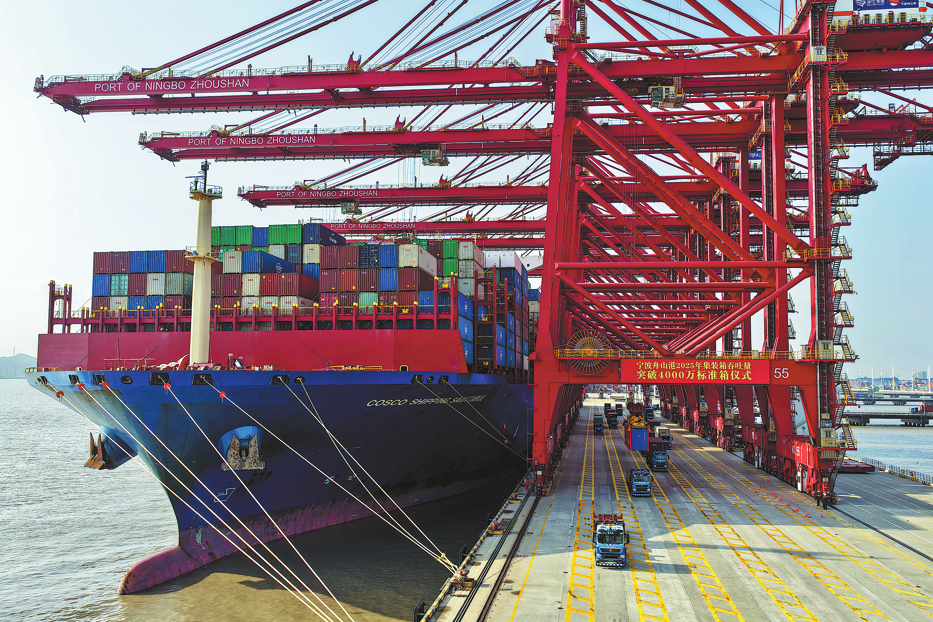
On the economic front, China moved swiftly to limit bilateral engagement with Japan, a step that could harm Japan's struggling economy. Restrictions were imposed on Japanese imports, and seafood imports were suspended on Nov 19. A cautionary message advising Chinese citizens to reconsider travel to Japan — which gets more than eight million Chinese tourists annually — could potentially cost Japan's tourism sector an estimated $14 billion in 2026 if the tensions persist. If China restricts exports of rare-earth minerals to Japan, as it did in 2010, Japan's manufacturing sector would be badly hit. The use of economic measures as a diplomatic warning shows China's ability to leverage comprehensive national power to safeguard regional interests.
Diplomatically, China postponed a planned trilateral meeting of culture ministers from Japan, China and the Republic of Korea, and rejected Japan's proposal for a leaders' summit early next year. At the United Nations, China also brought the issue to the global stage, accusing Japan of threatening military intervention in the Taiwan question. Beijing declared that it would firmly exercise its right to self-defense under the UN Charter and international law if Japan dared to intervene militarily, vowing to defend its sovereignty and territorial integrity. This demonstrates China's emphasis on legal rights and sovereignty on the international stage, while also signaling the risk of escalation to other actors.
Despite these developments and Japan's additional misstep of deploying medium-range surface-to-air missiles on Yonaguni Island, just 110 kilometers from Taiwan, it remains unlikely that the crisis will escalate into direct military confrontation. A military clash would place Japan in an extremely vulnerable position given the vast power asymmetry between the two countries. Moreover, Washington's muted response has reportedly frustrated Tokyo. The United States remains cautious due to its significant economic ties with China, suggesting that Japan's prime minister has inadvertently drawn her country into a crisis whose consequences she may not fully understand.
The future course of the crisis depends on Japan's willingness to correct its mistake. Failure to do so risks inviting further Chinese countermeasures as Beijing continues implementing the policies necessary to safeguard its national security. Ultimately, the only path toward de-escalation lies in following the advice offered by China's foreign minister: Japan must "reflect on its mistakes, correct them quickly, and avoid continuing down a wrong path". Doing so is in the best interest of both countries and the wider region.
The author is secretary-general of the Global Forum For Future Studies in Egypt.
The views don't necessarily reflect those of China Daily.
If you have a specific expertise, or would like to share your thought about our stories, then send us your writings at opinion@chinadaily.com.cn, and comment@chinadaily.com.cn.