Ushering in the green transformation








ASEAN-China cooperation to promote sustainable development can help set an example for the world
The urgent need for green development has gained significant traction. As nations grapple with the devastating consequences of climate change, the Association of Southeast Asian Nations and China have emerged as key players in fostering a green transformation. In 2021, ASEAN and China issued a joint statement on enhancing green and sustainable development cooperation and in 2022, both sides committed to strengthening common and sustainable development. Notably, 2021 and 2022 were designated as years of sustainable development cooperation between ASEAN and China.
In 2022, Cambodia, the rotating ASEAN Chair, proposed developing the ASEAN Green Deal to promote a sustainable and inclusive recovery from the COVID-19 pandemic. At the ASEAN Summit in Indonesia this month, ASEAN Leaders adopted a Declaration on Developing a Regional Electric Vehicle Ecosystem as part of ASEAN's efforts to reduce greenhouse gas emissions, accelerate the transition to clean energy, decarbonize the land transport sector in the region, achieve net-zero emission targets and improve energy security in each ASEAN member state and in the region.
It is crystal clear that a green economy is an important source of growth for ASEAN. Moreover, a green recovery and transformation will help ASEAN to achieve an economically and environmentally resilient future. According to a study by the Asian Development Bank, ASEAN's green recovery from the COVID-19 pandemic could potentially create $172 billion in investment opportunities annually and generate more than 30 million jobs by 2030.
As Southeast Asian economies are in transition toward more sustainable, resource-efficient and climate neutral economies, a regional framework on green recovery and green transformation is needed. In this connection, the development of the ASEAN Green Deal can serve as a regional framework for multi-stakeholder consultation and partnership building.
To realize the ASEAN Green Deal, five strategic policy interventions are recommended: first, advancing a zero-carbon, affordable and resilient energy system; second, developing smart, low-carbon, water-secure and climate-resilient infrastructure and mobility; third, mobilizing public and private finance for green investment and transformation; fourth, accelerating and scaling up green innovation; fifth, implementing the United Nations Economic and Social Commission for Asia and the Pacific's Asia Pacific Green Deal and the Framework for Circular Economy for ASEAN Economic Community through the promotion of multi-stakeholder consultation and partnership building and the development of a green economic zone.
ASEAN and China are endowed with abundant resources and diverse ecosystems, providing a fertile ground for innovative green solutions. By pooling their strengths, the ASEAN members and China can tackle shared environmental challenges and drive sustainable development. Collaborative initiatives on renewable energy, environmental conservation and sustainable infrastructure will not only promote economic growth but also ensure the preservation of natural resources for future generations.
Renewable energy stands at the forefront of the global transition toward a low-carbon future. Green investment is critical to realizing the low-carbon transition and a carbon-neutral economy. According to various studies, Southeast Asia needs about $3 trillion cumulative green investment to stay on track to reach 1.5 C target by 2030. In this connection, ASEAN and China can leverage their collective capabilities to ramp up investments in renewable energy sources such as solar, wind, hydro, and geothermal power.
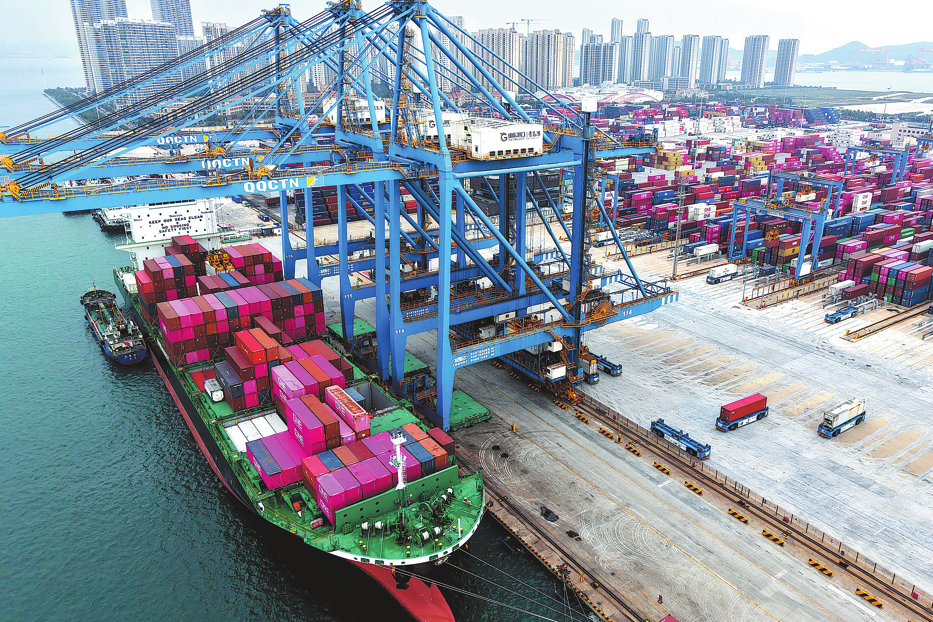
China's growing influence in renewable energy development globally presents a significant opportunity for ASEAN to expedite its energy transition. This is particularly noteworthy considering the existing cooperation between China and ASEAN in various domains. To illustrate, China has invested approximately $31 billion in renewable energy projects in the ASEAN region from 2000 to 2020, constituting about 60 percent of the total foreign public investment in the region during that time frame.
Moreover, the involvement of the private sector is crucial to China's advancement in renewable energy projects within the region. Starting from 2010, the private sector, acting as a sponsor and financing institution, has played a prominent role in China's engagement with renewable energy projects. In this regard, Chinese sponsors have pledged an investment of $3.6 billion in renewable energy projects as of 2023.
Electric vehicles present another promising avenue for cooperation between ASEAN and China. ASEAN is actively striving to establish favorable conditions within its domestic market to attract investments from EV manufacturers. In this context, China, being the foremost producer of EVs, holds significant importance. Strengthening partnerships with China through investments in EV products can generate positive spill-over effects, fostering innovation and growth in renewable energy-supporting industries across the region. This collaborative effort has the potential to drive the transition toward clean energy in the ASEAN region.
To facilitate a comprehensive green transformation, the members of ASEAN and China must foster a conducive policy environment. Harmonizing regulations, promoting knowledge exchange, and establishing regional standards and certifications are vital steps. By aligning their policy frameworks, these nations can incentivize sustainable practices, attract green investments and establish a level playing field for businesses operating in the region.
ASEAN and China's collaboration on a green transformation transcends regional boundaries and serves as an exemplary model for global cooperation to realize the necessary green transformation including the development and promotion of electric vehicles which China is leading.
The imperative for a green transformation is an unparalleled opportunity for ASEAN and China to lead the charge toward a sustainable and resilient future. By capitalizing on their strengths, fostering innovation and prioritizing cooperation, ASEAN and China can together embark on a common journey toward a greener tomorrow.
The author is president of the Asian Vision Institute, an independent think tank based in Phnom Penh. The author contributed this article to China Watch, a think tank powered by China Daily. The views do not necessarily reflect those of China Daily.
Contact the editor at editor@chinawatch.cn