Tap the Eastern Opening
Hungary has been urging EU to not get dragged into crises that are not theirs and to profit from Chinese ties. Hopefully Europe will take heed








Hungary has been urging EU to not get dragged into crises that are not theirs and to profit from Chinese ties. Hopefully Europe will take heed
Hungary was the main guest at the third China-Central and Eastern European Countries Expo in Ningbo, Zhejiang province in May, having been the main guest at several exhibitions, conferences and forums in China.
This is because that while relations between the European Union and China are becoming increasingly strained, Hungary and China have engaged in cooperation based on mutual respect, mutual benefit and mutual understanding. Hungary's China policy differs from that of the EU, but what is it all about?
In 2010, Hungary announced a policy of "Eastern Opening". In a speech, Prime Minister Viktor Orban said that the wind is blowing from the East in the world economy, and though it is sailing under a Western flag, Hungary needs to adjust to it. Hungary took the lead in initiating cooperation between China and the Central Eastern European countries and was the first to join the Belt and Road Initiative. For this, the country has received flak from the EU, being described as "China's Trojan horse". The China-CEEC cooperation was even seen as Beijing's plan to "divide Europe". But what is the reality?
In 2011, then Chinese premier Wen Jiabao attended the first China-CEEC Economic and Trade Forum, which became the starting point for China-CEEC multilateral cooperation. However, the world has changed dramatically in the past 12 years, with the economic rise of China and Asian countries, the Belt and Road Initiative, and the emergence of Eurasian connectivity. The West has become concerned about the transformation of its hegemonic unipolar world order into the Eurasian era.
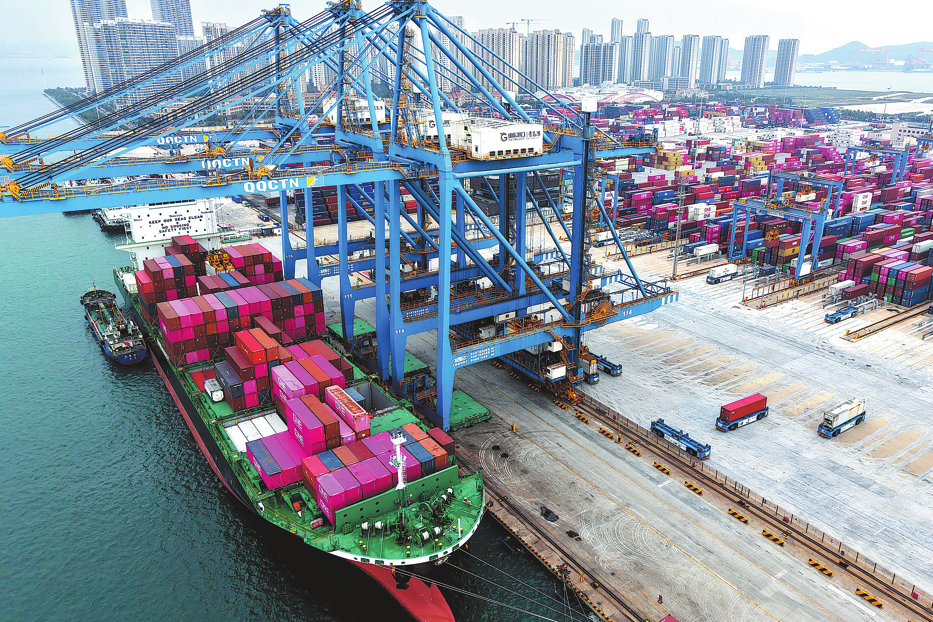
The EU looks askance at the economic cooperation of the CEE countries with China, but a closer look at the data shows that in 2021, the total trade of the 12 EU countries of the CEE region with China (116 billion euros or $124 billion) is less than half of the Chinese-German trade (245 billion euros). In EU-China trade, Germany has a share of 27.7 percent, while CEE countries have a share of 0.1 to 4.7 percent each. Chinese-CEEC imports and exports have been steadily increasing over the past 12 years and were scheduled to reach $100 billion in 2015, but this goal was not achieved until 2020.
A similar trend can be observed in investment, with Chinese investment in the CEE region increasing but still far below the level of Chinese foreign direct investment in Germany and some Western European countries. But then, what is all the great concern about?
As I mentioned, the West fears losing the power it has so far. The United States launched a trade war against China in 2018, and has since positioned China as a competitor and continues to demonize the Asian country and prevent its rise while clinging to its unipolar world order with both hands.
At the behest of the US, the allied European states are acting against their own interests. This has also been emphasized by the Hungarian government at various platforms, most recently by Minister of Foreign Affairs and Trade Peter Szijjarto, who — in the context of the EU's sanction plans — said that "we think the European Union should strive for strategic cooperation with China".
Despite being its major economic partner, the EU constantly threatens to impose sanctions on China. Hungary's prime minister turned eastwards to develop trade relations with China and Asia alongside Western economic cooperation in 2010. The "Eastern Opening" policy has been a great success; after 2012, more than half of Chinese foreign direct investment to CEE countries came to Hungary. Hungary has now become the number-one destination in Central and Eastern Europe for Chinese corporate investments. In 2020, China became Hungary's largest foreign investor and is set to be the largest investor in Hungary in 2023, too.
Since 2010, Hungary has been urging the EU that if it wants to profit from Chinese ties, mutual trust, respect, and cooperation based on mutual benefits must be highlighted rather than rivalry. Hopefully, European leaders take heed of these words to put the EU's own interests first.
The author is the director of Eurasia Center at John von Neumann University in Hungary and former consul general of Hungary in Shanghai. The author contributed this article to China Watch, a think tank powered by China Daily. The views do not necessarily reflect those of China Daily.
Contact the editor at editor@chinawatch.cn