Smart approach








Boosting EU-China connectivity in the digital geopolitical era
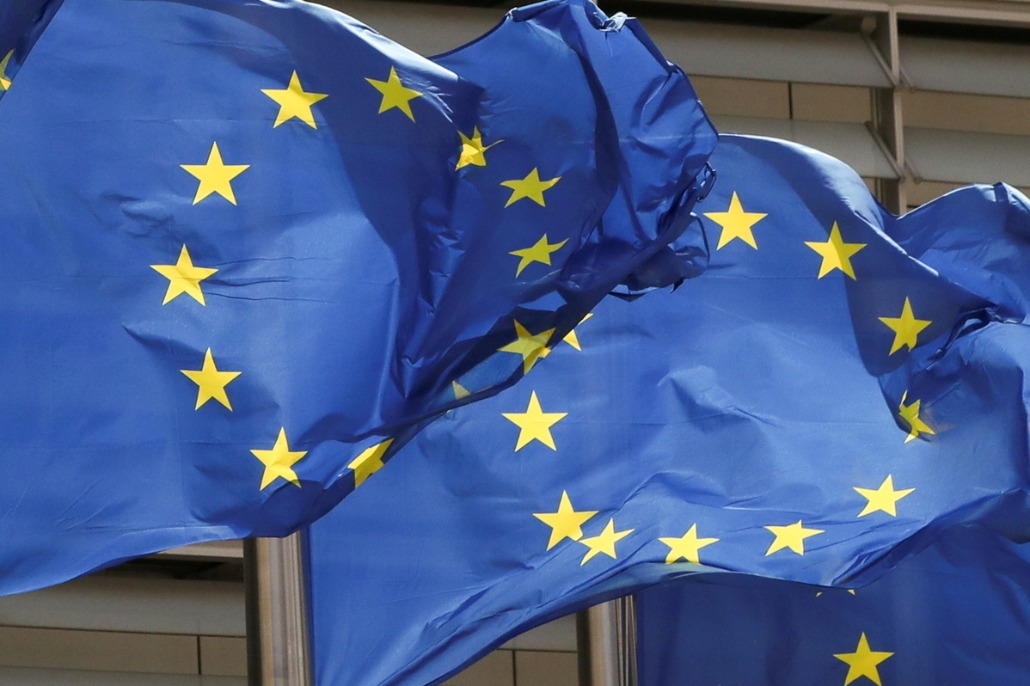
Sweden, the holder of the presidency of the Council of the European Union, presided over the fourth meeting of the EU-US Trade and Technology Council (TTC) on May 31.
The outcomes of this meeting were in line with the EU aiming to strengthen its international role in digital affairs by working out forms of digital diplomacy.
They corresponded to the two sides' efforts for more coherent internal and external digital policies that incorporate geopolitical, commercial and growth priorities into a cohesive strategy.
Beyond the noticeable contrasts, contradictions and differences between them, the European Union and the United States via the TTC meeting in Lulea, Sweden, have made efforts to establish coherent policies and to counter China's enormous influence worldwide, including in Africa and those countries with coastlines bordering the Pacific Ocean.
Notably, the meeting has acted in accordance with the G7 nations' communique issued at the Hiroshima Summit. Irrespective that Western leaders have settled on terminology that is slightly less aggressive such as "de-risking" to their relationship with Beijing, and the urgings from France that the meeting should not be perceived as being anti-China, the actions of some of the G7 members and the group's joint declarations completely interfere in China's internal affairs. It is worth noting that other countries have expressed similar objections and concerns as France, opposing the hegemonic agenda of the US and its intention to expand NATO into the Asia-Pacific region.
Despite the reservations of France, the G7 has been converted into an accomplice of the US' geopolitical and economic coercion. Instead of addressing the various problems they have at home such as extreme inequalities and poverty, state and corporate bankruptcies, fast-rising interest rates and persistent inflation, systemic banking crises, the G7 members are promoting bloc conflict and confrontation worldwide.
The US pressed for the EU-US TTC communique to be similar to that of the 49th G7 Summit in Hiroshima. Nonetheless, after the two-day meeting in Lulea, the EU finally supported a milder communique that did not add more fuel to the political fire. At the same time, it advocated a stronger approach toward Beijing in relation to avoiding the risk of overdependence on the Chinese economy. This is related to the European Commission's "Economic Security Strategy", which contains measures to prevent competitors gaining access to its most sensitive technology. Despite this strategy, the EU's ability to manage future security crises is doubtful, particularly when its handling of a series of recent policy dependences is considered. For instance, the EU's subordination to the US and to NATO continues to generate results that threaten both world peace and a harmonious global community with a shared future.
In light of the fast-changing international digital environment and the geopolitical complications, Brussels must avoid policies of destruction that dominate the international system. It should reject new Cold War practices and agendas that expand and deepen the EU's dependency on the US and NATO.
In any case, Brussels and Beijing must deepen their high-tech negotiations on information technology and telecommunications. It should be noted that in its 2018 policy paper on cooperation with the EU, Beijing reiterated its commitment to emerging digital connectivity with the EU within the framework of the Belt and Road Initiative. Both sides have also recognized the advantages of closer collaboration between "Digital China" and the "EU Digital Single Market". China and the EU can also strengthen their cooperation on cross-border data flow, new technologies and applications such as artificial intelligence, 5G, 6G, as well as the industrial internet in the digital economy.
At a time when the global power of technology is being shaped by means of ad hoc councils or committees for dialogue, China and the EU should stay engaged and maintain a long-term perspective on cooperation by undertaking shared action in the digital and quantum spheres while avoiding digital decoupling. This would be a big step forward in terms of starting to build coherent connectivity in the digital geopolitical era.
The author is a former director of the European University Cyprus and an ordinary member of the European Academy of Sciences and Arts. The author contributed this article to China Watch, a think tank powered by China Daily. The views do not necessarily reflect those of China Daily.
Contact the editor at editor@chinawatch.cn