Why 'de-risking' poses immense risks to world








Countries worldwide must remain cautious about the possibility of a new Cold War. It is much better to seek common ground while shelving and narrowing differences, foster collaboration and play a part in advancing sustainable development for all of humanity.
The concept of "de-risking" peddled by the United States is based on the same old logic of "decoupling" as the world's sole superpower continues its tireless efforts to thwart China's development.
Don't be fooled.
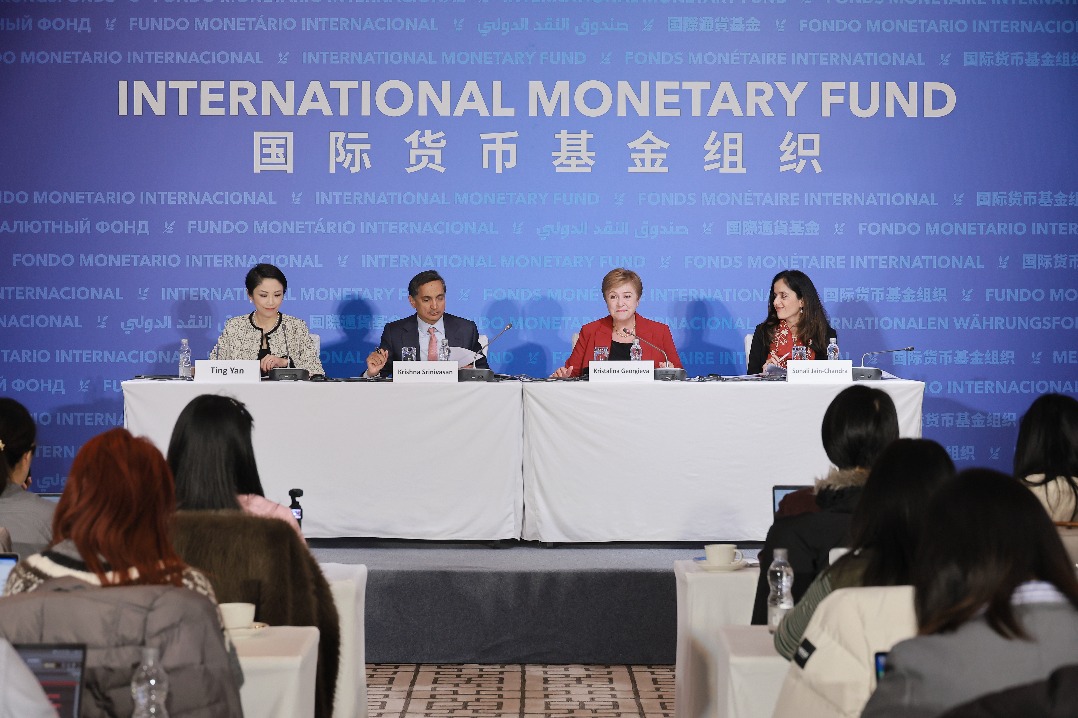
"De-risking" will increase economic frictions and slow global economic recovery. International Monetary Fund (IMF) chief economist Pierre-Olivier Gourinchas has said that "de-risking" could see countries turn inward at the expense of global growth. "There is a danger that (the) global economy could fragment into blocks."
As the world's second-largest economy, China's total goods trade topped the world for six consecutive years in 2022, playing a massive role in promoting a much-needed global economic recovery.
Washington's decision to politicize economic and trade matters violates the World Trade Organization's principles of non-discrimination and freer trade. This undermines the multilateral trading system and ignores the laws of economics.
To stop China's rise, the United States is deliberately sabotaging the global economy.
Take supply chains, for example. It's self-evident that friend-shoring and restructuring supply chains are bound to obstruct global trade flows. For enterprises, developing new and decentralized supply chains would drive up costs significantly and threaten their vitality and survival.
IMF estimates showed the longer-term cost of trade fragmentation alone could range from 0.2 percent of global output in a limited fragmentation scenario to almost 7 percent in a severe scenario.
Moreover, "de-risking" would delay scientific and technological progress, disrupt the global technology ecosystem and fragment international cooperation in research and development.
Nowadays, countries worldwide coordinate with each other to optimize and advance technologies in hardware, software and basic and applied science.
By roping in more allies, the United States seeks to forge a parallel system to shut China out through "decoupling and severing supply chains" and building "small yards with high fences."
Jensen Huang, CEO of AI chip giant Nvidia, has warned that the US tech industry is at risk of "enormous damage" from the escalating battle over chips between Washington and Beijing.
"Over the long term, restrictions prohibiting the sale of our data center graphic processing units to China, if implemented, would result in a permanent loss of opportunities for the US industry to compete and lead in one of the world's largest markets," Nvidia's Chief Financial Officer Colette Kress has said.
"De-risking" would also disrupt global governance and hinder global efforts to tackle climate change and eliminate poverty.
Visionary policymakers worldwide have been devoted to tearing down trade barriers and bridging ideological differences for decades.
Nevertheless, "de-risking" creates artificial barriers, destroys the foundation of mutual trust built among countries for decades and could eventually drag the world back into a Cold War.
The risk of "de-risking" is so evident that even many US allies are wary of it. A recent poll conducted by the European Council on Foreign Relations in 11 European countries showed the majority of more than 16,000 respondents think their country should remain neutral between China and the United States and are reluctant to "de-risk" from the Asian country.
Creating a bigger pie of common interests is necessary for a global economic recovery and solving challenges. The United States should ditch its "de-risking" approach and abandon its zero-sum, Cold War mindset.
Countries worldwide must remain cautious about the possibility of a new Cold War. It is much better to seek common ground while shelving and narrowing differences, foster collaboration and play a part in advancing sustainable development for all of humanity.