Ensuring inclusivity in the Asia-Pacific
China and ASEAN can refine and interpret the inclusive connotation of the Treaty of Amity and Cooperation in Southeast Asia to maintain regional order








China and ASEAN can refine and interpret the inclusive connotation of the Treaty of Amity and Cooperation in Southeast Asia to maintain regional order
Attending the China-ASEAN Foreign Ministers' Meeting in Jakarta on July 13, Wang Yi, a member of the Political Bureau of the Communist Party of China Central Committee and director of the Office of the Foreign Affairs Commission of the CPC Central Committee, emphasized that "it is important to stay committed to the purposes and principles of the Treaty of Amity and Cooperation in Southeast Asia, explore the ways to leverage the strengths of the Global Development Initiative, the Global Security Initiative, the Global Civilization Initiative and the Treaty of Amity and Cooperation in Southeast Asia in a coordinated manner, properly inherit and carry forward Asian wisdom, practice true multilateralism, and maintain regional rules and order."
China officially signed the Treaty of Amity and Cooperation on Oct 8,2003, becoming the first country outside the region to join it. Over the past 20 years, China and the Association of Southeast Asian Nations have actively implemented the treaty and promoted the construction of an inclusive regional order in the Asia-Pacific region.
First, China and ASEAN uphold the spirit of the Treaty of Amity and Cooperation in Southeast Asia to ensure lasting peace and stability in the Asia-Pacific region. The treaty stipulates that the high contracting parties should settle differences or disputes through peaceful means and oppose resorting to threat or use of force. With the expansion of ASEAN, the treaty has changed from being a symbolic principle for handling relations among ASEAN member states to an institutional basis for dealing with regional cooperation. The core values of China and the treaty are highly consistent and conform to the Five Principles of Peaceful Coexistence that both sides abide by.
China's entry into the treaty had a snowball effect, as many countries, such as India, Japan, the Republic of Korea, Australia, New Zealand, Russia, the United States, and many European countries, have signed up to join it.
On July 12, during the 56th ASEAN Foreign Ministers' Meeting and a series of meetings, Saudi Arabia signed an agreement to join the treaty, becoming the 51st country to do so. China and ASEAN promote the Treaty of Amity and Cooperation in Southeast Asia to become a regional convention generally recognized by countries in the Asia-Pacific region. On this basis, China and ASEAN are committed to maintaining the regional rules and order, accelerating the promotion of the Code of Conduct in the South China Sea, carrying out non-traditional security cooperation in multiple fields, and jointly responding to regional security challenges. Also, China has always supported the efforts of ASEAN countries to establish a nuclear-weapon-free zone, and supported the early signing and entry into force of the protocol of the Treaty on the Southeast Asia Nuclear-Weapon-Free Zone.
With the joint efforts of China and ASEAN countries, the 21st century has become the Asia-Pacific century. And the Asia-Pacific region has become a stable anchor of world peace, a source of power for development and a new highland for international cooperation.
Second, China and ASEAN actively implement the purpose and principles of the treaty and carry out mutually beneficial cooperation in all aspects. In the political field, China and ASEAN have jointly built a regional rules-based order. China firmly supports ASEAN solidarity and the building of the ASEAN community, and is working with ASEAN to gradually promote the establishment of cooperation platforms such as ASEAN+3 (China, Japan and the ROK), ASEAN+1, the ASEAN Regional Forum, the East Asia Summit, the ASEAN Defense Ministers' Meeting Plus, and the ASEAN Maritime Forum, forming a hub-and-spoke structure with ASEAN as the axis and various partnerships as the spokes. This process has significantly enhanced ASEAN's influence and centrality in the construction of regional cooperation and security frameworks, practiced true multilateralism, and maintained regional rules-based order.
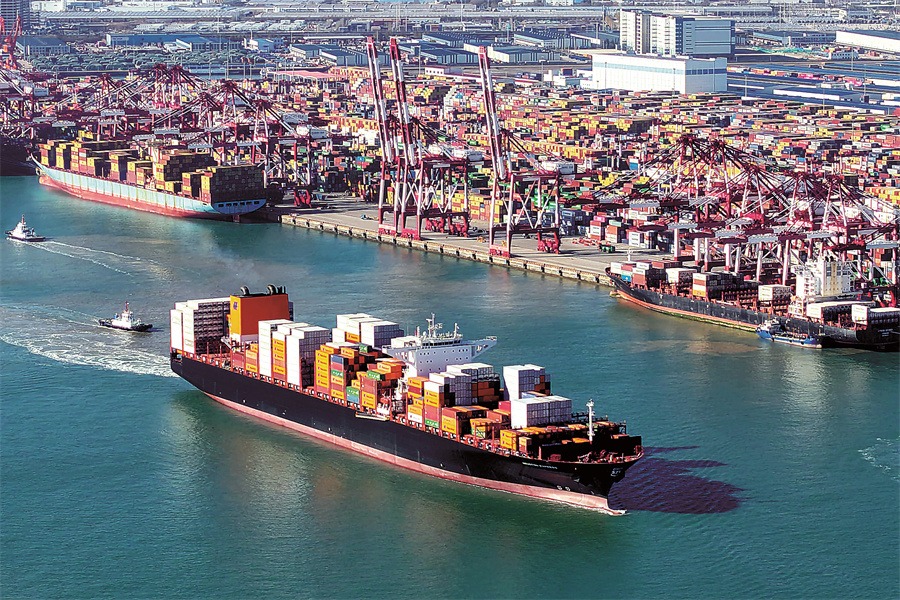
In the economic field, China and ASEAN have driven the process of Asia-Pacific regional integration. Over the past 20 years, they have joined hands to carry out construction work in the countries involved in the Belt and Road Initiative, strengthened infrastructure cooperation, and continuously improved the level of connectivity; and taken the lead in establishing free trade zones, from building "hard connectivity" to strengthening "soft connectivity", and expanding from traditional areas to emerging areas.
In the field of social culture, China and ASEAN have managed and controlled differences through dialogue and consultation, and cultivated the "Asian way" of non-interference in internal affairs while taking care of the comfort of all parties; they recognize Asian cultures, respect different civilizations, and advocate mutual learning among civilizations, which has contributed to the harmonious coexistence of diverse civilizations in the Asia-Pacific region; they have focused on consolidating the foundation of non-governmental exchanges between the two sides, built a multi-subject, all-round exchange and cooperation platform, cultivated new forms of businesses in the cultural field, and explored various forms of friendly interactions, which has promoted the in-depth development of people-to-people and cultural exchanges.
Third, China and ASEAN can rely on the treaty to promote an inclusive regional order in the Asia-Pacific region. Currently, the US government pursues a zero-sum game and the logic of winner-takes-all, creating camp confrontation in the Asia-Pacific region, exaggerating geopolitical conflicts and competition among major powers. This move is not in line with the principles of the treaty, nor is it conducive to the sustainable and high-quality development of China-ASEAN relations.
In addition, the COVID-19 pandemic and the Ukraine crisis show that the global order is facing great uncertainty, and no country can stand alone. It is the common expectation of the people of all countries to build a regional norm of equality, mutual benefit, and peaceful coexistence, and to seek to build a stable and inclusive regional order. China and ASEAN adhere to the positive-sum logic, emphasize win-win results, and advocate positive interaction of value harmony and order building.
In this regard, China and ASEAN can strengthen the application of the treaty, and jointly promote the inclusive regional order in the Asia-Pacific region.
First, they should highlight the inclusive connotation of the treaty. China and ASEAN can refine and interpret the inclusive connotation in the treaty. At the same time, experts and scholars are encouraged to rationalize the inclusive connotation of the treaty. The second is to seek regional multilateralization of the treaty. China and ASEAN can advocate the treaty as a blueprint, reaffirm their commitment to regional security, seek a comprehensive regional security framework, and establish a binding multilateral security cooperation mechanism through regional trust, confidence, and system building, and promote its effectiveness and implementation. The third is to connect the Treaty of Amity and Cooperation in Southeast Asia and the ASEAN Indo-Pacific Outlook to realize the dual planning of security and development in the relationship between China and ASEAN.
Currently, the treaty and the ASEAN Indo-Pacific Outlook are two key pillars of ASEAN in the field of security and development, and are the main means of consolidating its central position. By coordinating the docking of the two initiatives, China will help promote an inclusive security order and an inclusive development order in the Asia-Pacific region.
Wang Lina is a postdoctoral fellow of the Institute of Area Studies at Peking University. Zhai Kun is a professor at the School of International Studies and deputy director of the Institute of Area Studies at Peking University, and contract research fellow of the Institute of International and Strategic Studies at Peking University. The authors contributed this article to China Watch, a think tank powered by China Daily. The views do not necessarily reflect those of China Daily.
Contact the editor at editor@chinawatch.cn.