Matching needs with advantages








Trilateral cooperation has emerged as an essential means to promote global sustainable development
The 2008 financial crisis left the world with a sluggish economy and worldwide development deficits. In this context, the Belt and Road Initiative has been a highly welcome and important international public good offered by China.
Over the past 10 years since the Belt and Road Initiative was proposed, China has continuously innovated trilateral cooperation. From promoting trilateral development cooperation to taking the lead in third-party market cooperation and piloting trilateral "development+market" cooperation, China has been proactively contributing ideas and solutions to advance international sustainable development.
Trilateral development cooperation can be traced back to the United Nations' initiative in 1978, which called on developed countries to support technological cooperation among developing countries. The fundamental purpose of the initiative is to enhance the effectiveness of development for all participating countries that have provided solutions. However, the conventional cooperation between "South-North-South", which is "emerging powers-developed countries-developing countries", has its limitations. It cannot meet the financing gap of billions of dollars required for sustainable development.
The narrow sense of trilateral development cooperation is insufficient for realizing the sustainable development goals. It is essential to adopt the broader approach of trilateral cooperation that includes development, the market, security, and even ideas, in order to build a community with a shared future for humanity.
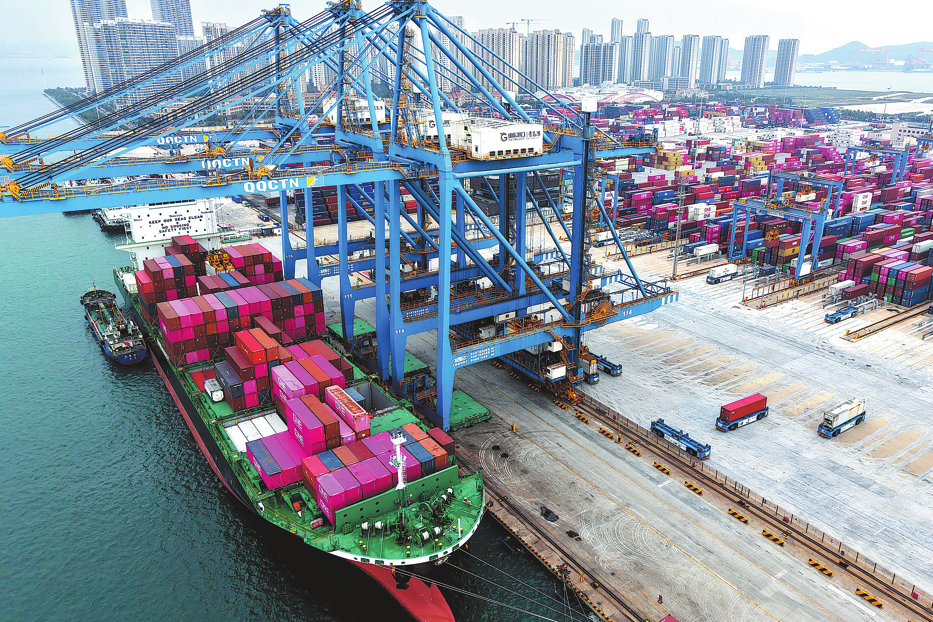
Third-party market cooperation is market-oriented economic collaboration within the framework of the Belt and Road Initiative. It is a China-initiated international cooperation model that goes beyond the traditional assistance framework dominated by Western countries. The purpose is to effectively match the needs of developing countries with the advantageous production capacity of China and advanced technologies of the developed countries. This will create synergy to promote industrial development, enhance infrastructure and improve livelihoods in third-party countries.
As a form of market cooperation, third-party market cooperation covers the areas of products and services, engineering, investment, manufacturing and financing, as well as strategic partnerships. It also includes development financing, which can be integrated with trilateral development cooperation to create a synergy to boost the efficiency in partnerships between governments, between the public and private sectors, and within the private sector.
Innovating third-party market cooperation and exploring "development+market" trilateral cooperation is an important public good provided by China to promote international solidarity. To maximize its potential, there are several areas for improvement.
First, cooperation based on comparative advantages should be emphasized. On the one hand, globalization and interdependence have magnified the comparative advantages of various countries. Any country that clings to outdated public goods monopoly will find it difficult to be accepted by the international community. On the other hand, cooperation based on comparative advantages not only promotes friendly cooperation among public goods providers, but also enhances the development effectiveness for recipients, making it the effective path to achieving sustainable development goals.
The joint statement between China and France on their partnerships in third-party markets emphasizes the full utilization of their respective advantages in production, technology, and/or finance to complement each other and encourages their enterprises to shift from traditional subcontracting models to joint bids, joint production and joint investments. In other words, both trilateral development cooperation and third-party market cooperation integrate resources to promote complementarity and move away from universal competition.
Second, government coordination should be enhanced and joint consultation mechanisms should be strengthened. For all types of cooperation among three countries, concerted efforts from the three governments are essential in strategic and policy coordination, project design and execution. During the process, joint consultation as proposed by the Belt and Road Initiative is key. A good example is the partnership between China and France, which have signed the fourth round China-France Third-party Market Cooperation Pilot Project List.
Third, financing and enterprise cooperation should be strengthened. Achieving sustainable development goals requires cooperation between governments, between governments and the private sector, and within the private sector, combining the public welfare nature of the government with the profit-oriented nature of enterprises. This will maximize benefits by providing long-term and stable prospects for private capital while injecting active resources into intergovernmental cooperation.
For example, Africa faces three major bottlenecks in development: a shortage of funds, outdated infrastructure and a scarcity of human resources. Through third-party market cooperation on large-scale infrastructure projects, the first two challenges can be addressed with financing, and the talent problem can be mitigated along with extensive technology transfer.
Fourth, it is important to bear in mind the benefits for the third party and build a strong sharing mechanism. The development of relatively vulnerable third parties is fundamental to trilateral development cooperation. The three countries involved in the cooperation have shared responsibilities: the Chinese and the partnering countries' governments and enterprises should promote the "development+market" trilateral cooperation based on the interests of the third country; and the third-party government should make efforts to improve the overall business environment, to create favorable conditions for the integration and innovation of North-South cooperation and South-South cooperation, as well as of development cooperation and market cooperation.
The author is a senior fellow at the Center for African Studies at Yunnan University. The author contributed this article to China Watch, a think tank powered by China Daily.
The views do not necessarily reflect those of China Daily.
Contact the editor at editor@chinawatch.cn.