Balancing act








China needs to coordinate its development and security to maintain growth in the face of the US' bullying behavior
The world was on a path to economic integration after the end of the Cold War. But this global system is now experiencing major adjustments and the world is on the brink of division. With the decline of the World Trade Organization, various bilateral and regional mechanisms have emerged, resulting in more fragmented patterns of international economic and trade cooperation.
The international monetary and financial system centered on the United States and the US dollar can no longer shoulder the responsibility of maintaining stability. Amid the turmoil, international markets are gradually moving toward a multi-currency system. Supply chains and technologies are no longer organized solely based on efficiency but on political security too. The world economy is about to be divided into two parallel systems.
Despite the fact that the US has kept a leading position in various capabilities and comprehensive national strength, the vested interests and the polarization of its society have limited the country's long-term economic growth and damaged its social stability.
The US is now less capable of dominating the world as a result of its domestic and foreign policy dilemmas.
Facing the rising international influence of China and other emerging economies, the US is anxious to maintain its hegemony by suppressing other countries, instead of solving its own problems to enhance competitiveness.
In October 2022, the Joe Biden administration released its National Security Strategy, explicitly identifying the next decade as a decisive period for containing China's development. It can be anticipated that the US will spare no effort to suppress and contain China in all aspects.
With the Ukraine crisis still ongoing and geopolitical conflicts intensifying, local crises could escalate into global ones. In addition, the US is striving to advance its "Indo-Pacific strategy", attempting to create an Asian version of NATO. This involves increased deployment of US forces and those of its allies around China, raising the risk of conflicts between China and neighboring countries, and making it more challenging for China and its neighbors to manage risks.
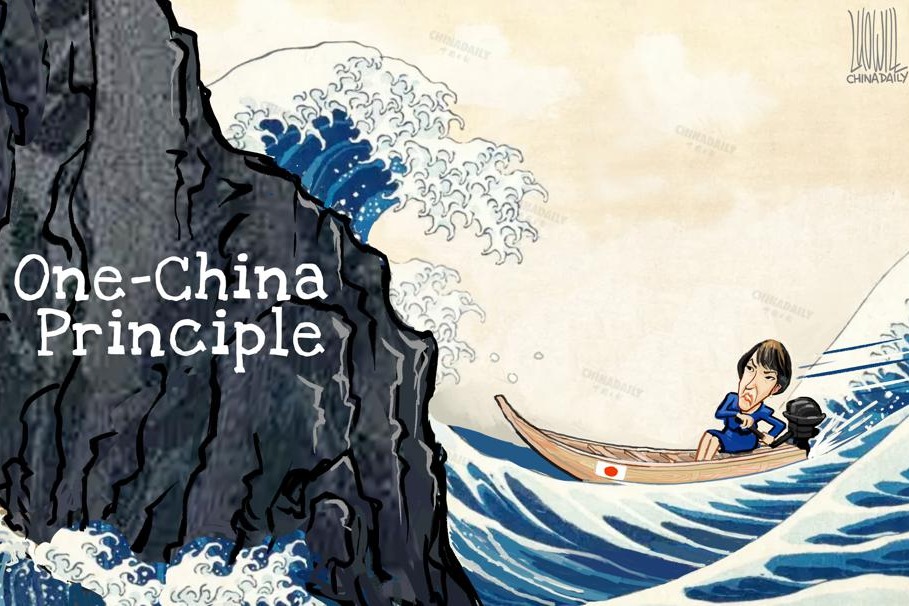
The US is also constantly interfering in the Taiwan question by fueling pro-independence sentiment on the island and attempting to create a crisis across the Taiwan Strait to achieve its goal of containing China.
Despite the increasing risks and challenges, China's development has numerous strategic advantages. These include a strong leadership, a solid economic foundation built on sustained and rapid development, a long-term stable social environment, and the nation's confidence and will for self-improvement. These strategic advantages provide a solid foundation for China to respond to challenges and seize strategic development opportunities. By timely adjusting its development strategy, China is continuing to grow its economy and maintain long-term social stability. With innovation becoming an engine for growth, China has embarked on a path of high-quality development.
China is home to the largest number of scientists and engineers engaged in research and development globally, and its R&D investment ranks second in the world. China's R&D expenditure accounts for 2.55 percent of its GDP and the share is steadily rising.
In terms of advanced technologies including information and communication technology, artificial intelligence and digital technology, quantum technology and biotechnology, China has made great strides and is now standing at the forefront globally.
The enormous size of the Chinese market is strongly attractive to the world, enabling China to maintain a high level of openness. China has now surpassed the US to rank first in manufacturing value added and the expenditure of goods in the domestic market.
In 2022, the value added of China's manufacturing industry reached 40 trillion yuan ($5.6 trillion), accounting for 33.2 percent of the GDP. And the high-tech industries accounted for 15.5 percent of the large industrial enterprises.
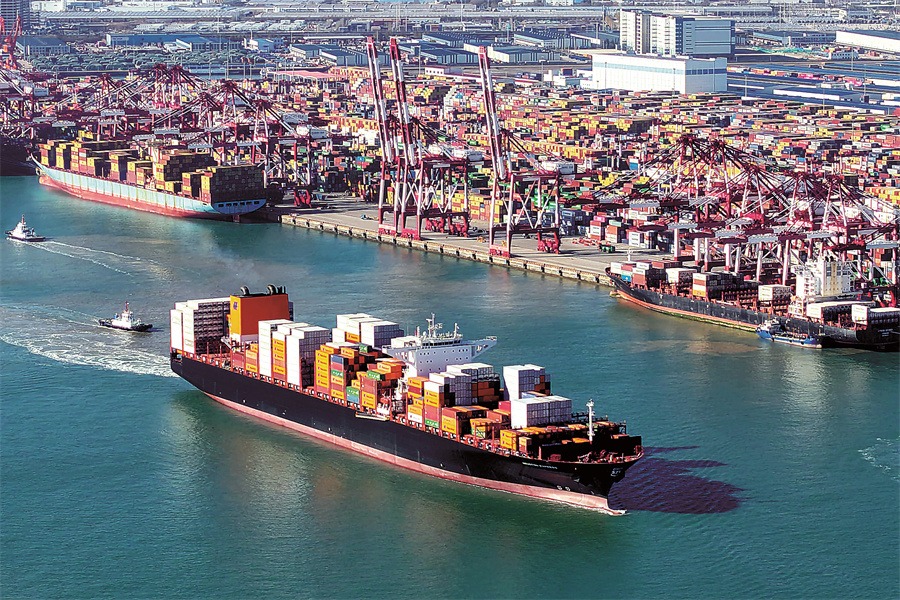
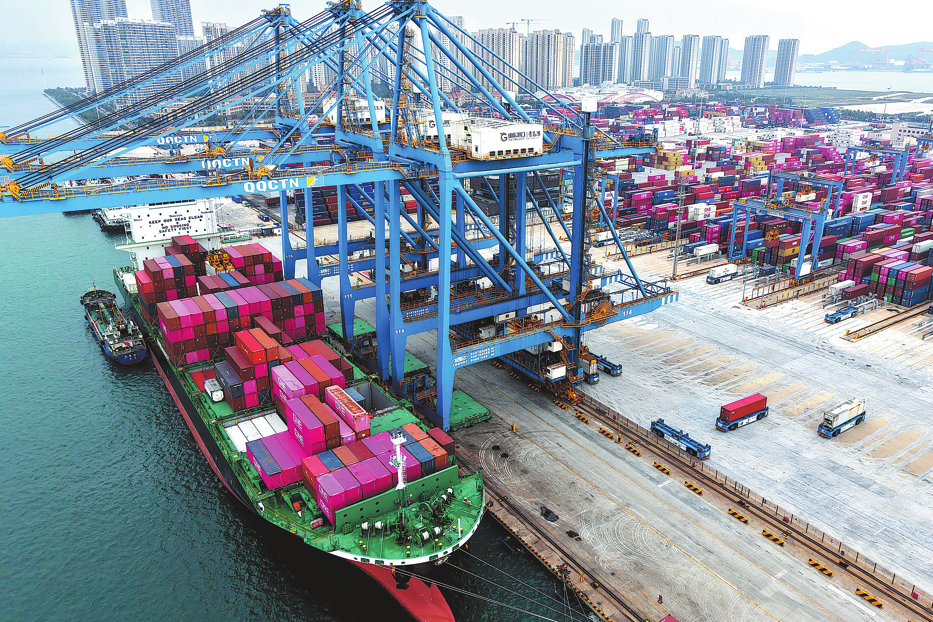
The number of economies with which China is the largest trading partner has surpassed that of the US. Despite the impact of the COVID-19 pandemic and the suppression efforts of the US, China continues to attract growing foreign direct investment, with inflows amounting to $189 billion in 2022, ranking first among developing countries.
For many years, China has ranked first in the increment of GDP and it has contributed to over 30 percent of global GDP growth. Moving forward, China will continue to maintain the world's largest increment in GDP, making it the largest source of global income and wealth growth.
While some countries prioritize their own narrow short-term interests at the expense of others, China is endeavoring to build a community with a shared future for mankind.
China has chosen globalization over anti-globalization, and multilateralism over unilateralism. China pursues common development with other countries and has put forward the Belt and Road Initiative and the Global Development Initiative. China is also advocating common security and has proposed the Global Security Initiative to this end.
Seizing new strategic opportunities, China needs to coordinate its development and security to maintain growth in the context of the changing security landscape. It also needs to coordinate national interests with the common interests of all humanity, so as to achieve the great rejuvenation of the Chinese nation in the process of building a community with a shared future for mankind.
The author is a professor at the University of Chinese Academy of Social Sciences. The author contributed this article to China Watch, a think tank powered by China Daily. The views do not necessarily reflect those of China Daily.
Contact the editor at editor@chinawatch.cn.