Bumper harvest
Ten years in retrospect: Fruitful international agricultural cooperation along the Belt and Road







Ten years in retrospect: Fruitful international agricultural cooperation along the Belt and Road

Since the launch of the Belt and Road Initiative 10 years ago, China has been promoting bilateral and multilateral economic and trade cooperation along the route, promoting its agricultural cooperation with countries and regions involved in the Belt and Road Initiative and agricultural development in those countries and regions.
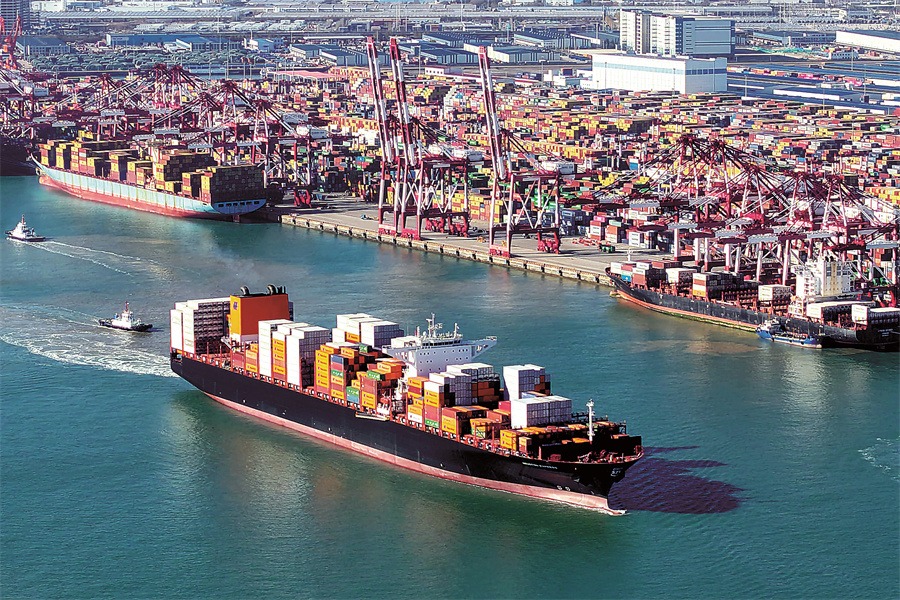
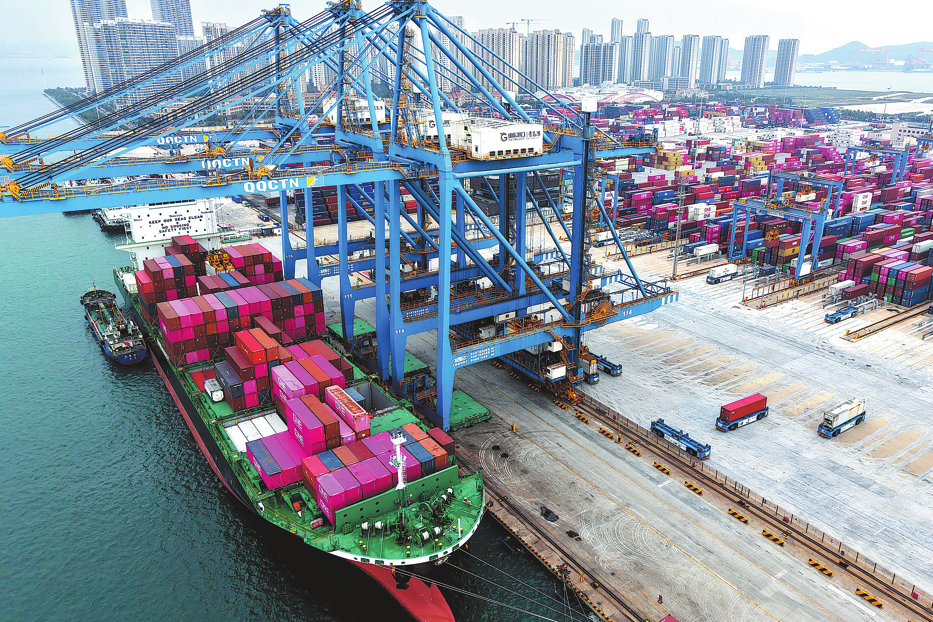
China's agricultural trade with the Belt and Road countries has hit new highs. From 2013 to 2022, China's agricultural trade with countries and regions along the Belt and Road increased from $67.23 billion to $141.18 billion, with an average annual increase of 8.7 percent. The structure has also been constantly improving, with a noticeable trend of more diversified imports.
China's outward foreign direct investment in Belt and Road countries' agricultural industry had accumulated to $14.02 billion by 2021, accounting for 51.7 percent of China's total outward FDI in agriculture. The investment areas are expanding toward the whole industry chain covering production, processing, logistics, storage and sales, and the investment regions are expanding from Asia and Africa to other regions.
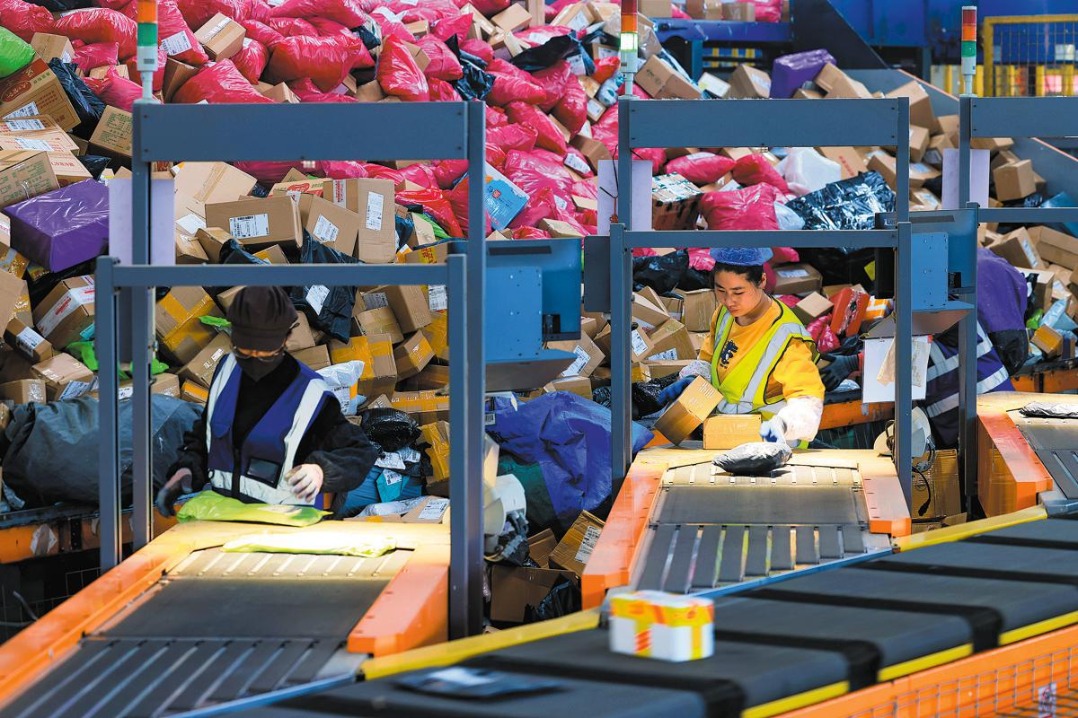
China and other Belt and Road countries are building a multi-layer logistics network for agricultural products. The logistics arrangements such as the China-Europe Freight Train, China-Laos Railway, and the New International Land-Sea Trade Corridor have significantly promoted the orderly cross-border flow of agricultural resources and better allocation of such resources. The construction of logistics has considerably shortened the transportation time for agricultural products and reduced transportation costs, too. For instance, businesses in China's southwestern region, such as Chengdu, can save 45 days by importing meat products through the China-Europe freight trains, instead of using the sea route, while saving around 10,000 yuan per ton ($1,392.22 per ton) of transportation cost compared with air transport.
China and countries along the Belt and Road have realized leapfrog growth in agricultural technology cooperation by jointly tackling major scientific problems and carrying out R&D on new technologies and new products. By 2021, China had sent more than 2,000 agricultural experts and technicians to more than 70 countries and regions, promoted more than 1,500 agricultural technologies to many countries, increased the average output of participating projects by 40 to 70 percent, and effectively improved the efficiency, stability and resilience of local agricultural production.
The quality of cooperative industrial zones — such as the pilot agricultural opening-up zones and overseas agricultural cooperation demonstration zones — is constantly improving. For instance, the governments of China and Uganda and the United Nations Food Agriculture Organization have jointly launched the Agricultural Innovation Technology Center under the South-South Cooperation project to support Uganda's strategic transformation from self-sustaining agriculture toward commercial agriculture and to increase its capacity in ensuring food security.
China has assisted Belt and Road countries in reducing poverty and benefiting farmers. Under the framework of the Belt and Road Initiative, Chinese companies, through various forms of agricultural assistance, have helped the local agricultural industry make new progress in production technologies and productivity, creating job opportunities for the impoverished people.
The World Bank predicts that by 2030, the Belt and Road Initiative can help lift 7.6 million people out of extreme poverty and 32 million from moderate poverty. Research reports by McKinsey & Co and Johns Hopkins University respectively show that 89 percent and 85 percent of the employees of Chinese enterprises in Africa are local people, boosting local employment and empowering poor people in the regions to deal with food crises.
Cooperative mechanisms between China and the Belt and Road countries have been improving. By June 2023, China had signed over 200 cooperation documents on joint construction under the Belt and Road Initiative with 152 countries and 32 international organizations, with over 3,000 projects for promoting economic development and improving people's livelihoods in the Belt and Road countries. A number of long-term mechanisms for regional agricultural cooperation — such as agricultural cooperation among the Association of Southeast Asian Nations, China, Japan and the Republic of Korea (ASEAN+3), the South-South cooperation program under the framework of the Special Programme for Food Security, and the Lancang-Mekong cooperation mechanism — have been established.
In the face of mounting instability, uncertainty and insecurity in agricultural development and food supplies caused by major-country competition, intensifying geopolitical tensions and climate change, China and other Belt and Road countries should join hands to press ahead with international agricultural cooperation to ensure global food security.
First, the bilateral and multilateral cooperative mechanisms on agriculture should be improved to attract more countries and regions to participate in the construction of the Belt and Road Initiative.
China and other Belt and Road countries should strengthen the exchanges and alignment of their respective agricultural development strategies, jointly formulate plans for agricultural economic and trade cooperation, push for the signing of more free trade agreements, enlarge the FTA "circle of friends" under the Belt and Road Initiative, and further advance trade policy and rules coordination on food security, animal and plant inspection and quarantine, and agricultural and fishery cooperation through World Trade Organization agriculture negotiations.
Second, the scope and channels for agricultural cooperation should be expanded to push for the integration of industry and value chains and promote high-quality development of the agricultural sector.
Based on Belt and Road countries' respective agricultural resource endowments, the warehousing and logistics networks such as the China-Europe freight trains, and diversified market demands, China and other Belt and Road countries should build an industry and supply chain for key farm produce along the Belt and Road, so as to achieve effective alignment of domestic and international supply and demand and coordinated development of supply and industry chains to strengthen the resilience of those chains.
Third, with technological cooperation as the guide, they should promote the sharing of benefits of technological progress in agriculture.
By bolstering cooperation in agricultural technologies they can activate overseas agricultural production factors to promote local agricultural development and increase local farmers' incomes. Focusing on the modern seed industry, soil health, biotechnology, and smart agriculture, they should make the utmost of the demonstrative effect of leading technologies and advance whole-industry-chain cooperation on agriculture led by technological cooperation and supported by agricultural cooperation.
Fourth, they should boost cooperation on the global governance of food security to ensure food security and regional stability.
China has accumulated rich experience and achieved remarkable progress in ensuring food security, reducing poverty, promoting rural development and advancing South-South cooperation, providing it an opportunity to help other developing nations to enhance their comprehensive production capacity for major farm produce. The Belt and Road countries have extraordinary agricultural resource endowments and huge potential in food production, laying a solid foundation for trade cooperation on farm produce.
Li Chunding is a professor at the School of Economics and Management at China Agricultural University and executive vice-dean of the Belt and Road International Agricultural Products Circulation Innovation Institute. Li Juan is a doctoral student at the same school. The authors contributed this article to China Watch, a think tank powered by China Daily.
Contact the editor at editor@chinawatch.cn.