Growing together
China and Latin America should make joint efforts to strengthen their agricultural cooperation for mutual benefits








China and Latin America should make joint efforts to strengthen their agricultural cooperation for mutual benefits
This year marks the 10th anniversary of the Belt and Road Initiative. Over the past decade, 22 Latin American countries have signed cooperation documents or memorandums of understanding with China under the initiative, and cooperation between the two sides has continued to be enriched and expanded in various fields and projects.
Agriculture is a key field of China-Latin America cooperation in the framework of Belt and Road Initiative. Since the first China-Latin America and Caribbean Agricultural Ministers' Forum held in 2013, the agricultural cooperation between the two sides has entered a new stage of rapid development. So far, China has signed bilateral agricultural cooperation agreements with 18 Latin American countries and established inter-departmental agricultural cooperation mechanisms with 14 countries. China has become the major destination for Latin American agricultural exports, and Latin America has become China's largest source of agricultural imports, achieving mutual benefits and win-win outcomes.
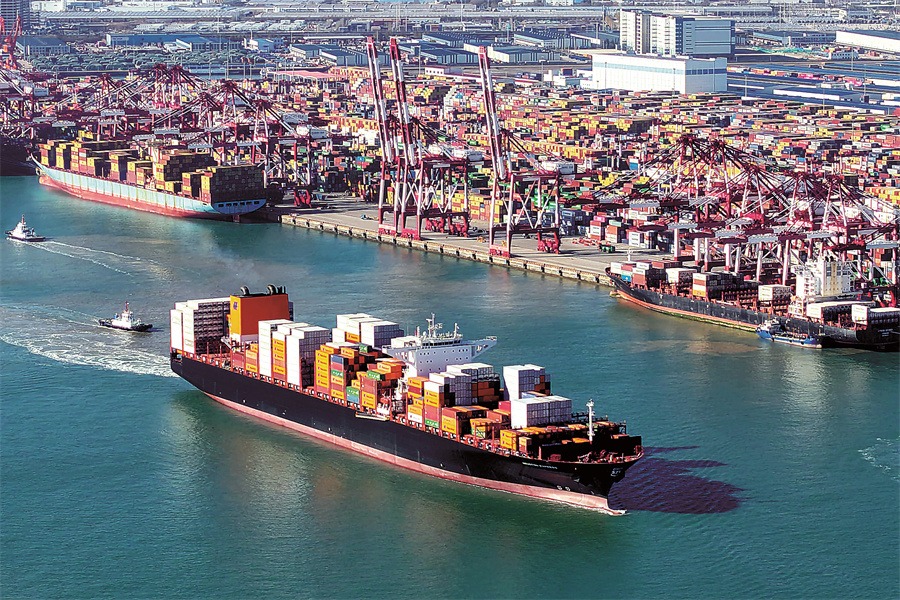
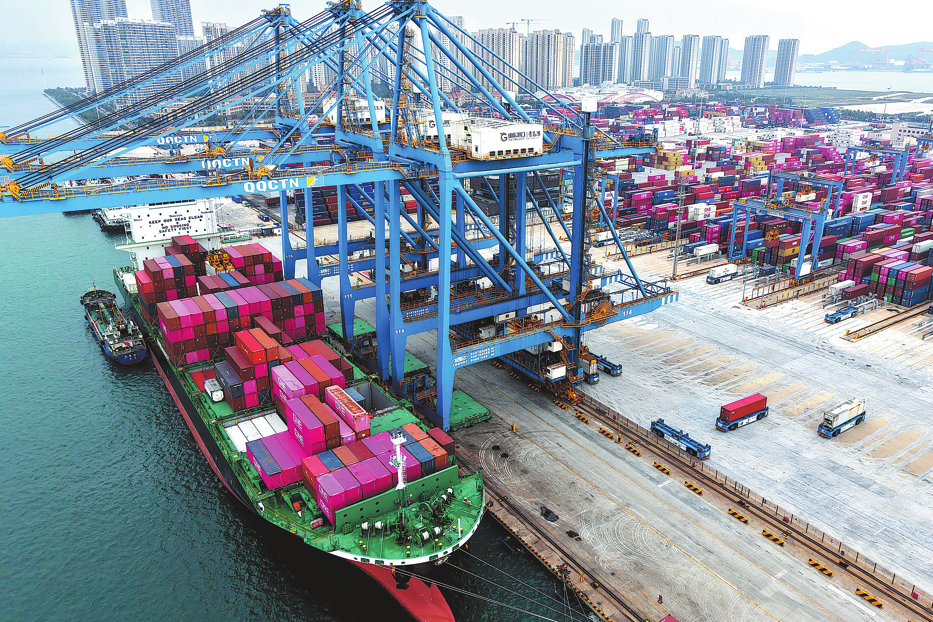
China-Latin America trade in agricultural products has grown significantly, becoming an important driver for the development of their relations in other fields. In 2022, the total trade volume of agricultural products between China and Latin America reached $80 billion, accounting for 16.5 percent of the total trade volume between the two sides. More and more Latin American countries have established increasingly close trade links in agricultural products with China, while the total trade volume of agricultural products between the two sides just surpassed $30 billion a decade ago. Last year, over one-third of Brazil's agricultural products were exported to China. Argentina, Uruguay, Chile, Peru and Ecuador are also important agricultural trade partners of China. In addition to bulk farm-products such as soybeans and beef, more diversified products such as fruits, flowers and seafood are entering the Chinese market at an accelerating pace. This fully reflects the great potential and strong complementarity of China-Latin America agricultural cooperation.
The trade in agricultural products epitomizes the mutually beneficial cooperation between China and Latin America, and jointly addressing the problems and challenges they both face in agricultural modernization will elevate the cooperation to a new height. Issues such as improving the quality and efficiency of agricultural products, preventing and controlling crop diseases and pests, and improving the agricultural ecological environment have always been the key to the high-quality development of agriculture, and agricultural science and technology is undoubtedly a powerful tool to solve these problems. Since the beginning of the new millennium, China and Latin America have promoted pragmatic and in-depth cooperation in the field of agricultural science and technology. In 2011, the China-Brazil Joint Laboratory of Agricultural Sciences was established, which was the first joint research platform for agricultural science and technology cooperation established by China overseas. China has also set up joint research institutes on agricultural science and technology with Argentina, Peru, and other countries. These institutes have created conditions for the two sides to jointly solve problems in the fields of biotechnology, crop breeding and agricultural product processing, and have become models for agricultural cooperation under the framework of the Belt and Road Initiative.
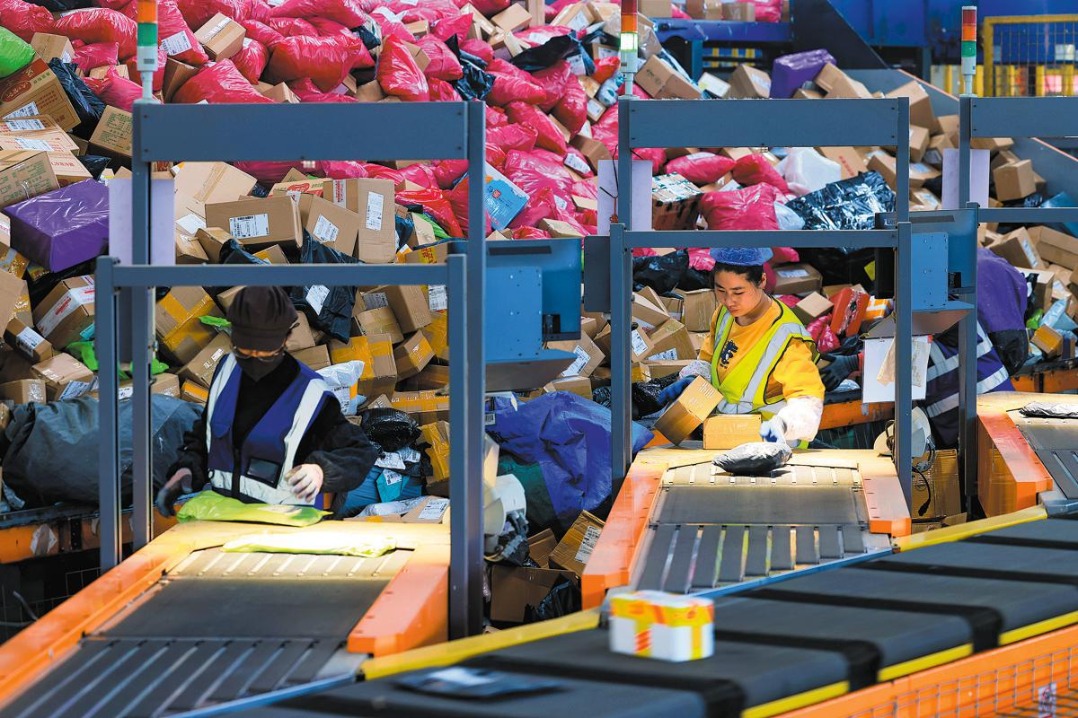
Agricultural cooperation between China and Latin America has gradually spread to other fields, forming an "agriculture+"cooperation model. Agriculture is a pillar industry in many Latin American countries, covering various fields. Logistics is an important link affecting the transportation and trade of agricultural products, and also a major factor containing the further expansion of agricultural exports. Under the Belt and Road Initiative, China and Latin American countries are working together to overcome this bottleneck. For example, the Renovation of the Belgrano Freight Rail System in Argentina by China Machinery Engineering Corporation has significantly improved the stability of train operations, greatly increased the grain transport capacity, and further unlocked the potential of agricultural trade between Argentina and China. Not only in logistics, the "Chinese + Agricultural Science and Education Development Center" jointly built by China's South China Agricultural University and Brazil's Federal University of Mato Grosso and the Autonomous University of Chapingo in Mexico are concrete examples of "Agriculture+". This also enables the fruits of China-Latin America agricultural cooperation to better benefit local people and helps realize the extensive consultation, joint contribution and shared benefits of the Belt and Road Initiative.
Although China-Latin America agricultural cooperation has achieved rapid development, it also faces many challenges due to multiple factors such as the impact of the COVID-19 pandemic, global climate change and geopolitical confrontation. In order to promote the sustained and in-depth development of China-Latin America agricultural cooperation and jointly shape the resilience of cooperation, both sides should continue to make joint efforts in the following two aspects:
First, they should further highlight the "agriculture+" cooperation model to tap the potential of agricultural cooperation. Facing changes in the international environment, more possibilities for cooperation have emerged in China-Latin America agricultural cooperation. For example, after the outbreak of the Russia-Ukraine conflict, global fertilizer prices rose sharply, resulting in increased agricultural production costs. Brazil, Argentina and other countries are important importers of fertilizers, and have a high dependence on imports. If China and Latin America can explore further cooperation in this field, both sides will benefit. Brazil, Argentina and other countries have been affected by climate change. If China and Latin America can deepen cooperative research in the field of climate change, both sides will benefit.
At the second China-Latin America and Caribbean Agricultural Ministers' Forum, China announced that it would strive to bring total trade in agricultural products between China and Latin America to more than $100 billion by 2030. As long as the two sides work intensively, there is still huge potential for agricultural cooperation between China and Latin America, and it can lead to cooperation in more fields.
Second, the two sides should also continue to improve the institutional construction for China-Latin America agricultural cooperation and deepen the exchange of governance experience in the agricultural field. Policy communication is an important guarantee for the construction of the Belt and Road Initiative, and institutional construction and top-level design are crucial for good policy coordination. Currently, the China-Latin America and Caribbean Agricultural Ministers' Forum has become an important platform for both sides to comprehensively deepen mutually beneficial agricultural cooperation. China has also established agricultural cooperation mechanisms with most Latin American countries. China has also put forward the Global Development Initiative and set up the China-LAC Cooperation Fund. How to make better use of these cooperation mechanisms and clarify their positioning is essential to further deepening China-Latin America agricultural cooperation. China and Latin America share similar goals in green agricultural development, food security and increase of farmers' income, and are exploring their own distinctive paths of agricultural modernization. Both sides should strengthen exchanges on governance experience in the agricultural field. Only by communicating more ideas and sharing China's development experience in rural vitalization and agricultural e-commerce with Latin American countries can we better explore a development path suitable for developing countries and truly shape China-Latin America agricultural cooperation into a model of South-South cooperation.
The author is secretary-general of the Center for Latin American Studies at Renmin University of China. The author contributed this article to China Watch, a think tank powered by China Daily. The views do not necessarily reflect those of China Daily.
Contact the editor at editor@chinawatch.cn.