Green essentials
China-US climate cooperation should be consolidated by means of climate diplomacy and economic and trade cooperation








China-US climate cooperation should be consolidated by means of climate diplomacy and economic and trade cooperation
Due to the differences between the two countries in terms of national development strategies and climate governance, there are many contradictions and divergences between China and the United States on climate change cooperation.
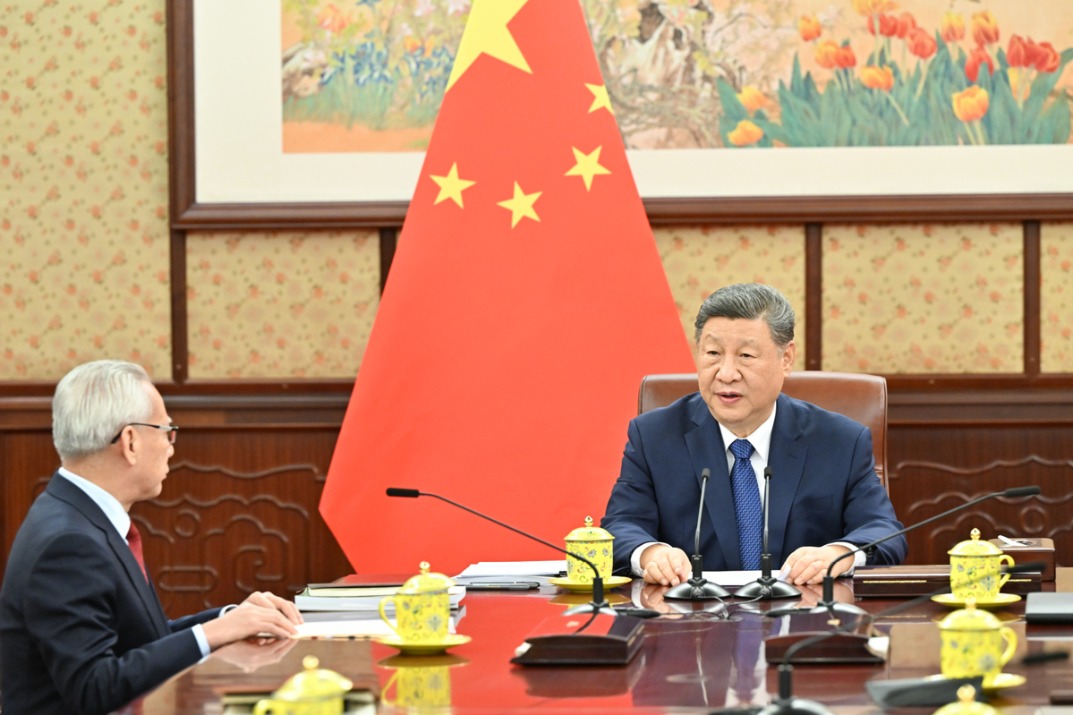
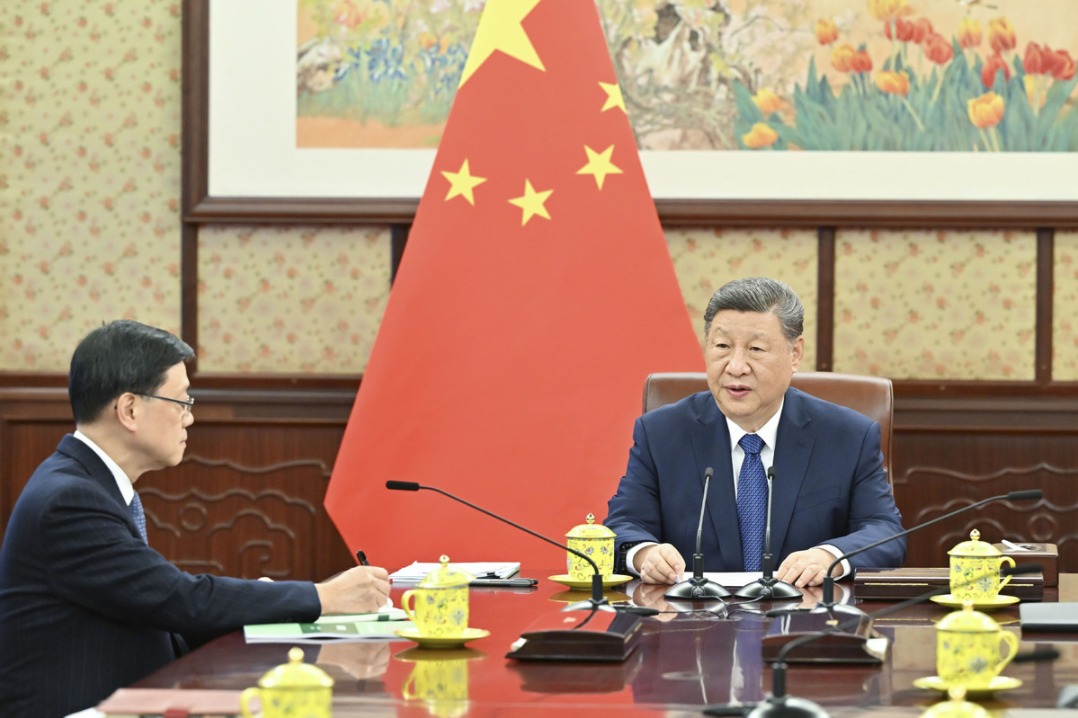
However, the newly released joint statement indicates that they have now reached a consensus on the need for them to enhance their cooperation to address climate change.
China-US climate cooperation is not only an important stabilizer of bilateral relations, but also a crucial force for advancing the global climate governance process. China-US climate cooperation has promising prospects for future development, but there are also certain risks and challenges.
China and the US have played key roles in the international climate governance system. Both countries have made positive efforts to accelerate the transformation of the energy structure, promoting green technology innovation, and enhancing their independent contributions to climate governance. Strengthening their climate cooperation is of profound significance to addressing global climate change and promoting the green transition.
China and the US share common ground in the development of green industries and can further expand relevant bilateral trade. Currently, the US has invested a lot of research and development funds and policy support in industries such as new energy vehicles, battery technology, solar photovoltaics and aviation, while also constantly introducing a large number of transformative products. China has formed strong competitiveness in the industry chains for new energy vehicles, photovoltaics and lithium batteries, and continues to seek foreign trade and technological cooperation in green industries. If the two sides can agree on trade cooperation in green industries, it will promote the overall progress of these industries worldwide.
China and the US are also taking a leading role in green science and technology innovation, and promoting bilateral cooperation on such technology is of great significance to the realization of the green transition. By strengthening academic exchanges, investing research funds, and sharing scientific and technological achievements, China and the US can vigorously promote innovative development in new energy, including wind power, photovoltaic, batteries, electric vehicles, energy storage, hydrogen energy, carbon capture and storage, and smart grids. Other countries can learn from and apply these advanced green and low-carbon technologies to jointly contribute to addressing climate change.
China-US climate cooperation has a long history. Although the specific progress has been less than satisfactory, the future development prospects are relatively bright. Yet, under the influence of many factors, China-US climate cooperation still faces some challenges.
First, the two countries currently have significant differences in the interpretation of the "common but differentiated" principle. This principle is the core of global climate responsibility sharing, and requires that both historical differences in emissions and respective capacity levels be taken into account in the allocation of emissions responsibility. The US believes that developing countries should be classified according to several indicators, such as the level of economic development, total greenhouse gas emissions, and energy structure characteristics, to distinguish major developing countries, such as China, from small or least developed countries. The US argues that large developing countries, such as China, should shoulder more of the emissions reduction burden similar to developed countries. The US has denied China's developing country status and is trying to compel China to increase its emissions reduction efforts. However, China has always maintained that the principle should be firmly observed, and that China's development rights and capacities as a developing country must be taken into account.
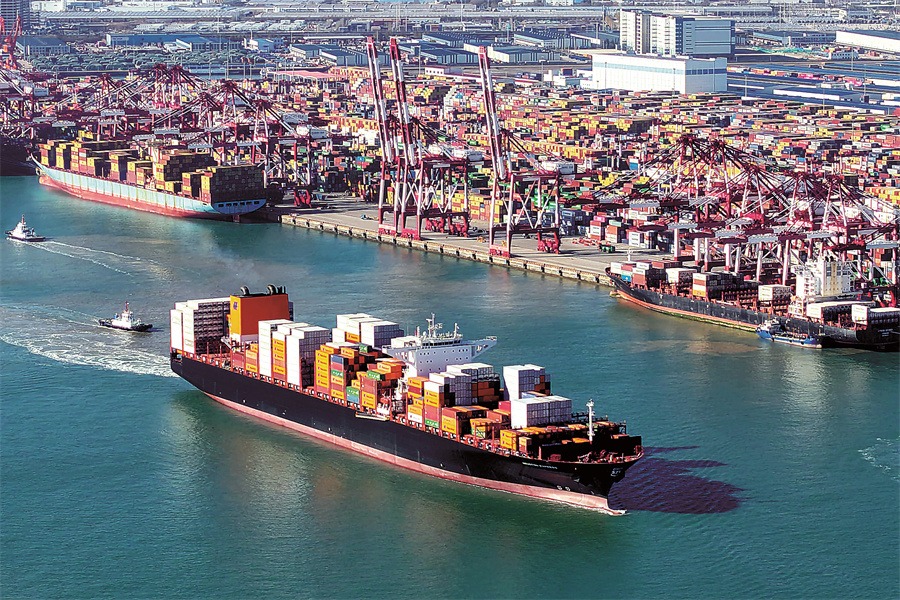
Second, in the trade of high-carbon products, in order to protect its own industrial interests, the US is trying to suppress China by using restrictive means such as climate trade barriers. Since the implementation of the EU's carbon border adjustment mechanism, the US has been trying to follow suit and introduce its own version of the "carbon tariff". In June 2022, the US proposed a draft of Clean Competition Act, hoping to use a carbon border adjustment mechanism as a new low-carbon trade policy. In June 2023, a US bipartisan coalition asked the Department of Energy to collect product emission intensity data to prove the low-carbon advantages of the US industry and hold high-emitting countries accountable for their emissions.
Third, in the field of green and low-carbon industries, the divergences between China and the US are leading to trade frictions. At present, the green industry has become an important driver for economic growth and major economies are building their own competitive industries through industrial support and technological innovation. China and the US are no exception to this. Both countries are actively investing in new energy vehicles, photovoltaic and wind power equipment manufacturing, battery manufacturing and other fields to compete for a dominant position in the green industry. Such overlapping and fierce competition in economic development fields may lead to disputes between China and the US over trade policy, technology patents and other aspects, which is not conducive to the two sides carrying out climate cooperation.
In the face of these challenges, China needs to be proactive and make early arrangements, and seek key breakthroughs to stabilize China-US climate cooperation based on the two major areas of climate diplomacy and economic and trade cooperation.
First, it should actively promote the establishment of a long-term and stable climate communication mechanism and a high-level climate cooperation alliance. China and the US should strengthen dialogue and communication and conduct cooperative talks on climate change through various economic cooperation forums, diplomatic and political forums and the United Nations Climate Conference. More importantly, as influential developing and developed countries, China and the US can actively propose the establishment of a climate cooperation alliance. Currently, developing countries and developed countries lack effective and pragmatic communication. Collaboration between China and the US can serve as an important model for the two camps to build cooperative relations.
Second, due to the policy uncertainty caused by the election cycle in the US, it is difficult for China to quickly reach a consensus with the US on important areas such as the division of emissions reduction responsibilities and the transfer of funds. However, both countries can interact more flexibly with local governments, cities, businesses and NGOs in the US to broaden the popular support for China-US cooperation. China can establish contacts with US states, cities and enterprises to demonstrate the sincerity of its emissions reduction efforts through policy discussions, sharing of practical cases and exchanges of cutting-edge technologies.
The author is a researcher with Tan Kah Kee Innovation Laboratory and dean of the China Institute for Energy Policy Studies at Xiamen University. The author contributed this article to China Watch, a think tank powered by China Daily. The views do not necessarily reflect those of China Daily.
Contact the editor at editor@chinawatch.cn.