In the light of reason
Openness contributes to economic development's ultimate objective of improving human well-being







Openness contributes to economic development's ultimate objective of improving human well-being
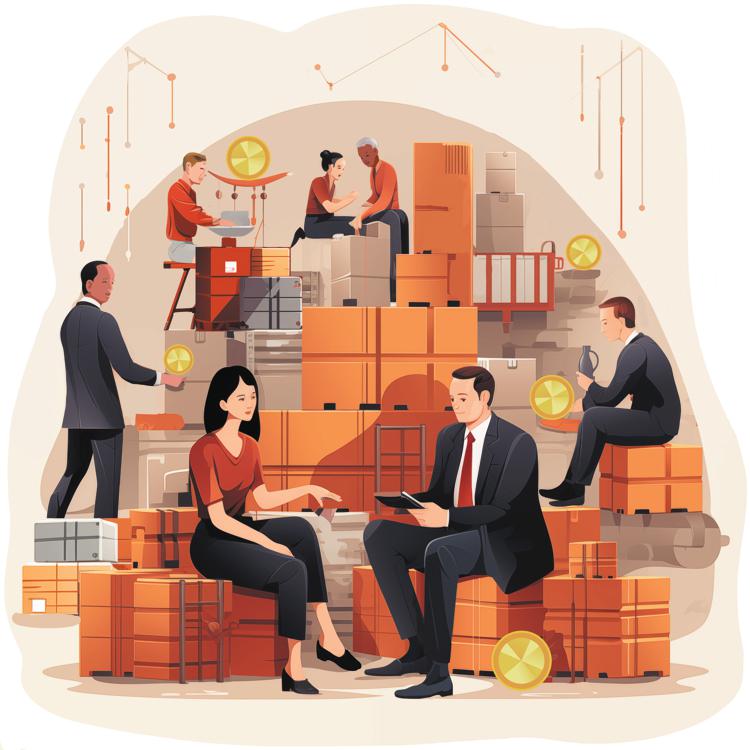
Economists know by now what's good for economic growth and what is not good. Investment in new technology and in people, through education, promotes growth. Political conflicts and excessive bureaucracy undermine it. We also know that openness, acting through international trade, gives access to a larger market size. Larger market size enables countries to promote specialization and efficiency, explore fully their comparative advantages, and bring growth beyond the limits that countries could achieve if they tried to do it all by themselves. In addition, openness promotes mutual understanding between people and reduces conflict.
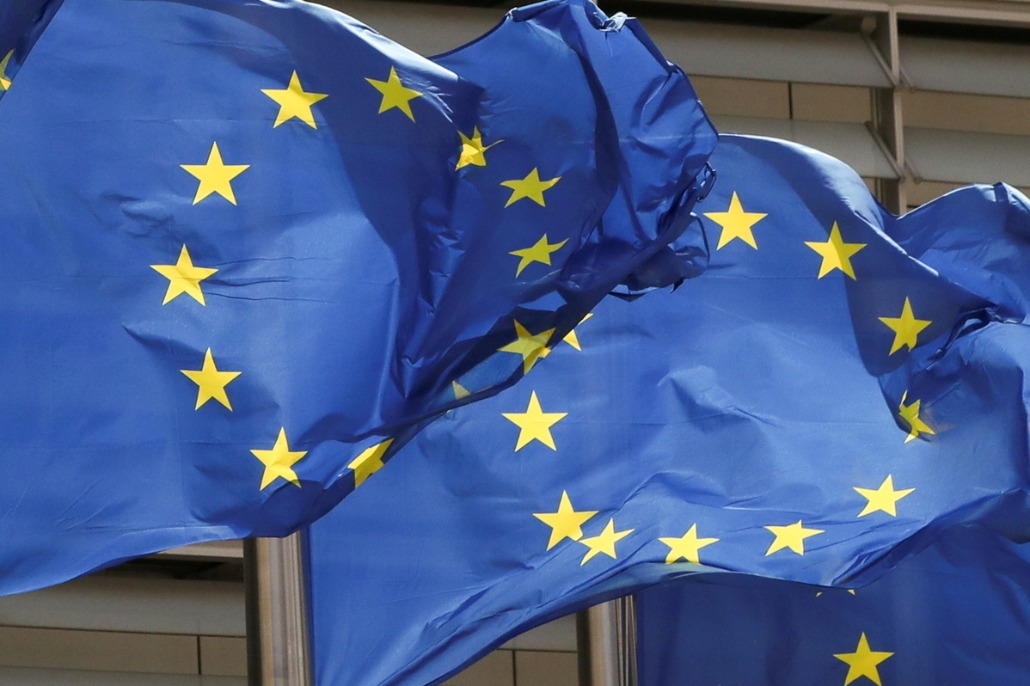
Look at Europe after World War II. After two destructive wars in the 20th century, the founding fathers of the European Union had one paramount objective in mind: create an economic union for the rival countries and increase their interdependence, so in future a war would not be just unlikely, but unthinkable. Today indeed, a war in Europe among the members of the EU is unthinkable.
There is a lot of diversity across the world and openness makes it possible for us to build on this diversity, for the benefit of humanity. Let me emphasize the obvious once again, as I so often do. The purpose of economic development is to eliminate poverty and improve human well-being. It is not to make the rich richer or the powerful more powerful.
Openness contributes to this ultimate objective. A world that engages in free social, cultural and economic interaction, including the exchange of ideas and travel across borders, is one that is superior to a system of recluse nations. Understanding each other's cultures and social conventions is a prerequisite for peaceful coexistence; exchange of goods and ideas opens horizons that cannot be unlocked by single isolated countries.
Openness doesn't have to be a sudden event, but it must be guided by good practice. The key is to build the openness capabilities of countries, and the right time to put them to use and open up the economy will arrive. Every country should be prepared to open up when the right time comes. The World Openness Report gives us a guiding principle, that all should follow: "Let the light of science and reason guide the world through the thorns to a smooth path". Guided by this principle we can achieve a lot.
Economic openness received a lot of support and grew rapidly in the 1980s, with concurrent movements by several large countries. On the front line we find China and its opening-up policies, introduced gradually, but at sufficient speed, to turn it, 30 years later, into the biggest trading nation on earth. In Europe, the EU members were establishing the single European market, with total economic, social and cultural openness. The North American Free Trade Agreement was also being established by the United States and its neighbors. Given the increased interdependence between nations that was brought about by these developments, countries established first the General Agreement on Tariffs and Trade and then the World Trade Organization, which encouraged more opening-up and intervened to resolve disputes, when they arose. These trends became known as globalization, a push that led to a lot more openness than before.
Unfortunately, the current situation with globalization and opening-up is not so good. As the World Openness Report emphasizes, we have been regressing, at least for the past 15 years. As usual with socioeconomic developments, there is no single reason for this that one can put one's finger on, but there is no doubt that the worsening geopolitical situation worldwide is not helping. The Report clearly shows that the openness policy index has experienced a decline, and this needs to be reversed if we are to progress. Nations are becoming suspicious of each other, and instead of taking a global view of the world, they are taking a more limited view that centers on relations with nations that they consider friendly. This is not good for globalization and openness, because it compartmentalizes the world, and the compartments are not necessarily the ones that give maximum efficiency.
Apart from politics, technology is playing a big role in recent developments. The driving force of globalization has been the location of economic activity along elaborate supply chains, with parts of production located in different countries, based on their comparative advantages. For example, a large company producing a labor-intensive good might decide to save costs by locating its production in countries with low wages. New technologies, with their wonderful potential, have moved on from this simple idea of offshoring, which benefited poorer countries in the past. Nowadays, "data is the new currency". Companies locate in places where they can get the best data for their operations, process it to their advantage and trade. This development makes it possible to "onshore", namely, to bring some production activities home, or "friend-shore", to locate in friendly countries which would be more open to giving foreign companies more flexibility and more data even about strategic issues. Although this might benefit some large multinationals, the International Monetary Fund has recently warned that it is likely to lead to lower global growth than if we had genuine global opening-up.
Openness necessarily involves cross-border collaboration. If there ever was one issue on this planet that we need more cross-border collaboration, indeed that we depend on for our survival, is the protection of our environment. Nations have agreed many brave actions that need to be taken, and the United Nations has compiled several sustainable development goals. But unfortunately, we have been underperforming. Net zero carbon emissions need a lot more action than is being pursued at present.
An interesting connection made, which has been around but still not well understood, is the connection between digital technologies and environmental policies. There is no doubt that the future belongs to digital technologies. Communication costs in the digital age have been cut to virtually nothing, and contracts, production practices and trade will depend on them. We should be increasing our efforts to use AI and other digital technologies to improve our performance on our environmental objectives.
The author is a professor of economics at the London School of Economics and the 2010 Nobel Laureate in Economic Sciences. The author contributed this article to China Watch, a think tank powered by China Daily. The views do not necessarily reflect those of China Daily.
Contact the editor at editor@chinawatch.cn.