Coping strategies








Ramping up climate cooperation is crucial to advancing the green transition of countries participating in the BRI
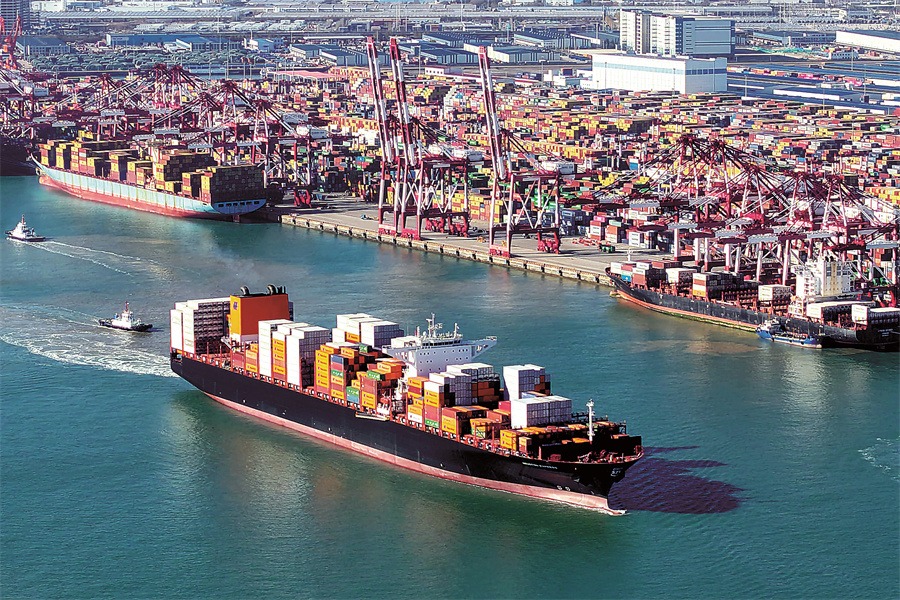
By the end of June, more than 150 countries and over 30 international organizations had signed Belt and Road cooperation documents with China. Most participating countries are emerging economies and developing countries, which face such problems as environmental pollution and ecological degradation. Climate cooperation will help enhance their capability in coping with climate change and promoting economic restructuring.
Climate elements along the routes of the Belt and Road, such as temperatures, precipitation and extreme weather events, have all changed over the past few decades. In particular, temperatures have risen notably. In places such as China's western region, Central Asia, West Asia, Northeast Africa and Central and Eastern Europe, the ground temperature has increased by over 0.6 degree Celsius every 10 years, a rate higher than the global average. In terms of precipitation, overall, the precipitation in the Belt and Road regions is rising. Southeast Asia, South Asia, and China's eastern and southern regions are witnessing notably increased precipitation, whereas Western Europe and the area ranging from China's northeastern region to China's western region and then to North Africa are witnessing decreasing precipitation.
Regarding extreme weather events, the increasing frequency of high temperatures, decreasing frequency of low temperatures, and increasing frequency and intensity of extreme precipitation events have led to decreasing frequency and duration of droughts. Such changes will affect the ecological system and social development of the Belt and Road regions. In a nutshell, the changes in temperatures and precipitation will result in more frequent and more intense extreme weather events. Particularly, regional disparities in precipitation will widen even further.
Climate change is projected to have an irreversible negative impact on the Belt and Road regions in such fields as water resources, agriculture and biodiversity.
Regarding water resources, the Belt and Road regions will witness slightly increased, but unevenly distributed water resources. Water abundant areas will have even more water resources, whereas those with water stress and scarcity will face the challenge of further shortages.
In the field of agriculture, the negative impacts of climate change on agricultural production have begun to materialize and will continue and intensify. Mid- and low-altitude regions will face the threat of decreasing crop yields and high-altitude regions will probably have higher crop yields. South Asia and Africa are high-risk regions, Europe and West Asia are medium-risk regions, and China and Central Asia are low-risk regions.
As for biodiversity, global climate change has already exerted a huge impact on the biodiversity of the Belt and Road regions. Rising temperatures will accelerate the speed of animal migration, causing habitat loss for rare and endangered species. Rising sea levels threaten the habitats of species in coastal areas.
The vast majority of countries participating in the BRI are still in the initial stage of industrialization. Most of them have a more urgent need for adaptive technologies than mitigation technologies.
Primary industry — referring to farming, forestry, animal husbandry and fishery — needs adaptive technologies the most, such as high-efficiency irrigation, plant breeding for disease resistance, and conservation tillage. The water resources sector is second only to the primary industry, which urgently needs water harvesting, water saving and water-efficient technologies.
As for mitigation technologies, the energy sector is a main user of such technologies, particularly the high-profile renewable energy technologies such as wind, solar and hydro power technologies. Technologies for high-efficiency boilers and boiler improvement are also in demand.
Most countries participating in the BRI are developing economies with poor infrastructure and the funding problem is a core concern. Currently, there exist funding shortages in green and climate-related projects in the Belt and Road regions, which requires support from the international community.
A hefty amount of capital is still needed to fund the emissions reduction endeavors and green transition in the Belt and Road regions. It is estimated that if the cost of emissions reduction is $40 per ton, the mitigation funds demand of the 65 BRI countries to realize their nationally determined contributions stands at $3.18 trillion and their total demand for climate funds is $8.3 trillion.
Countries participating in the BRI have great differences in their capabilities for capacity building to tackle climate change. Northeast Asia and Southeast Asia prioritize education, training and the enhancement of public awareness in promoting capacity building, whereas Central Asia, West Asia and North Africa pay more attention to the assessment of mitigation measures.
In the years to come, the Belt and Road regions will experience more frequent and more intense extreme weather events, which will have a growing impact on water resources, agriculture and biodiversity. However, these countries and regions have disadvantages in organizing disaster response, disaster warning, disaster prevention infrastructure and legal and policy frameworks. There is a dire need for them to strengthen capacity building in disaster prevention and mitigation, ecosystem governance and biodiversity protection.
Through efforts to promote international cooperation on climate change and Belt and Road cooperation, China is actively contributing to the building of a community with a shared future for mankind.
First, China needs to improve the top-level design for climate cooperation, aligning it closely with the country's low-carbon transition and the development of its western region. The China International Development Cooperation Agency could play an even bigger role and make overall plans for and coordinate all foreign aid affairs.
Second, financial institutions and scientific and technological institutions should be encouraged to carry out pragmatic cooperation in climate-related areas.
Third, it is essential to promote dialogue and exchanges among tech professionals by jointly building an array of technology transfer centers and demonstration and promotion bases for advanced practical technologies, such as key technologies for environmentally friendly and climate-smart agriculture and new energy vehicles.
Last, it is vital to facilitate the sharing of experiences and practices. For example, platforms such as the China-ASEAN Expo and the Boao Forum for Asia could be better used to strengthen capacity building for the green development of the Belt and Road.
Wang Yi is a professor at the Institutes of Science and Development at the Chinese Academy of Sciences (CASISD) and deputy director of the National Expert Committee on Climate Change. Tan Xianchun is a professor at the CASISD and vice-director of the Center for Carbon Neutrality Strategy at the CASISD, and one of the leading authors of the IPCC Sixth Assessment Report. The authors contributed this article to China Watch, a think tank powered by China Daily.The views do not necessarily reflect those of China Daily.
Contact the editor at editor@chinawatch.cn.