Rural vitalization key to reversing no-marriage trend








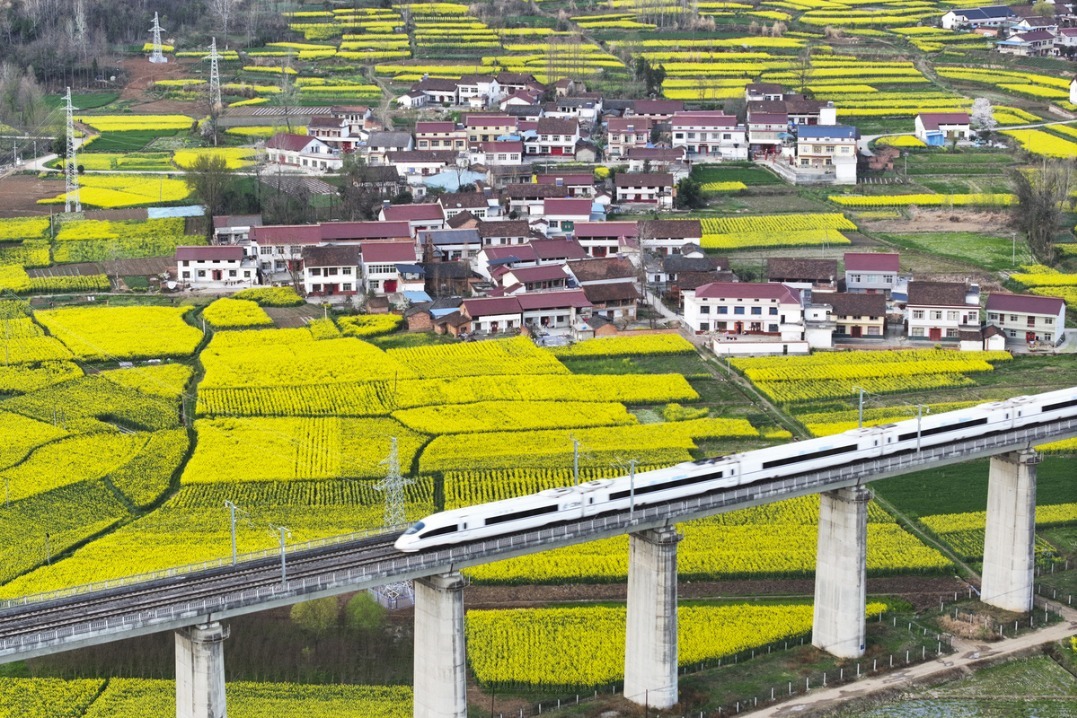
The trend of not getting married is spreading in some rural areas. While changes in the attitude of young people toward marriage is a factor to some extent, the main reason is that the financial pressure after marriage is too great, as the overall economic income level in rural areas is significantly lower than in cities.
With the continuous acceleration of urbanization and the rapid outflow of the population, most rural areas are experiencing continuous population loss. Since it is easier for rural women to marry in cities than rural men, the gender ratio in countryside tilts further to the male, resulting in an obvious gender imbalance there.
After working and living in cities for a long time, the farmers-turned migrant workers' requirements for a better material life are markedly higher than those of their predecessors who had few opportunities to work and live in cities.
Before the underlying economic causes are addressed, and the rural-urban gap is filled, the no-marriage trend in the countryside is hard to reverse.
To effectively curb the spread of the no-marriage trend in rural areas, the government is required to further improve various marriage and childbearing welfare mechanisms and public services, and further narrow the gap between urban and rural areas.
Some suggest that governments at various levels introduce special fertility policies for rural areas, and formulate reasonable policies for those having a second child without fixed jobs and fixed incomes, such as financial incentives, purchase of insurance for retirement, house purchase subsidies and assistance.
Also, the government needs to take more concrete actions to create more jobs in the countryside to attract young people back. In particular, it should be noted that the imbalance in the gender ratio of the rural population is also directly related to the fact that most rural areas provide fewer employment opportunities and space for women, leading to a severe loss of the female population.
Since men have a higher tolerance for manual work, they are more likely to stay in the countryside. Accordingly, in order to make the rural population structure healthier, the cultivation of related industries and the arrangement of vocational training services must take more into account the needs of the female population.
Therefore, it is worth promoting some industries that meet women's employment needs in rural areas and small towns.