Removing barriers good for US, China








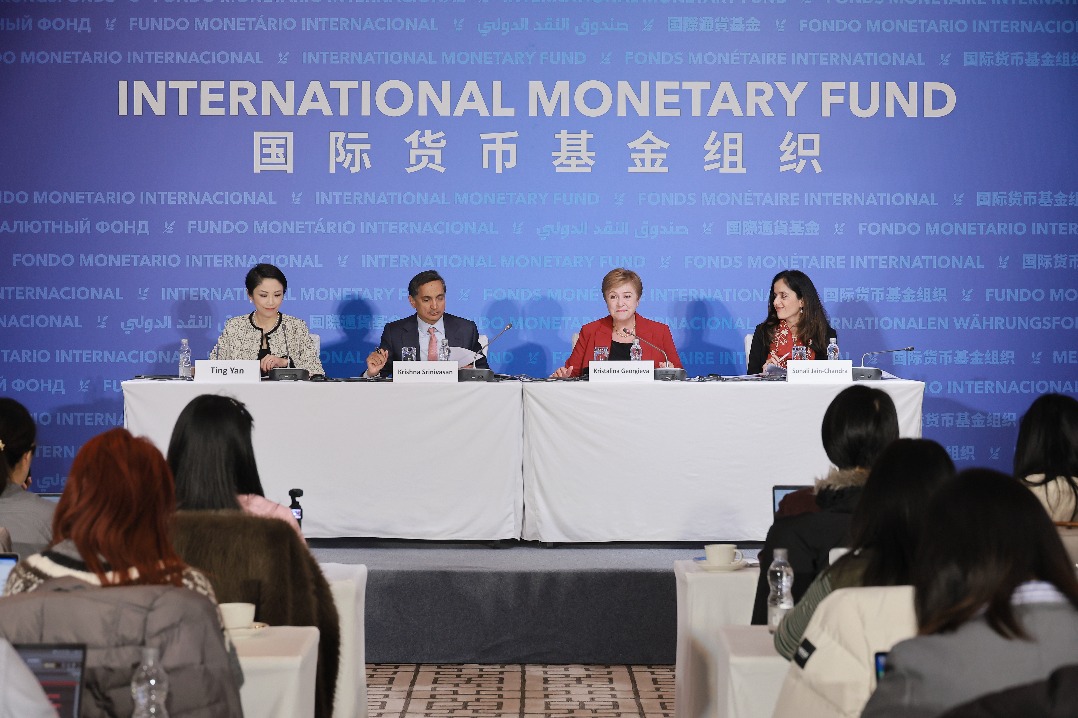
When US Treasury Secretary Janet Yellen dined at one of the oldest Cantonese restaurants Taotaoju after landing up in Guangzhou Thursday, the US side demanded that the privacy screens be moved so that they could enjoy cuisine together with local diners sitting around.
Such a "remove-the-barrier" request, a gesture of openness that allows Yellen and her entourage to have a direct engagement with the Chinese people, was also a graceful pose for the camera. However, don't forget that there are formidable barriers hindering interactions between China and the United States, which wait to be dismantled for the good of the two nations as well as the rest of the world.
The specter of protectionism has been haunting Washington. Multiple America's top decision-makers, both Republicans and Democrats, have been in the grip of the you-win-I-lose Cold War mentality when looking at China-US relations. In their eyes, China's progress equals America's setbacks.
Fabricating the so-called "China threat" narrative, Washington has erected all kinds of barriers between the world's top two economies, ranging from trade tariffs, high-tech embargoes, as well as visa restrictions for Chinese academics and students, among others.
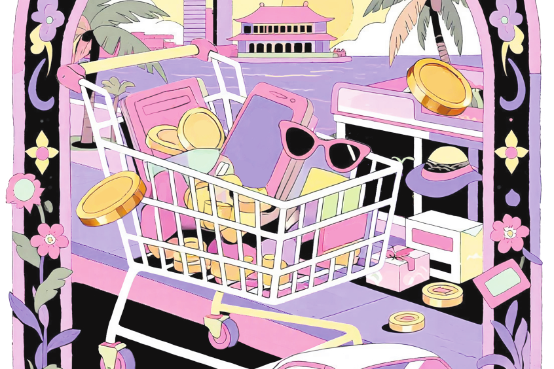
For starters, tariffs on Chinese imports have caused higher prices of related items, and contributed to rising inflation that afflicts the US economy in recent years. Over the past four years, grocery prices have jumped by 25 percent, according to the US Department of Agriculture.
Washington's attempts to decouple the American economy from that of China, though Yellen denied on Friday, have also, in effect, come to naught.
Bilateral trade did decrease last year, and the US trade deficit with China fell to its lowest in over a decade. However, the rising exports from countries like Vietnam and Mexico to the United States consisted of considerable inputs sourced from China.
According to the McKinsey Global Institute report published in January, even as China's share of US manufactured imports declined from 2017 to 2020, its share of the value added in goods consumed in the United States actually rose.
In the meantime, China's development, not least in technological innovation, has kept up its momentum even in the face of America's all-round crack-down. Last year, Huawei, China's telecommunications company, surprised the world by launching a smartphone with new chips despite years of chip sanctions by Washington. Also, China's pursuit of high-quality development is boosting its advanced manufacturing industries.
During a recent interview with CNBC, former US Commerce Secretary Carlos Gutierrez, who attended this year's Boao Forum for Asia last month in China's island province of Hainan, recalled his visit to an unmanned factory in China, describing it as "the most advanced manufacturing facility" he has ever seen in his life.
He said that innovation, not sanction, should be the right way for the United States to out-compete China.
As Washington has grown increasingly agitated over China's booming green industries, electric vehicles (EVs) and solar panels in particular, the straw it clutches at is rehashing the old "overcapacity" rhetoric and threatening to impose higher tariffs. In fact, levies on some Chinese imports are already so high that one could hardly see a Chinese-made electric car running in the US streets.
Suppressing China's EV-related industries won't help America grow its own. Only cooperation can. Some Chinese and American companies are giving it a try. According to media reports, US automaker Ford and China's CATL, a leading EV battery maker, are considering building a battery plant in the US state of Michigan or Virginia. The two sides should create more conditions for the plan to materialize.
Before flying to China, Secretary Yellen said her China visit this time is to advance a "healthy economic relationship." From Beijing's perspective, a healthy relationship should be one featuring openness, equality and mutual benefits, while any unilateral measure to stifle China's trade and technology development will only create more risks.
It is expected that in the coming days, Secretary Yellen can work with the Chinese side to set the stage for the two countries to start breaking down some of the barriers hindering stable and mutually beneficial bilateral cooperation. Or at least, some headway is hopefully made to forestall any further piling-up of the lose-lose blocks.