Philippines' provocation undermines regional stability







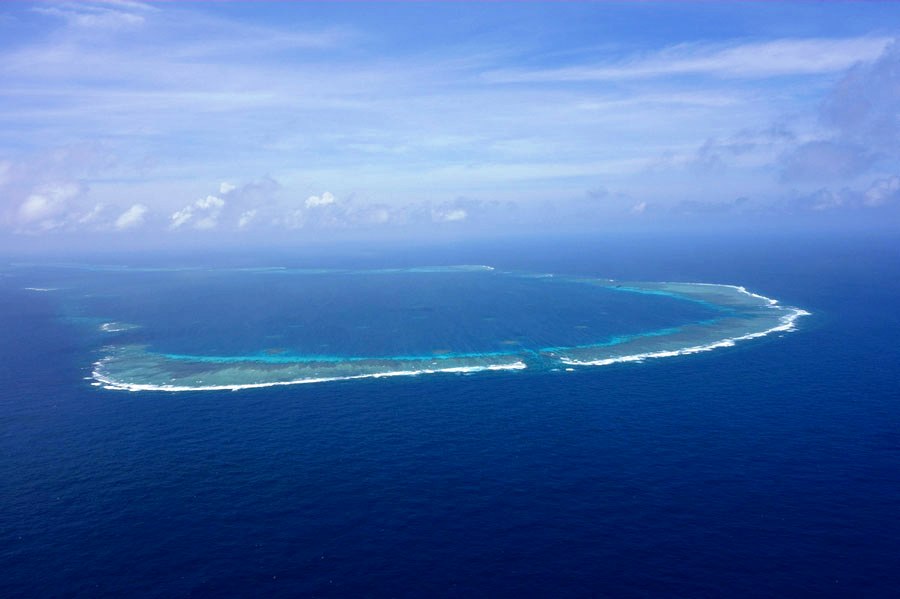
In recent months, the Philippines, supported by some external forces, has fueled tensions in the South China Sea, despite the fact that China has indisputable sovereignty over the Nanhai Zhudao (the South China Sea Islands) and their adjacent waters.
It is imperative to recognize that any activities disrupting the South China Sea situation and creating buzzes will undermine regional peace and stability.
By continuously inviting external forces into the fray, the Philippines is not just undermining the established mechanisms for conflict resolution but actively sabotaging the efforts of China and the Association of Southeast Asian Nations (ASEAN) to maintain peace and stability in the region.
China and ASEAN countries have long been committed to properly managing and resolving disputes through dialogue and consultation between states directly involved. They have worked together to jointly maintain peace and stability in the South China Sea, which has kept the South China Sea situation generally stable.
The maritime disputes between China and the Philippines have heated up because the Philippines, backed by outside players, has been reversing its words and provoking China.
The involvement of external actors in its joint naval exercises and the upcoming trilateral summit among the Philippines, the United States and Japan reveal a stark truth: the Philippines is recklessly exploiting these platforms to solicit external support for its provocative actions.
These external forces, driven by their own strategic agendas, readily exploit the Philippines' maneuvers to interfere in regional affairs and contain China.
As noted by Anna Malindog-Uy, vice president of the Manila-based think tank Asian Century Philippines Strategic Studies Institute, the Philippines is being used "as a pawn and a proxy."
"The maritime issue is between the Philippines and China, and the United States is not a party to the quarrel and hence should refrain from intervening or meddling in this matter," the expert said, warning that the US meddling in the South China Sea issue is "akin to fueling a fire, complicating further the already complex situation."
Regardless of the Philippines' attempts to smear China, it cannot alter the indisputable reality that China's sovereignty, rights and interests in the South China Sea were established over the long course of history and are solidly grounded in history and the law.
China has always been committed to resolving the South China Sea issue through dialogue and negotiation.
In 2002, China and ASEAN countries signed the Declaration on the Conduct of Parties in the South China Sea, jointly committing to resolving "territorial and jurisdictional disputes by peaceful means, through friendly consultations and negotiations by sovereign states directly concerned."
In recent years, China and ASEAN countries have actively promoted negotiations on the Code of Conduct for the South China Sea. Tensions escalated only after the Philippines backtracked on its commitments in the declaration and a series of bilateral agreements with China.
The Asia-Pacific region is the most dynamic in the global economy, and its stability and prosperity lies in the fact that it is for the people of Asia to solve the problems of Asia, and maintain the security of Asia.
Maintaining calm and stability in the region serves the interests of regional countries and contributes to growth in the global economy. Achieving these goals requires the constructive efforts of all related parties.