Overcapacity, a protectionist rhetoric







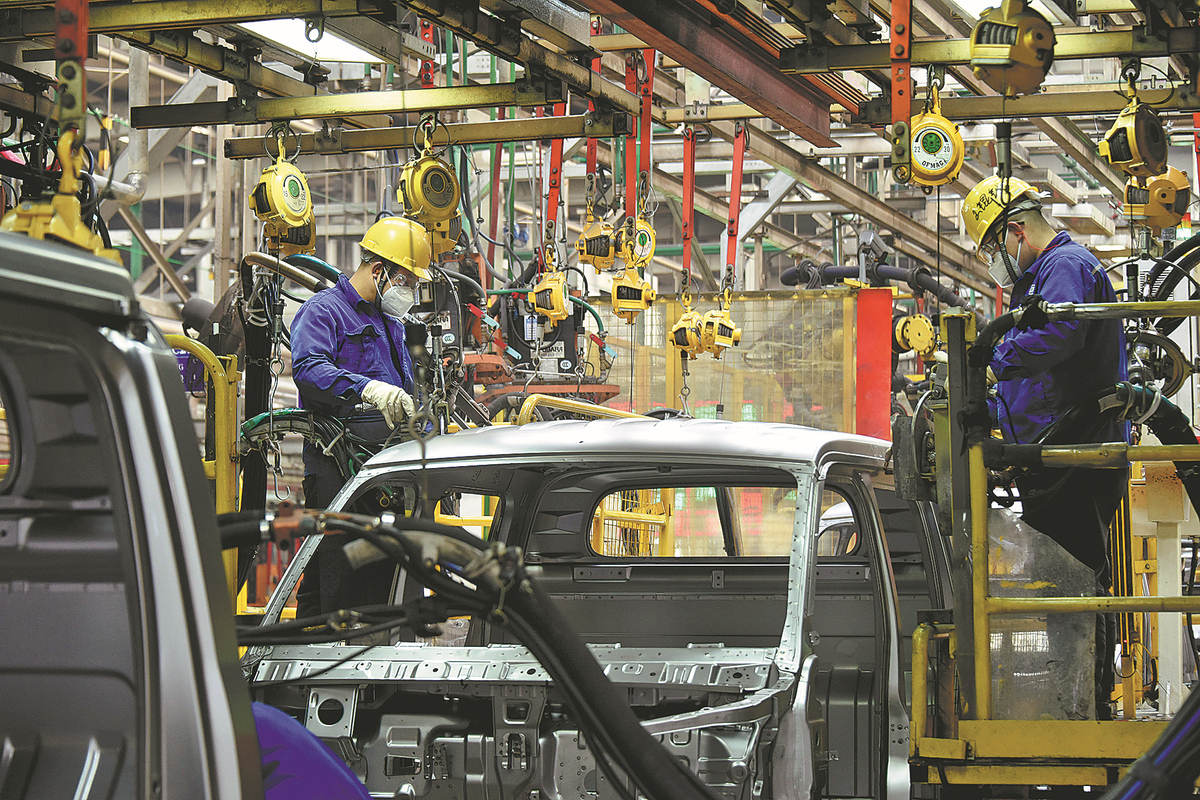
In view of China's rise to the top of the global car export market, Washington's response has been marked by a palpable unease.
Rather than addressing underlying issues with domestic competitiveness head-on, US policymakers and their allies in the media have resorted to protectionist rhetoric, invoking the convenient but dubious theory of "Chinese overcapacity" in the clean energy sector, particularly in electric vehicles, lithium batteries, and solar cells.
This tactic isn't new. It reflects a longstanding pattern of politicizing economic and trade issues to suit the US agenda: thwarting the ascent of Chinese rivals to preserve the longstanding monopoly of the United States and its Western allies in the global economic hierarchy.
The concept of overcapacity is deeply rooted in economic theory. However, Washington's recent rhetoric has morphed it into yet another Sinophobic catchphrase, with an oversimplified idea that Chinese goods production in the clean energy sector exceeds domestic demand, resulting in a global overcapacity concern.
A fundamental fallacy of such "overcapacity" accusations is that contrary to an "overcapacity problem," the clean energy sector is struggling to meet global demand amidst urgent climate change concerns and widespread efforts towards energy transition.
At the end of 2023, the International Renewable Energy Agency projected that in order to keep the Paris targets alive, global renewable power capacity must grow by around 1,000 GW a year through 2030.
In 2023, a year with a record high capacity addition, the world had an increase of around 507 GW, half of what was needed to keep the 1.5-degree target within reach, according to the International Energy Agency's Renewables 2023 report.
As China transitions to high-quality development, its "new three" industries — electric vehicles, lithium batteries, and photovoltaic products — are highly sought after globally. They support countries in achieving green, low-carbon transformation and sustainable development, fostering global economic growth.
While China's clean energy vehicle industry has made significant strides forward, the United States perceives heightened competition from China in high-end industries and value chains. Furthermore, they fear that their traditional technological monopolies, particularly in developing nations, may face erosion due to China's progress.
This zero-sum mindset fails to recognize the potential advantages of cooperation and collective progress. Rather than perceiving China's advancements as a threat and rolling out more protectionist policies, Washington and its allies should join China for constructive dialogue and cooperation to tackle common challenges like climate change and sustainable development.
If history is any guide, protectionism isn't answer to the economic woes of the United States and the West. As Bloomberg recently argued, despite implementing steel protectionist measures over the past decade, Washington has failed to prevent the decline in employment within the US metal manufacturing industry.
What is worse, these measures have increased costs across other sectors of the US economy, diminishing industry competitiveness. If extended to the new energy industry, such policies would further weaken Washington's ability to address climate change.
Gary Clyde Hufbauer, a senior researcher at the Peterson Institute for International Economics, has recently warned that whether it is in terms of "decoupling" or "de-risking," it is a sign of Washington's shift toward deepening protectionism. Ultimately, it is the interests of American companies and people that suffer.
Clinging to obsolete protectionist strategies hampers global progress and sustains a cycle of distrust and rivalry. On the contrary, embracing an inclusive approach that recognizes China's contributions and aims for shared development and prosperity offers the potential for more fruitful outcomes for all stakeholders in the global economy.