Workload at grassroots level hard to ease







The voices calling to ease the workload of grassroots civil servants have become increasingly louder recently, exposing a key issue directly concerning the high-quality development of the country.
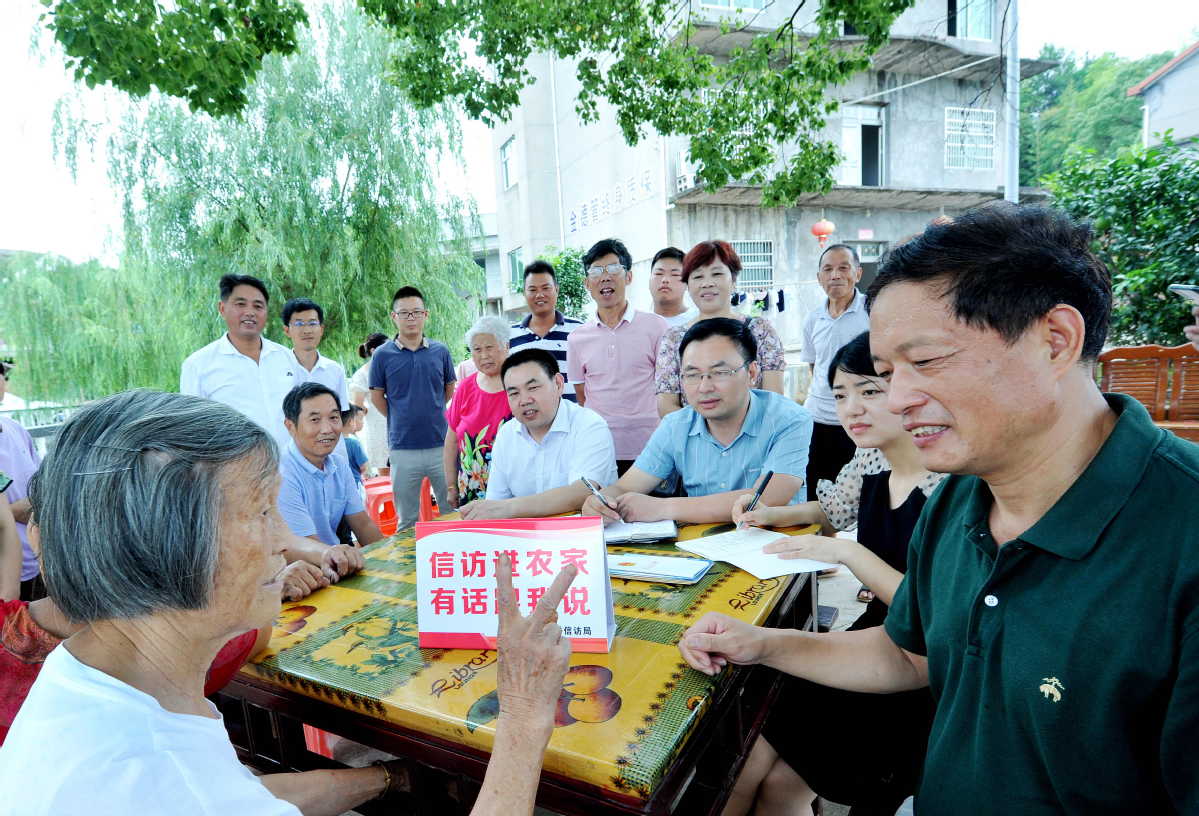
The hierarchical bureaucratic system of China means that although the grassroots government departments at sub-district and village levels constitute the large base of the pyramid-shaped governance system in the country, they are in charge of providing the majority of public services in their respective jurisdictions.
Governments at the county- and city-level and above have a complete architecture in which each bureau or department is responsible for one field of government work, such as agriculture, commerce, industry and technology, civil affairs, finance, environment protection, land and resources, education and public health. But when it comes to the village- or sub-district-level government departments, an office of several staff members might be responsible for the practical work related to all of these aforementioned fields in a village or community, which in many cases are home to tens of thousands of people.
And the policies, rules and regulations are rolled out by county- and city-level government departments, which translate into implementation of the provincial authorities' directives that are derived from the principles and guidelines of the central authorities. And it is their effects that determine how grassroots offices are evaluated by their superiors.
Many of the directives, policies and instructions they receive have specific requirements, objectives and deadlines and how the grassroots officials perform in these regards is assessed according to a strict accountability system.
Those judged to have failed to fulfill their duties might even be investigated and punished, even though not all the tasks on the to-do list and the policies they receive from the upper-level departments fit local conditions. So they have to make necessary adjustments to ensure they can achieve the desired effects.
These grassroots civil servants face pressure from both their superiors and the people. On the one hand, almost all the upper-level departments, up to the central authorities, conduct regular or unannounced examinations and inspections of how their policies and regulations are carried out at the grassroots level.
That means the grassroots civil servants, aside from their busy daily work, which might entail them being on-call round the clock for days, during the COVID-19 pandemic period for example, have to respond to these higher-level authorities' inspections at any time. Due to their reliance on their superiors for financing and evaluation, the grassroots civil servants actually have little space to bargain with their bosses. Multitasking, under great pressure, is therefore a typical feature of the work of grassroots civil servants.
At the same time, they have to address all kinds of complaints from the public and help them resolve their practical problems in daily life ranging from a broken streetlight to a missing manhole cover.
That more than 1,800 grassroots civil servants had died by 2020 in the national campaign to eliminate abject rural poverty speaks volumes of the work pressure and risks related to their duties.
It is hoped that the campaign the central government has recently launched to ease their work-related pressure and unnecessary workload does not at last trickle into an extra workload to be added to the shoulders of these unsung heroes.