For the common good
An alternative institutionality is being established by countries of the Global South








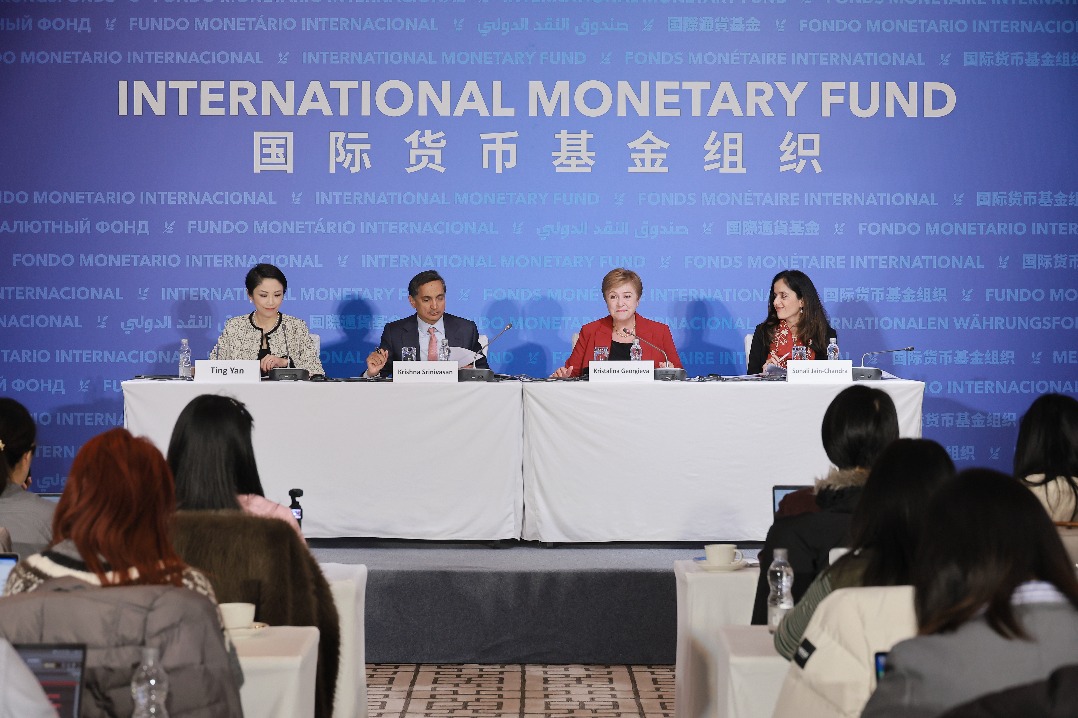
After World War II, the victors established a "new institutionality" that would ultimately govern the destiny of the world from then until today. That institutionality, including the International Monetary Fund, the World Bank and the United Nations, enclosed and contained the interests and values of a few developed economies. It did not include the ideals, values or interests of the developing countries, especially because some were beginning to internally decide their future. Today, that institutionality is being questioned, because the standards, norms and patterns that the victors established for the functioning of the world are no longer as effective as before. It does not contain the interests or values of many economies that are now very important, and of others that have enough credentials and arguments to be heard.
Many of the developing economies already have their own voice and enough support to discuss another order, which eventually takes into account their interests and, therefore, work to achieve a modification of the existing institutionality. Unable to quickly achieve this, an alternative institutionality is appearing — BRICS, the Shanghai Cooperation Organization, and the Asian Infrastructure Investment Bank, etc. — driven by the largest political entities, among which China stands out. The Global South aligns and groups around common interests, but those needs have become a significant force with structural impact on changing the established order in the era of the post-Bretton Woods. The aggregation of economies around the concept of the Global South gives meaning to the common interests of many economies at the same table, among which several are mutually complementary with common needs. They can be in one place, seated, with less presence of some Western countries that have defined a world with rules that often freeze or stratify their dependence, making it challenging for the Global South economies to break the vicious circle of economic debt and technological, political dependence and eventual sovereign subordination. Within the Global South, developing countries are finding growing space to align around shared interests, meaning an enormous step is being taken to expand their autonomy in shaping their own economic and political future.
There are two instances in which the voice of the Global South has been heard at the APEC meeting in Peru and the G20 meeting in Brazil. World leaders met at these two events, which constituted a good opportunity for the multilateral agenda to take into account Latin American interests, since the host countries incorporated specific agenda topics, according to their interests. The Global South was present at these meetings, with many of its most dynamic economies (especially at the meeting in Peru) participating.
China can make itself heard and gain support for the positions in favor of peace and stability, with China's efforts regarding the Palestinian-Israeli issue in particular receiving increasing attention. Since 2002, it has had a special envoy for the Middle East issue and maintained very positive relations with the main actors in the region. These political stances and gestures are quite embedded in the foreign policy of many actors in the Global South, and that is why China's positions are watched with great attention and its moves gain so much support.
But as China gathers more economies around it to encourage greater homogeneity within the Global South, it faces increasing pressure from the United States, resulting in heightened tensions and competition between the two countries. China does not seek to replace the existing international order. China offers its experience in exploring its path to modernization as a reference for countries of the Middle East and Africa, as well as the rest of the developing world. China's behavior differs from that of the US across functional areas. From the US' perspective, China's economic, political and foreign aid behavior tends to be competitive with that of the US in particular and the rest of the West in general. The US' perception of a "China threat" is amplified, as China advocates true multilateralism and works with its partners in the Global South to seek political and economic alternatives.
The alternatives proposed by China emphasize South-South cooperation in various forums, with the focus mainly on economics and politics, tending to prioritize development and reinforce the connectivity between various countries, regions and subregions. In this context, China has established several cooperation mechanisms: the China-Arab States Cooperation Forum, the China-Africa Cooperation Forum and the Shanghai Cooperation Organization. Free trade agreements also appear within the characteristics of the institutionality promoted by the Global South.

The author is director of Sino-Latin America Studies & Research Center and director of Postgraduate Career on Contemporary China, UNLa, Argentina. The author contributed this article to China Watch, a think tank powered by China Daily. The views don't necessarily reflect those of China Daily.
Contact the editor at editor@chinawatch.cn