A new global economic order, if it can be built







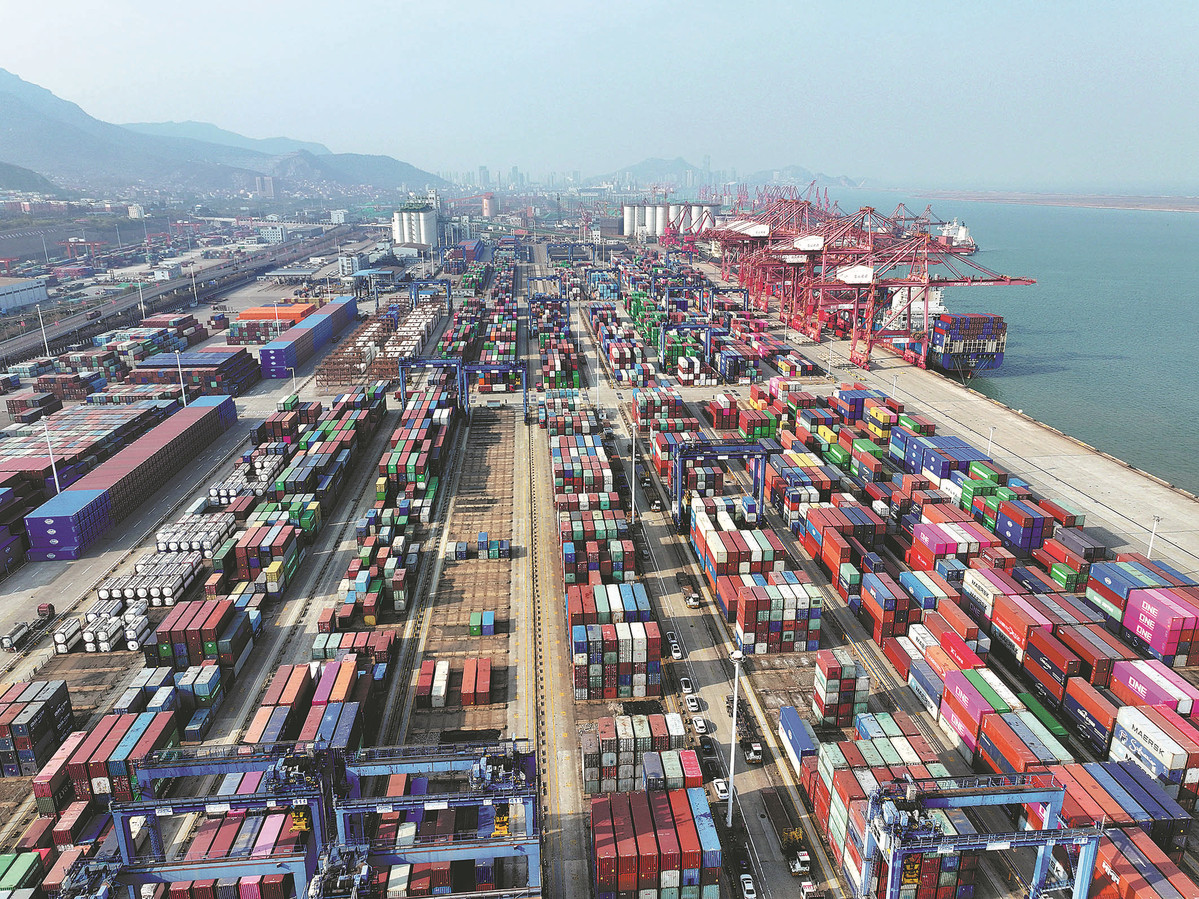
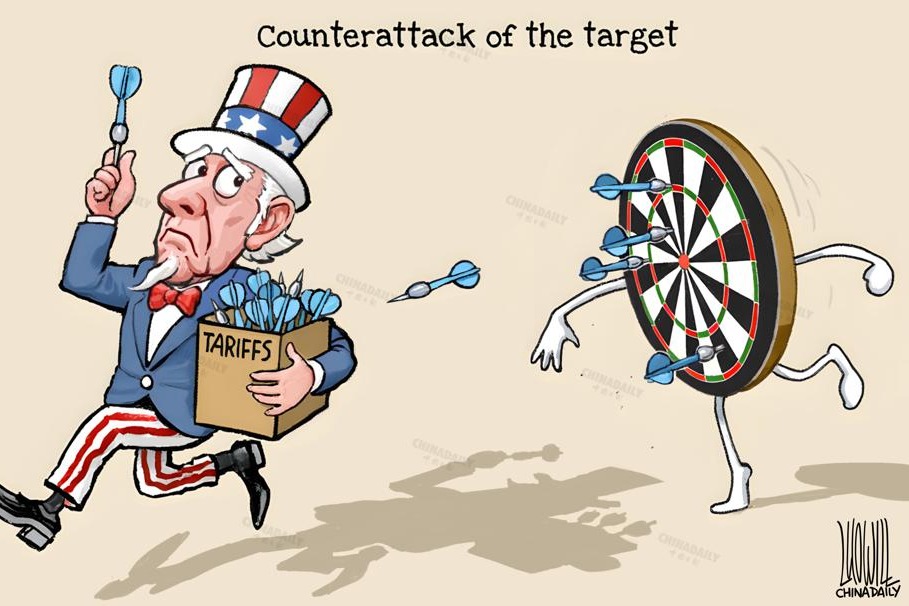
Washington's punitive tariff attacks started, literally, within days of US President Donald Trump's inauguration. He first announced 25 percent tariffs on imports from Canada and Mexico, which he has put on hold after both countries' aggressive response, and 10 percent additional tariffs on Chinese goods.
In March, the Trump administration imposed another 10 percent tariffs on Chinese imports.
Besides, Trump has promised that more tariffs are on their way targeting imports from the European Union.
Trump is a self-proclaimed "tariff man". But it has become clear by now that tariffs, to the White House, are more than just a tool to address the US' trade imbalance, or to propel "Corporate America" to reshore, or to reestablish the industrial manufacturing base in the United States.
Trump has expressed fondness for the McKinley era when there was no income tax, as the entire federal budget was financed by tariffs. There are many influential people around him, Commerce Secretary Howard Lutnick for example, who truly believe in the tariff-income tax-substitution theory and are bent on going on with this "social economic experiment", so as to reduce income tax for Trump's billionaire friends.
Of course, to a trained economist, this theory borders on lunacy, as probably an overwhelming majority of the economist community worldwide would agree. Nevertheless, it looks like this theory is going to be put into practice. Tax revenues will have to come from somewhere else, so some tariffs will come into play, at least partly. But even some less onerous tariffs would have a profound impact on the rest of the world.
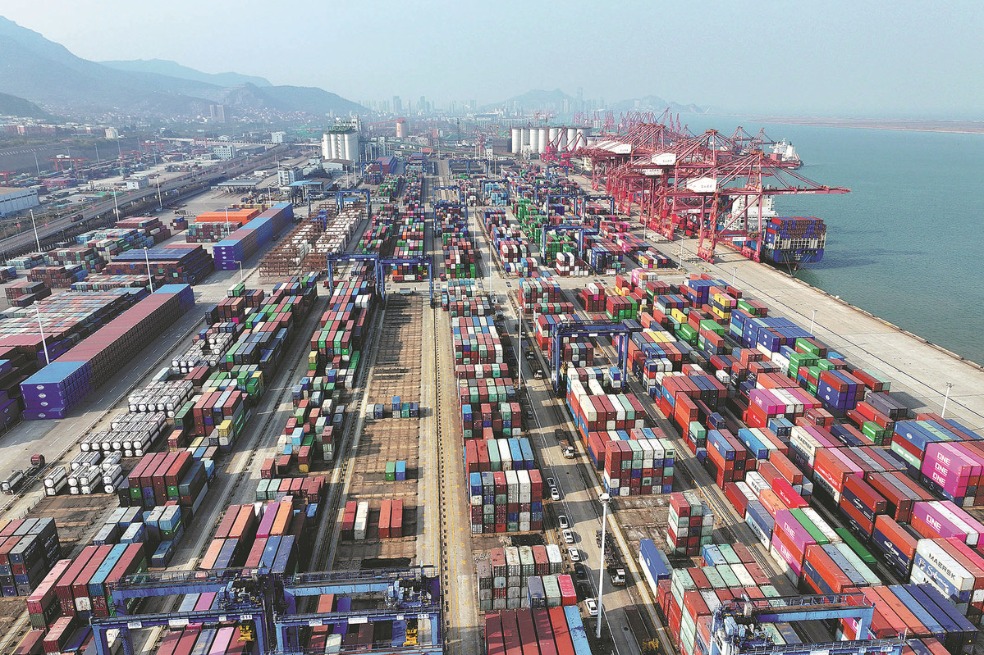
China stands front and center against this tariff challenge from the US. It stands as the second-largest exporter to the US market, behind only Mexico, and with the largest trade surplus in goods totaling nearly $300 billion in 2024. No matter how one looks at it, China appears to be an apparent and legitimate target of the Trump administration's "tariff revolution".
As a result, the Sino-US trade relationship seems set to deteriorate in the long run. Many Chinese companies and the Chinese government are prepared for this. The question is: Can we manage this process less abruptly, less disruptively and less destructively?
But at the end of the day, it is not so much of a far-fetched idea to fathom the scenario of an eventual decoupling, or at least a decoupling to some degree, of the Chinese and US economies.
If that were to happen, the world may see two parallel trade networks with China and the US respectively playing the central roles in them. China will just do fine thanks to its robust economic relationships with ASEAN, the EU, the Global South in general, the BRICS countries in particular, and other developing countries.
The US market accounts for a bit less than 15 percent of the total Chinese exports. However, a significant part of Chinese exports is related to US and other foreign companies operating in China. Is this really a doomsday scenario for China's economy? Obviously not.
In fact, Beijing has been preparing for a possible second trade conflict since 2018. Today with China's domestic market-focused dual circulation development paradigm, Chinese companies' extensive global supply chains, and the China-proposed Belt and Road Initiative footprint, the country is in a much better position to weather the US tariff storm.
Besides, the US would suffer from a parallel world economic order. US consumers will not only see high prices, but also will be denied access to affordable but high-quality made-in-China products.
Take the automobile industry for example. The current 100 percent tariffs on auto imports from China have already made Chinese-made cars economically unviable.
Without access to cutting-edge but still affordable BYD electric vehicles, the US administration's "drill, baby, drill" policy will eventually turn the US into an ICE(internal combustion engine) island, whose vehicles will be at least one generation behind China's. What tariffs ultimately protect are not just Detroit automakers but also their outdated technologies.
Is this going to be in the US' national interest? From China's perspective, I say, so be it.
The author is a professor at the University of International Business and Economics.
The views don't necessarily represent those of China Daily.
If you have a specific expertise, or would like to share your thought about our stories, then send us your writings at opinion@chinadaily.com.cn, and comment@chinadaily.com.cn.