LA chaos reflects US' deep-rooted divisions







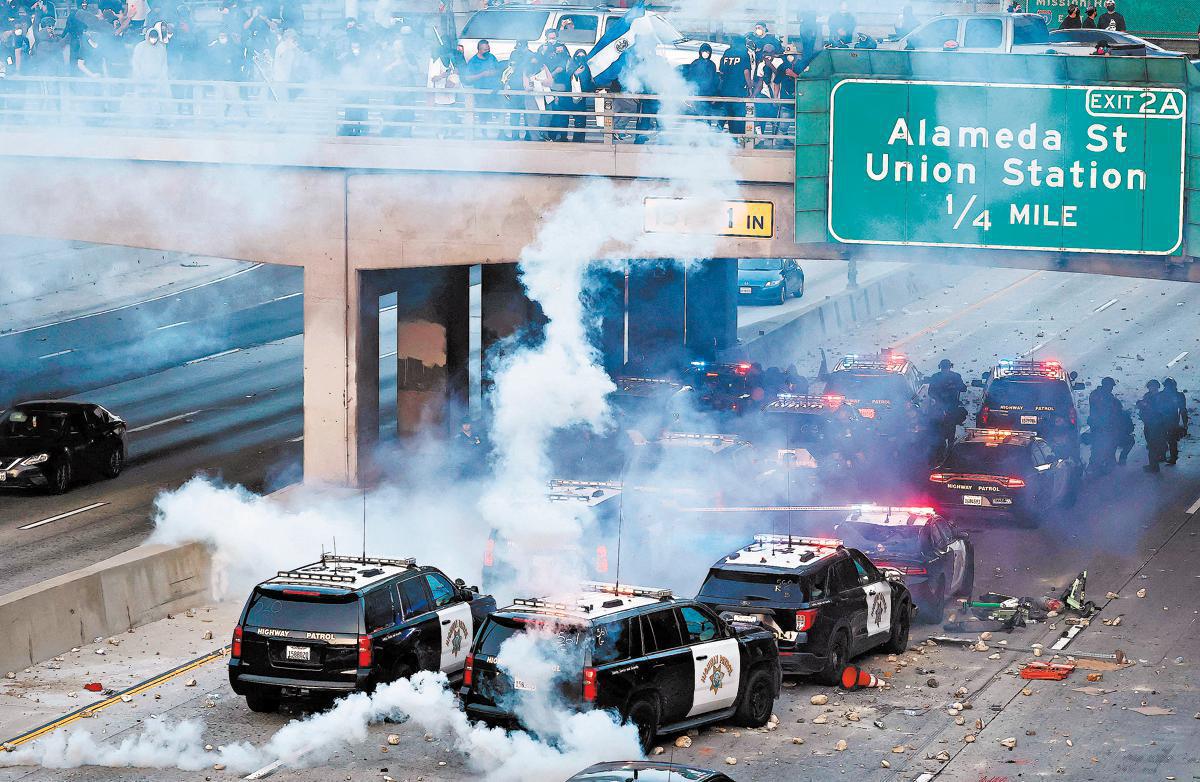
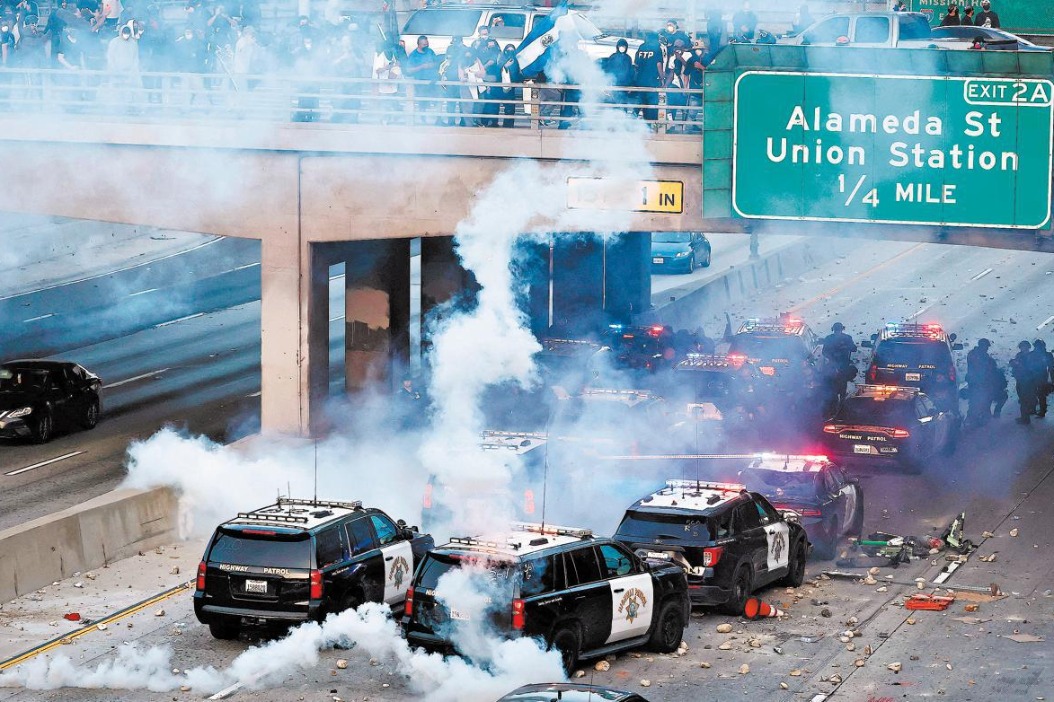
The ongoing protests in Los Angeles against the deportation of undocumented immigrants have captured the world's attention largely due to the powerful and emotional images widely circulating on social media. Crowds of demonstrators have filled the streets, waving signs, chanting slogans and demanding an end to what they see as an unjust and inhumane crackdown on immigrant communities. These scenes have resonated globally, sparking both solidarity and concern.
What stands out, however, is not just the scale of the protests, but the extraordinary response from the authorities. The sheer disproportion between the number of demonstrators and the armed forces deployed to counter them is striking. Under normal circumstances, maintaining public order during protests falls under the jurisdiction of local police departments. But in this instance, law enforcement has been supplemented — and in many cases overshadowed — by the presence of heavily armed National Guard units and even Marines. This highly militarized response to a domestic issue marks a troubling departure from established norms by the US administration.
The deployment of military personnel for civilian crowd control raises serious questions about the appropriateness and legality of such measures. The Posse Comitatus Act, a longstanding federal law, limits the use of federal military personnel in domestic law enforcement. While exceptions exist, the involvement of the US military in Los Angeles appears to push these boundaries, blurring the line between civilian policing and military intervention.
This situation has also laid bare the political tensions between different levels of government. California Governor Gavin Newsom and Los Angeles Mayor Karen Bass have both expressed concern over the federal government's decision to deploy military personnel to deal with the protests. They argue that such an approach is not only unnecessary but potentially dangerous. Their position is based on the belief that domestic public order should be maintained through community-based policing, dialogue and restraint, not through the use of military personnel more commonly associated with foreign conflicts.
In contrast, the US federal administration appears to view the protests through the lens of national security and border enforcement, labeling the unrest as a threat to public safety and the rule of law. This perspective may explain the decision to involve military units, but it also exposes a deep divergence in philosophy. For the federal government, the protests may seem like an escalation that demands a firm and immediate response. For local leaders, however, this escalation is precisely what should be avoided.
History tells us that deploying military personnel to control domestic protests often has had the opposite effect. Rather than defusing tensions, it can inflame them. Protesters may interpret the military's presence as a sign of repression, fueling further anger and mistrust. This risks turning what might have been a peaceful demonstration into a more volatile and unpredictable confrontation.
Moreover, the visual symbolism of troops patrolling American streets — armed, uniformed and ready for combat — sends a chilling message that undermines democratic values and civil liberties.
The situation in Los Angeles is therefore more than just a local crisis; it is a test of how a democratic society responds to dissent. It challenges the United States to reconcile its commitment to the rule of law based on the principles of free expression and civil rights. The optics of soldiers facing off against civilians, many of whom are protesting peacefully, could have long-lasting consequences — not only for public trust but also for the US' global image.
In the age of social media, where images can shape narratives in an instant, the decisions made now will be remembered and scrutinized for years to come. The challenge is not simply to restore order, but to do so in a way that respects the fundamental rights of all individuals, regardless of their immigration status. That balance is delicate, but essential. Failing to strike it risks deepening divisions and setting a dangerous precedent for the future.
The author, a specialist in global affairs and sinology, is the founder of the China-Europe-America Global Initiative.
The views don't necessarily reflect those of China Daily.
If you have a specific expertise, or would like to share your thought about our stories, then send us your writings at opinion@chinadaily.com.cn, and comment@chinadaily.com.cn.