Security cooperation safeguards region's development







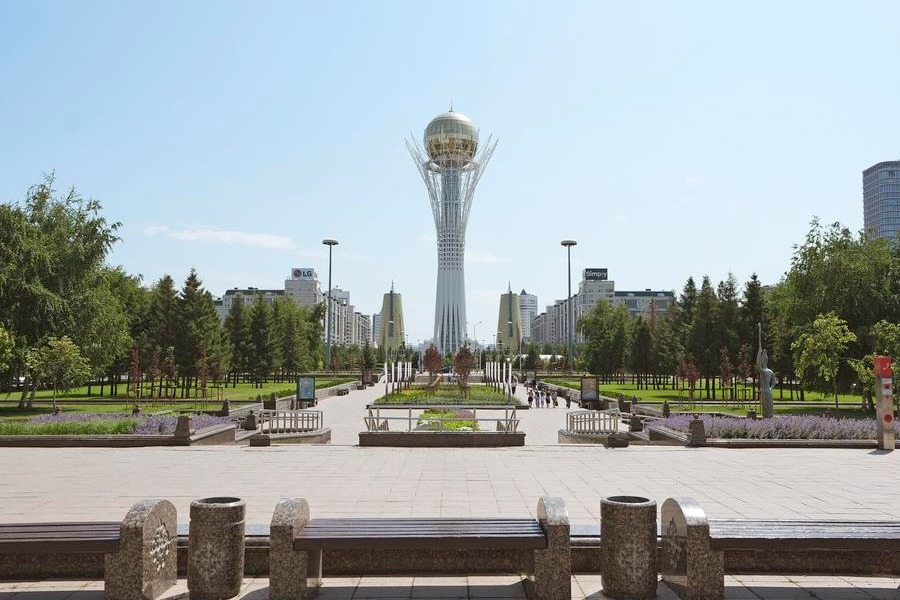
Despite escalating regional conflicts and growing disputes between countries, security cooperation between China and Central Asian countries has been improving, with security collaboration, a highlight of China's neighborhood diplomacy, among regional countries helping maintain peace in the region.
Security cooperation between China and the Central Asian countries is a model of collaborative security governance. And the integration of bilateral and multilateral cooperation is essential to building a community with shared security and development.
The Central Asian countries, which are of significant interest to major powers, are members of various multilateral security mechanisms. But genuine multilateral cooperation within those mechanisms is often limited. As such, bilateral cooperation usually takes precedence. But on some security issues, bilateral cooperation can hinder resolution and potentially exacerbate conflicts, while on other issues, multilateral cooperation can be inefficient, failing sometimes to effectively implement agreements.
That's why China-Central Asia regional security cooperation focuses on integrated advancement of both bilateral and multilateral cooperation, thereby minimizing risks and preventing buck-passing.
Within the mechanism promoted by heads of state, China and the Central Asian countries have established regular consultation channels including foreign ministers' meetings and expert working group meetings which, among other things, focus on information security, and disaster prevention and mitigation.
The flexible and diverse frameworks of bilateral and multilateral mechanisms enable China and the Central Asian countries to focus on common interests and practical cooperation. The two sides have established a comprehensive regional security cooperation network covering areas such as counter-terrorism, de-radicalization, border control, disaster prevention and mitigation, and cyber governance.
On border control and counter-terrorism issues, China and the Central Asian countries have adopted a multi-dimensional approach to joint border defense and joint capacity building.
In their joint border defense mechanisms, China, and Kazakhstan, Kyrgyzstan and Tajikistan have built a "border security belt" and "firewall" through intelligence sharing, and joint patrols and drills. For example, Chinese and Tajik border troops conduct regular joint patrols on the Pamir Plateau.
In capacity building, China provides support for the Central Asian countries through the Shanghai Cooperation Organization's regional anti-terrorist mechanism and other bilateral mechanisms. Since 2001, China has provided forensic lab equipment, border inspection devices, patrol equipment, and police armaments for Kyrgyzstan, Tajikistan and Uzbekistan, while training law enforcement and judicial personnel from the Central Asian countries, so they could strengthen their border control capabilities and improve their security governance.
On information and data security, SCO member states signed a declaration on international information security in 2006, and a plan for international information security cooperation in 2024. Also, the Central Asian countries support the China-proposed Global Initiative on Data Security. Accordingly, China, Kazakhstan, Kyrgyzstan, Tajikistan, Turkmenistan and Uzbekistan launched the Data Security Cooperation Initiative in 2022.
China and the Central Asian countries have also explored the common ground in regional security, which has played a crucial role in the success of China-Central Asia security cooperation. Although there are several security mechanisms in Central Asia, they generally lack development and security arrangements. The United States' failure in Afghanistan was partly due to its excessive focus on superficial security issues while neglecting the development factors.
Since the inception of the SCO, China and the Central Asian countries have focused on strengthening security and promoting development. The "security plus development "model aims to build a community of shared security and development, offering new ideas for strengthening security.
The Belt and Road Initiative aligns with the development plans of many countries, so it has helped boost regional security cooperation. In fact, Central Asian governments have not only welcomed the BRI, but also are willing to implement the China-proposed Global Development Initiative, Global Security Initiative, and Global Civilization Initiative.
Since security and development issues are included in the China-Central Asia cooperation framework, the participants are willing to build a community with a shared future. Also, mutual trust between China and the Central Asian countries is at a historic high, and both sides understand and support each other on issues of core national interests, condemn all forms of terrorism, separatism and extremism, and are ready to jointly combat the three evil forces.
Unlike the "democratic transformation" path to development advocated by some Western powers, China and the Central Asian countries adhere to the regional security cooperation principles of "development promotes security", "sovereign equality", and "non-interference in the internal affairs of other countries". Choosing one's development path and governance model is a sovereign right of all countries, a right that brooks no external interference.
The cooperation philosophy of equality and mutual respect, regardless of the size of the country, is another reason and the driving force behind the continuous advancement of China-Central Asia regional security cooperation.

The author is deputy director of the Institute for Central Asian Studies, and dean of the School of Politics and International Relations, Lanzhou University. The views don't necessarily represent those of China Daily.
If you have a specific expertise, or would like to share your thought about our stories, then send us your writings at opinion@chinadaily.com.cn, and comment@chinadaily.com.cn.