Entrepreneurship can build better tomorrow







Amid rising trade and geo-economic tensions, extreme weather events, social polarization and disruptive technological changes, the global outlook may seem more uncertain than ever. Yet it is in such turbulent times that entrepreneurship demonstrates its enduring value.
Entrepreneurship often thrives in difficult times, prompting shifts in our worldviews and ways of working, creating opportunities for new businesses to emerge and for existing ones to evolve and build new capabilities.
Two areas are especially critical for entrepreneurial action and new collaborative frameworks: addressing the climate emergency and shaping global technology governance.
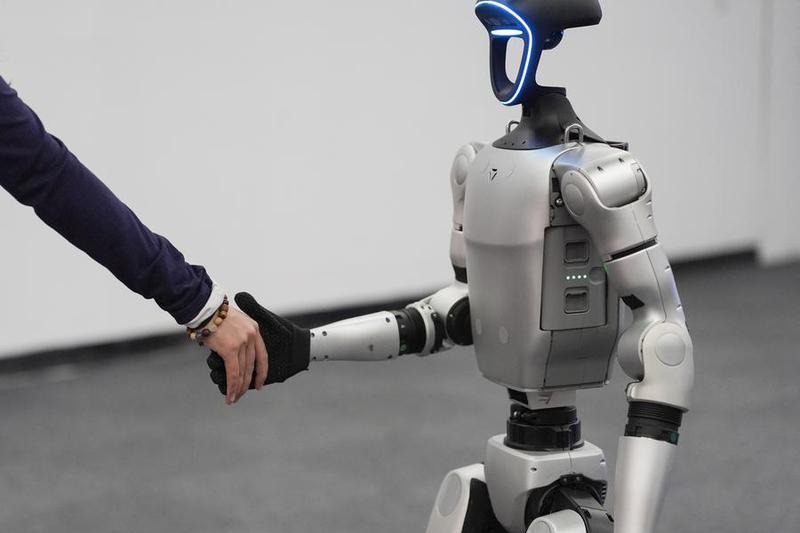
Vision and strategy must be anchored in values, ethics and purpose. As entrepreneurs leverage technologies such as artificial intelligence to gain comparative advantages, they should pair innovation with irreplaceable human qualities: conscience, compassion and meaningful connections.
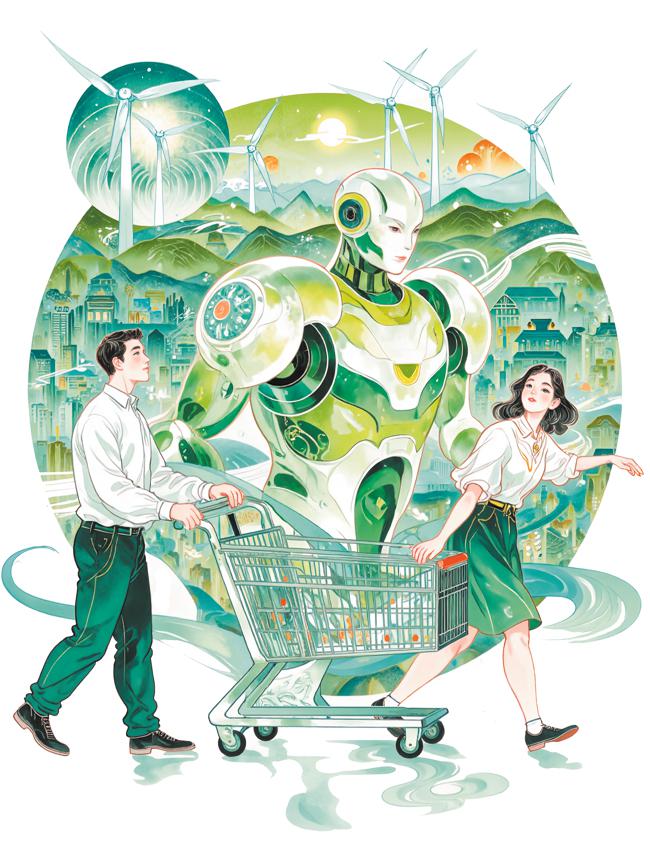
Likewise, in addressing the climate crisis, unleashing growth and prosperity in the new era requires leaders to harness our collective capacity for creativity, collaboration and co-creating new methods of production and consumption that are better aligned with the UN Sustainable Development Goals.
Entrepreneurship that stands the test of time is oriented toward serving humanity. Forward-thinking entrepreneurs recognize that long-term business viability depends on aligning profit with purpose — integrating commercial success with a commitment to the greater good. This approach is reflected in concrete actions: investing in employees, strengthening the customer and supplier relationship, and safeguarding the overall health of the environment and the broader ecosystem. These efforts create a virtuous cycle, where profits are used to improve the well-being of all.
Entrepreneurs are already turning the climate emergency into a catalyst for industrial reinvention, pioneering business models that decarbonize economies while developing new value chains. In recent years, Chinese entrepreneurs have built a global industry in electric vehicles (EVs), significantly advancing the green energy transition and decarbonization efforts. In 2024, China produced more than 70 percent of the world's EVs, supported by nearly 13.75 million chargers. As a result, nearly half of all the cars sold in China last year were EVs.
Globally, eco-entrepreneurial endeavours are integrating profit, people and the planet. A recent World Economic Forum study estimates that companies investing in adaptation to climate change, and decarbonization are seeing from $2 to $19 in avoided losses for every dollar spent.
The completion of the 3,046-kilometer barrier encircling the Taklamakan Desert, the world's largest such project, has halted the expansion of desert and reduced sandstorms, while boosting local economies. Farmers now intercrop medicinal herbs under shelterbelts, and solar farms generate clean energy while enabling agricultural production below the panels. The initiative has supported agriculture and eco-tourism, and created jobs.
True, technologies can aggravate global divides. But they can also be great equalizers. Digital education platforms are democratizing access to knowledge, breaking geographical and socioeconomic barriers. Online learning and AI-driven tools are empowering individuals in remote or underserved regions with good education and vocational training.
Since technological progress must be guided by human ethics, some Chinese AI models are trained on diverse linguistic and cultural data, mitigating the risk of value deviations stemming from cultural differences in training data.
Ethics also requires balancing efficiency with equity. Pioneering AI tools designed for hiring demonstrate this principle by ignoring demographic variables like age or location and instead focusing on skills and experience, preventing algorithmic bias and creating fairer opportunities.
Climate emergency and technological disruptions are systemic challenges that demand new forms of innovation and collaboration across policies, finances, geographies and generations. Policies act as a crucial catalyst for market transformation. For example, The European Commission's Clean Industrial Deal focuses on energy-intensive industries and the clean-tech sector, demonstrating how regulation can help achieve sustainability by making decarbonization a driving force for Europe's industrial growth.
Finance, too, is evolving. Innovative finance mechanisms, such as the $185 billion outcome-based funding market, while still nascent, are integrating non-financial objectives with risk management and financial returns. There is immense potential to tap into the entrepreneurial energy of the next generation for systems change. In Africa, about 80 percent of start-up founders are aged below 35, exemplifying the youths' entrepreneurial dynamism in addressing local challenges with global relevance.
Building a thriving new era requires open dialogue and strong partnerships across both public and private sectors. The notion of "prosper thy neighbour" is more important than ever, and we must continue to nurture a culture of mutual benefit whether in politics, economics and society.
More than 2,000 years ago, entrepreneurs of the Silk Road transformed regional commerce into global exchange networks. Their ventures not only enabled unprecedented flows of goods, ideas and technologies, but also bridged cultures, advanced civilizations and created opportunities for human development and progress.
Today, in Tianjin — the strategic hub of the 21st Century Maritime Silk Road (which along with the Silk Road Economic Belt makes up the Belt and Road Initiative) and the host city of the Summer Davos, or Annual Meeting of the New Champions 2025 — the WEF seeks to re-ignite the spirit of exploration through public-private dialogue, turning entrepreneurial courage into ethical technology, and sustainable and resilient growth.
At the new champions' meeting, we take inspiration from those early entrepreneurs to build pathways for a new era of prosperity.

The author is managing director and chair of Greater China of World Economic Forum. The views don't necessarily reflect those of China Daily.
If you have a specific expertise, or would like to share your thought about our stories, then send us your writings at opinion@chinadaily.com.cn, and comment@chinadaily.com.cn.