Read between the lines
US insularity has opened the door for a new global education order that is multipolar, inclusive and grounded in mutual development








US Secretary of State Marco Rubio's announcement on May 28 to revoke the visas of Chinese students in the United States has sparked outrage in some quarters. University administrators have lamented lost tuition revenue, academics have warned of diminished US leadership in research, and others have decried the human costs, the abuse of students' rights and xenophobic undertones.
Yet, beyond the immediate noise, a more profound truth is emerging. This is not a tragedy. It is an inflection point. It is time to recognize a new horizon and reflect on the implications of the decision. The world of education, research and innovation is not confined to the US. The soft power that once radiated from campuses — through scholarship programs, open research networks and cosmopolitan branding — has been steadily dissipating. Rubio's move simply accelerates this unraveling. In doing so, it also opens the door for a new global education order that is multipolar, inclusive and grounded in mutual development.
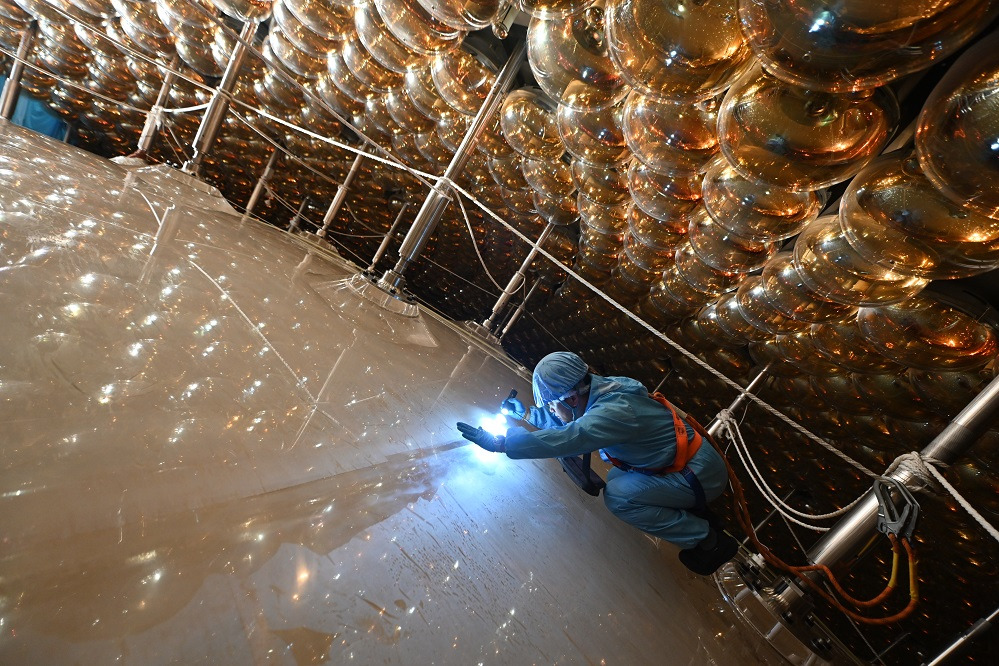
China, alongside other emerging powers, is well-positioned to play a key enabling role in this global shift. The global center of gravity in research and innovation has already been tilting eastward. Chinese institutions now lead the world in many scientific and technical disciplines, not only in terms of volume of publications and patents, but increasingly in quality and frontier-level innovation. Engineering, materials science, quantum technology, biotechnology and artificial intelligence are no longer fields dominated by the West alone.
At the same time, Chinese universities have significantly expanded their global reach. Through joint research labs, institutional partnerships, regional hubs and international recruitment, China has become a growing node in the global research network. Many of these collaborations are with institutions in Asia, Africa, the Middle East and Latin America. While Western narratives still frame this as "soft power competition", the reality is far more grounded. China is increasingly seen as a reliable, long-term partner for knowledge exchange, technological cooperation and education-driven development.
The US State Department's move will only deepen this realignment. By signaling to Chinese students and scholars that they are no longer welcome in the US, it effectively redirects flows of talent, collaboration and institutional energy elsewhere.
For many countries in the Global South, the default model of academic mobility and research collaboration has long been unidirectional: an outbound flow of talent. These countries have witnessed their best and brightest minds heading to elite institutions in the Global North, in the hope that they succeed, and some knowledge trickles back home. That model was never sustainable, and increasingly, it is becoming obsolete.
Now is the time for the Global South to think differently; not just about where students go, but about what kind of global education model they want to be part of. This means investing in regional research capacity, not just outbound scholarships. It means expanding peer-to-peer collaborations with Chinese, Indian, Brazilian and Southeast Asian institutions, not simply pursuing recognition from Euro-American ranking systems. And it means asserting greater control over the research agenda, focusing on technologies and disciplines relevant to local and regional development, rather than being peripheral participants in someone else's innovation pipeline.
In short, the Global South can move from client to co-author in global knowledge production. This means expanding scholarship programs for students from developing countries, not just in elite universities, but across disciplines and regions. It implies building open, multilingual research platforms that actively engage diverse epistemologies and promote knowledge sharing beyond English-language gate-keeping. Supporting joint research centers and applied innovation labs that are co-owned with partner institutions across the Global South is a new frontier that can be contemplated, focusing on health, agriculture, infrastructure, energy and other developmental priorities.
The challenge for China and other emerging countries is to collectively explore a better model — one that moves beyond the old soft power paradigm toward a vision of global education as a shared resource for collective advancement.
Aspiring international students, Chinese or otherwise, are exposed to a changing world. The US is no longer the singular beacon it once was. From Europe to East Asia, from the Middle East to Latin America, new opportunities for world-class education and collaborative research are emerging. And crucially, many of these opportunities are now being shaped by countries and institutions that recognize the developmental imperatives of the Global South.
This is as much a wake-up call for Chinese students and scholars as it is for anyone else. Rather than pursuing an increasingly restrictive and unstable US academic system, more energy can be devoted to exploring and investing in new circuits of excellence, new hubs of knowledge and new forms of intellectual belonging.
In the end, Rubio's decision is neither surprising nor unique. It reflects a broader shift in US political culture that is increasingly driven by insecurity, protectionism and ideological retrenchment. But history is full of such turning points.
The real question is what comes next. With the Global South deepening their role in the global knowledge exchange, this moment marks the beginning of a more inclusive, multipolar and solidaristic global education order. Such an order is one in which knowledge circulates openly, opportunities are more evenly distributed, and research serves the broad goals of human development.
If the Global South mobilizes, with strategic clarity and collaborative ambition, it can shape this new order not from the margins, but from the center. And if aspiring students and scholars look beyond the US, they may just find that the world is far bigger, and more open, than they had imagined.

The author is an adjunct professor at Queensland University of Technology and a senior fellow at the Taihe Institute. The author contributed this article to China Watch, a think tank powered by China Daily. The views do not necessarily reflect those of China Daily.
Contact the editor at editor@chinawatch.cn.