Trump sets 15% tariff for South Korea goods
Trade policy to curtail exports, bringing negative impact on economy: Analysts







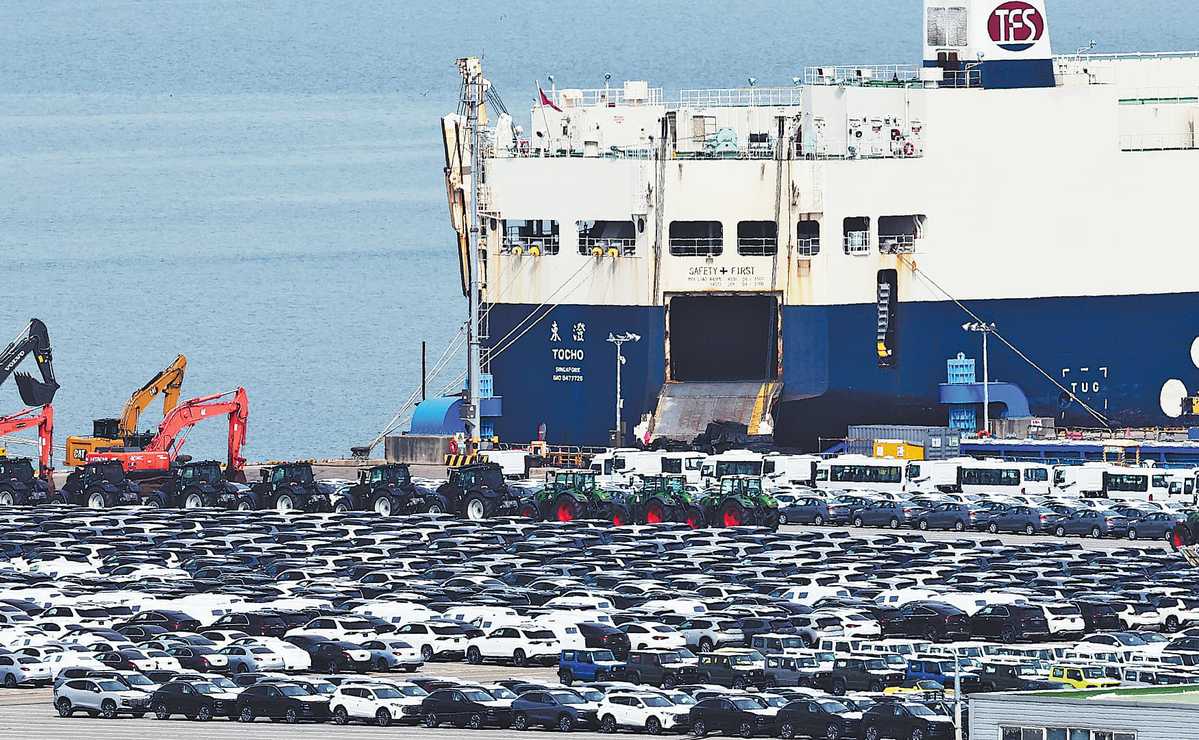
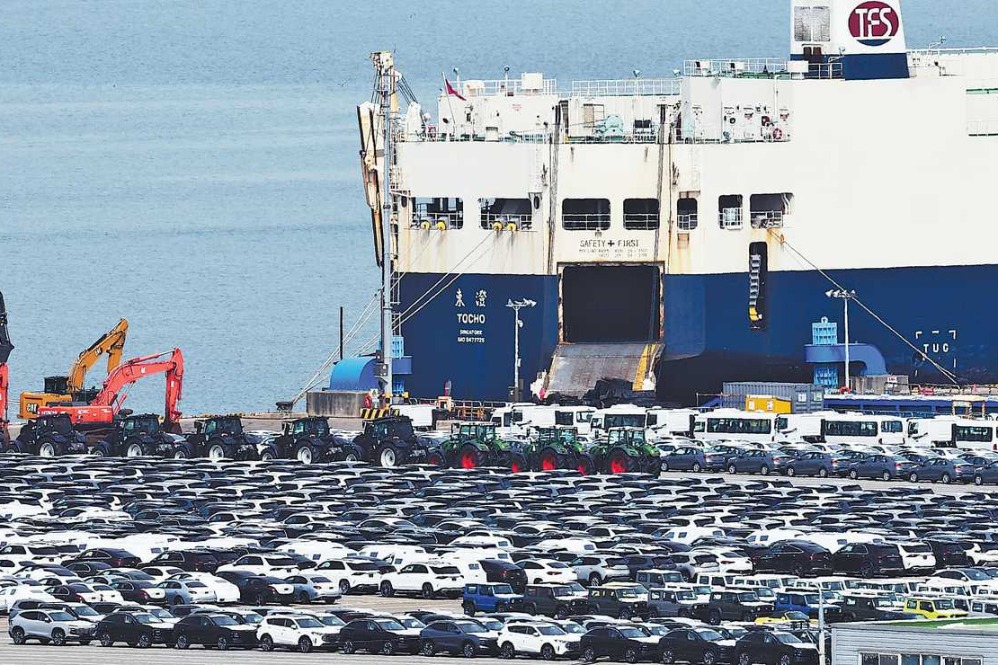
The United States has agreed to impose 15 percent tariffs on imports from South Korea under a trade deal announced on Wednesday, easing earlier concerns over a potential 25 percent rate.
Analysts have noted that while the outcome is not a worst-case scenario, it is still economically damaging for both South Korea and the US, and the impact on specific industries will depend on the detailed provisions of the agreement.
US President Donald Trump said in a post on his social media platform Truth Social that South Korea "will give to the United States 350 billion dollars for investments owned and controlled by the US, and selected by myself, as president". He also said South Korea has agreed to purchase $100 billion worth of liquefied natural gas and other energy products.
South Korea's President Lee Jae-myung said the $350 billion investment pledged by South Korea will solidify the foundation for bilateral cooperation in strategic industries, such as shipbuilding, semiconductors, secondary batteries, biotechnology and energy.
In particular, $150 billion will be committed exclusively for supporting the entry of South Korean shipbuilders into the US shipbuilding industry, Lee said.
Yang Jun-sok, an economics professor at the Catholic University of Korea, told China Daily that the new deal was probably "the best" for South Korea from a diplomatic or negotiating perspective, but still "a bad agreement for both the US and South Korea "when considered from an economic perspective.
"Since it will raise general tariffs from the current 10 percent to 15 percent, and from 0 percent to 15 percent if we consider the US-(South) Korea Free Trade Agreement," Yang said.
He also cited a February study by the Industrial Bank of Korea, which estimated that for each one percentage point increase in tariffs imposed by the US, South Korea's exports to the US would fall by 0.45 percent, and exports to other countries would fall by 0.15 percent.
Based on that projection, a 15 percent tariff could reduce exports to the US by 6.8 percent and to other markets by 2.25 percent — translating into a potential 0.7-0.8 percent decline in South Korea's GDP, he said.
Lee Dong-won, an official at the bank, told Yonhap News Agency that "starting from the third quarter, the impact of US tariffs is likely to become more pronounced. Economic growth may slow further under the 15 percent tariff scheme".
Uncertain prospects
Yang noted that in the longer term, the direction of the US tariff policy remains uncertain and will depend on the trajectory of the US economy over the next two to three years. He suggested that South Korea needs to strengthen its domestic demand rather than rely on exports as the main engine of growth.
South Korea's new tariff deal with the US, considered favorable as those achieved by other major trading partners, is likely to offer short-term relief for its export-dependent economy.
The South Korean industrial community on Thursday welcomed the new trade agreement, which lowered Washington's "reciprocal" tariff on South Korean goods to 15 percent, though businesses remained wary about the deal's details and its potential impact on specific sectors.
"I consider the 15 percent automobile tariff rate to be a considerable success in the negotiations. However, on steel-related goods, it is not yet clear whether they will be covered by 50 percent steel tariffs or 15 percent general tariffs, since home appliances are one of (South) Korea's major export items," Yang said.
Yang also said that despite Seoul's pledge of a $350 billion investment package in the US, key details remain unclear — and interpretations appear to diverge between the two countries.
Most of the money is expected to come from private firms, with the South Korean government providing guarantees and incentives. However, it's difficult to see how such a large sum can be achieved without affecting domestic investment, even if the government insists it will be done by readjusting overseas plans, Yang said.
Yang noted that domestic labor unions could push back against large-scale overseas investments.
"In the past, major (South) Korean unions have opposed foreign investment, fearing long-term job losses. And with the Yellow Envelope Act under review, it may become easier for them to protest," he added.
Contact the writers at houjunjie@chinadaily.com.cn