Washington's policy shifts fuel instability across Middle East
Erratic decisions deepen turmoil and reinforce US hegemonic grip: Experts







The Middle East has borne the brunt of US foreign policy as the administration's capricious decision-making diplomacy has further destabilized the region, undermined peace prospects, and reinforced Washington's hegemonic grip, experts say. (Watch video)
During the election campaign, United States President Donald Trump emphasized the need to end the conflict in Gaza. And in his inauguration speech, he highlighted his intention to bring lasting peace to the region.
However, within hours of taking office, the Trump administration signed an executive order imposing a 90-day halt on all foreign development aid, with exceptions only for emergency food relief and military assistance to Israel and Egypt.
In February, the US government proposed to "take over" the Gaza Strip, relocate the Palestinian population, and transform it into the "Riviera of the Middle East", which was widely condemned as a plan for "mass expulsion".
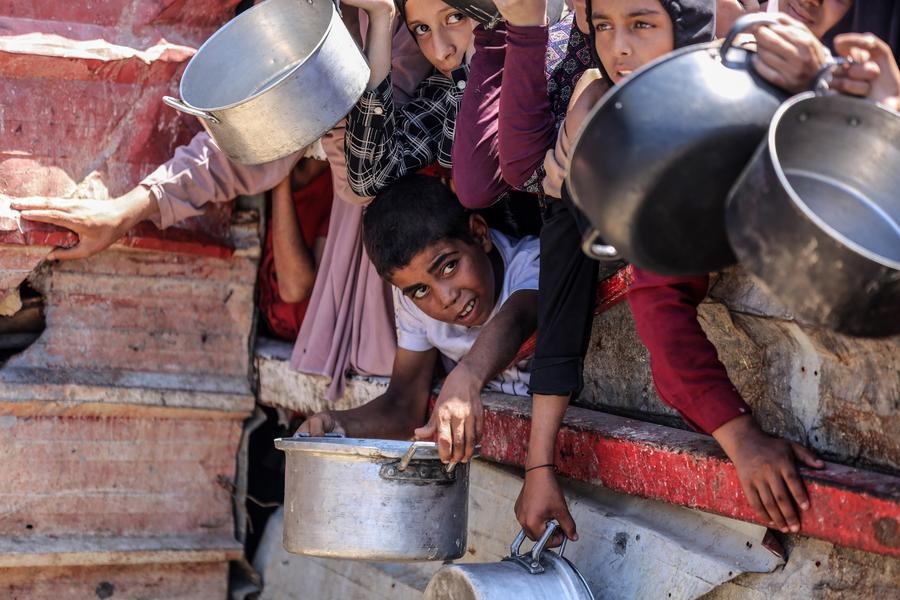
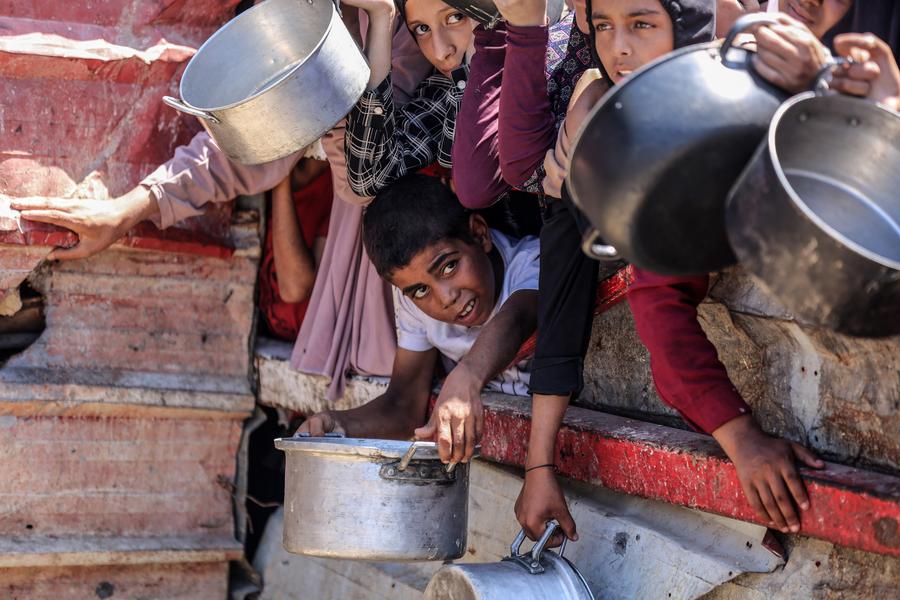
Earlier this month, an expansion of the US — and Israeli-backed Gaza Humanitarian Foundation was unveiled to quadruple food distribution sites across the enclave. However, funding remained unclear and the initiative drew sharp humanitarian and safety critiques, The Washington Post reported.
On Aug 8, Israel's security cabinet approved a plan to seize Gaza City, following Prime Minister Benjamin Netanyahu's call to take control of the entire Palestinian territory. When asked about supporting the occupation, Trump gave no clear answer, signaling reluctance to use US influence to limit Israeli military moves, experts said.
Beyond Gaza, the Trump administration's policies have fueled wider regional instability.
Since April, the US has held a series of nuclear negotiations with Iran, aiming to address Tehran's uranium enrichment activities. These talks, spanning about 60 days, went nowhere.
Meanwhile, Israel carried out a series of airstrikes on Iran's nuclear sites starting from June 13, which were strongly retaliated against by the Iranian side. The US had been providing defensive support to Israel, such as intercepting Iranian missiles and drones.
Later on June 22, amid heightened Israel-Iran tensions, the US bombed three Iranian nuclear sites, which was widely denounced as a violation of the United Nations Charter and international law.
This escalation has strained US relations with Iran, leading to Iran's suspension of cooperation with the International Atomic Energy Agency and complicating efforts to revive nuclear negotiations.
Hindering cooperation
Such military escalations and erratic policy shifts have deepened regional instability and strained the fragile fabric of international cooperation, underscoring the US failure to play a constructive mediating role in the Middle East, experts said.
Ross Harrison, a senior fellow at the Middle East Institute in Washington and the author of Decoding Iran's Foreign Policy, said shifting demands from the Trump administration often complicate the situation.
During 60 days of Iran-US nuclear talks, the administration's mixed signals — shifting from asking Iran to own "no nuclear weapon" to "no enrichment at all" — became a red line for Tehran and stalled progress, Harrison said.
"The mixed messaging, combined with the president's impatience, complicated negotiations."
He described the Trump administration's military actions as "surgical strikes", noting the lack of a long-term Middle East policy.
"The US should avoid 'forever wars', because such interventions neither benefit the region nor serve its own interests," he said.
Ding Jun, director of the Middle East Studies Institute at Shanghai International Studies University, said the US administration's actions reveal the absence of a coherent strategy for the Middle East.
"It highlights the Trump administration's shortcomings in diplomacy, notably the lack of a long-term vision, while reinforcing a hegemonic mindset," Ding said.
No clear results
In a recent report published by the Middle East Institute, senior fellow Brian Katulis said Trump's erratic and unpredictable leadership style has failed to deliver clear results across the broader Middle East.
The administration's three-phase plan to maintain a Gaza ceasefire collapsed, while its direct talks with Hamas yielded little. Trump's stance on Israel's possible occupation of Gaza "underscored his passivity" in ending the conflict, the report said.
Harrison said the US has largely lost the ability and credibility to mediate the conflict, adding that he sees neither the willingness nor the capacity in the current administration to take on the role.
Meanwhile, he emphasized that Trump possesses leverage over Israel. "If he doesn't use it to promote peace, halt settlement expansion or curb Israeli military actions in the West Bank, global perceptions will likely view US policy as merely aligning with Israel's every move," he said.
Nevertheless, it is still early to tell whether Trump will leverage his support for Israel's military campaign to gain concessions, he said.
Yan Wei, deputy director of the Institute of Middle Eastern Studies at China's Northwest University, said US influence in the Middle East is waning. Yet, Israel remains "a cornerstone of its hard-line strategy" that Washington "cannot afford to lose".
Trump has long been a staunch supporter of Netanyahu's military campaign in Gaza, emphasizing Israel's "right to defend itself" while condemning Hamas as a "terrorist organization", Yan said.
When Israel was seeking to drive Gaza residents from their homes by worsening the humanitarian crisis, the US has taken little tangible action to intervene, which showed the Trump administration's indifference to such disasters, he said.
"Although some voices in his administration have privately criticized Netanyahu, the alliance is still expected to remain strong."
Ding from Shanghai said, "For Trump, balancing the competing priorities of 'America first' and 'Israel first' poses a complex challenge."
The US administration is unlikely to take meaningful steps to advance peace and stability in the Middle East, Ding said, as it insists on pursuing power politics and hegemony in the region.
"History and reality have shown that lasting solutions to flashpoints such as the Iranian nuclear issue require abandoning hegemonic thinking and embracing political dialogue grounded in mutual respect, not the reflexive use or threat of force," he said.
Katulis said that the US and Israeli leadership should look beyond the management of the current crisis to define and pursue a clearer, more positive outcome through diplomacy, rather than more conflicts and wars.
Agencies contributed to this story.
liujianqiao@chinadaily.com.cn