Green transition
Hanoi faces 'extremely urgent' pollution as the capital plans to ban petrol-powered motorbikes







Editor's note: In this weekly feature China Daily gives voice to Asia and its people. The stories presented come mainly from the Asia News Network (ANN), of which China Daily is among its 20 leading titles.
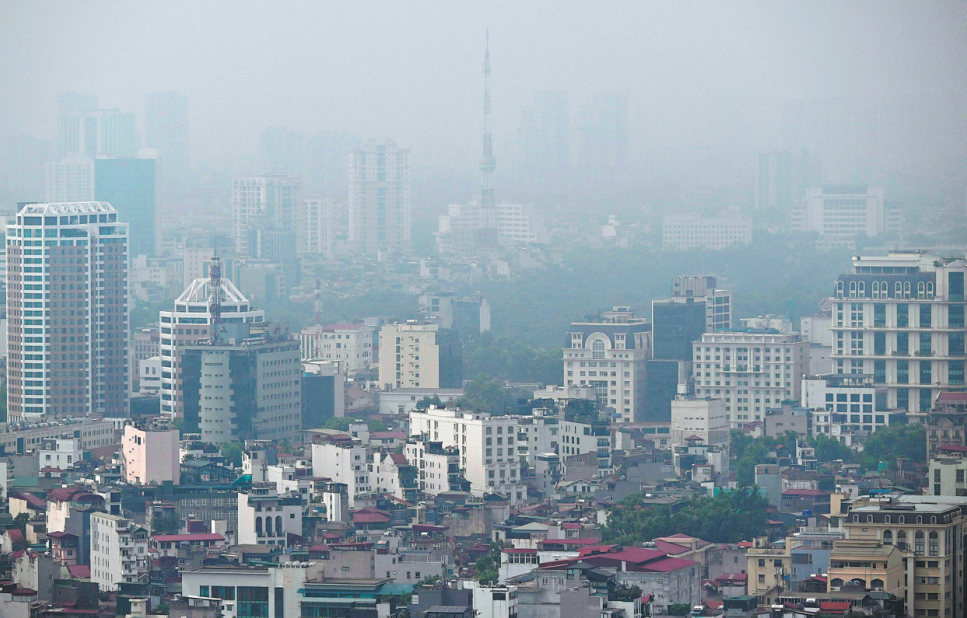
Vietnam's capital Hanoi is stepping up efforts to combat its deepening air pollution crisis with an ambitious clean transition plan that includes phasing out vehicles powered by fossil fuel, revitalizing polluted waterways and transforming public transportation systems by the end of this decade.
City officials say the environmental situation has become "critical", with levels of fine dust and harmful pollutants frequently spiking into hazardous zones. Much of the pollution stems from a dense fleet of aging motorbikes, road dust, industrial activity and changing climate conditions.
"Air quality in Hanoi has shown serious deterioration over many years, especially during the winter from October to April," said Chairman of the Vietnam Clean Air Network Hoang Duong Tung.
"It is not only severe, but is becoming worse each year. The trend is clearly upward, not downward."
Tung said the data collected over time shows that many days are marked by air quality index readings in the red, purple or even brown zones. He said that pollution in Hanoi is "a pressing issue" and that bold, timely actions are needed.
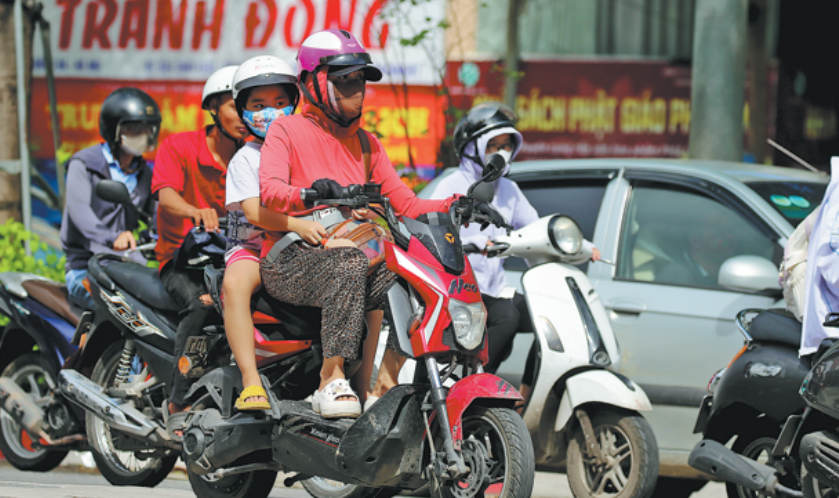
According to Hanoi Department of Agriculture and Environment, 56.1 percent of the city's air pollution originates from approximately 7 million motorbikes and another 800,000 petrol and diesel-powered cars.
Fine dust from tire friction, industrial emissions, construction activity and domestic fuel usage further worsen the situation.
In response, Prime Minister Pham Minh Chinh issued Directive 20 on July 12, ordering all relevant ministries and localities to take urgent, decisive action to reduce environmental pollution.
Hanoi is taking center stage in this effort, given its alarming pollution levels and role as the country's political and economic hub.
"The environmental pollution situation in Hanoi has become extremely urgent," said Duong Duc Tuan, deputy chairman of the Hanoi People's Committee.
"It poses a direct threat to the environment, to the quality of life and the health of the people."
Hanoi currently has over 8 million vehicles running on its roads. In the historic inner city, 1,450,000 motorbikes serve just 600,000 residents, creating overwhelming pressure on air quality.
Tuan cited transport as one of the largest contributors to air pollution.
"According to central and city-level assessments, one of the main causes of air pollution is transportation, especially as our infrastructure still relies heavily on fossil fuels like gasoline and diesel," he said.
Tuan confirmed that Hanoi's implementation plan, developed in accordance with Directive 20, includes phasing out of all fossil-fuel motorbikes from within Ring Road 1 by July 1, 2026.
By 2028, the ban will expand to include all motorcycles within Ring Road 1 and 2, while restrictions on petrol-powered cars will also be introduced. The target for 2030 is to extend the low-emission zone to Ring Road 3.
As part of this transition, the city is rolling out clean energy infrastructure, including a new network of electric vehicle charging stations.
Public buses are also being converted to electric power. Of the 45 bus routes currently operating within Ring Road 1, 11 already use electric buses. By 2030, all public buses in the capital are expected to run on electricity.
Restructuring network
Tuan said the city is also working to restructure its public transport network and promote green mobility options. He noted that only clean vehicles would be acceptable in the long term.
"Only clean vehicles can ensure low emissions," he said. "Two-stroke petrol-powered vehicles generate consequences for the environment — they are not efficient, not orderly and obviously harmful to the environment."
The health impacts of air pollution have become increasingly evident, especially among vulnerable groups like children, the elderly and pregnant women. Exposure to pollutants like PM2.5 has been linked to respiratory diseases, cardiovascular complications, neurological disorders and even skin and eye conditions.
"Pollution is having a profound impact on public health in Hanoi," said Deputy Director of the National Institute of Occupational and Environmental Health Nguyen Van Son.
"Pollution is also contributing to hospital overcrowding and a general decline in the quality of life."
He warned that prolonged exposure to pollutants can also damage the nervous system, accelerate aging of the skin and lead to chronic infections and autoimmune conditions.
The Ministry of Agriculture and Environment has been assigned to oversee the national coordination of Directive 20. According to Hoang Van Thuc, general director of the Department of Environmental Pollution Control, the directive outlines four key task groups for the ministry: policy reform, emissions standards, infrastructure investment and public monitoring systems.
"One of our key priorities is to issue technical standards for motorbike emissions," Thuc said. "From July 1, 2027, Hanoi must start mandatory emissions testing for motorbikes."
He said the ministry is reviewing all the previous government decisions, such as the national air quality management plan for 2021-25, to identify which tasks are behind schedule and why.
"We must pinpoint whether delays are due to limited resources or inadequate policy mechanisms," he said.
The ministry is also developing a national air quality bulletin system to inform the public. "We're working on daily forecasts, similar to weather reports, so that people can plan their routines and protect their health," Thuc added.
Learning from examples
Tung from the Vietnam Clean Air Network said Hanoi could learn from successful models overseas.
"More than ten years ago, Beijing was one of the most polluted cities in the world," he said. "But they made a great effort. Within just one or two years, they converted their entire bus fleet to electric vehicles."
He argued that data clearly show emissions from motorcycles are a major source of pollution, and said it was no longer necessary to debate whether they were the main cause. What is needed now, he stated, are extremely decisive actions, exactly as outlined in Directive 20.
Tung also welcomed the swift response by city leaders, noting that he is pleased Hanoi has promptly established advisory and steering committees. He said such measures are timely and demonstrate the city's determination to act.
He also noted that public support remains strong.
"People generally support these policies because they will bring better health to every family," he said. "But they also hope to see support mechanisms, EV charging networks and public transport options announced promptly."
Son from the National Institute of Occupational and Environmental Health echoed that view, stressing the role of individual awareness. "People should check the air quality index regularly and wear proper masks when pollution levels are high," he said.
He said that high-risk groups, such as the elderly, children and those with underlying illnesses, should undergo routine medical checks and stay away from areas with heavy pollution.
"Until broader solutions are fully implemented, personal precautions remain essential," Son said.
Tuan concluded that success would depend on social consensus.
"The government, citizens and businesses all need to work together to ensure balanced interests," he said. "Controlling pollution and improving quality of life is something we must accomplish — the only question is how quickly we can make it happen."
With firm policy measures, unified leadership and rising public awareness, Hanoi now finds itself at a turning point.
Its ability to implement Directive 20 effectively could determine whether the capital can become a leader in green urban transformation or continue to struggle under the weight of pollution.
VIET NAM NEWS