Invent, not just make, to reflect industrial power








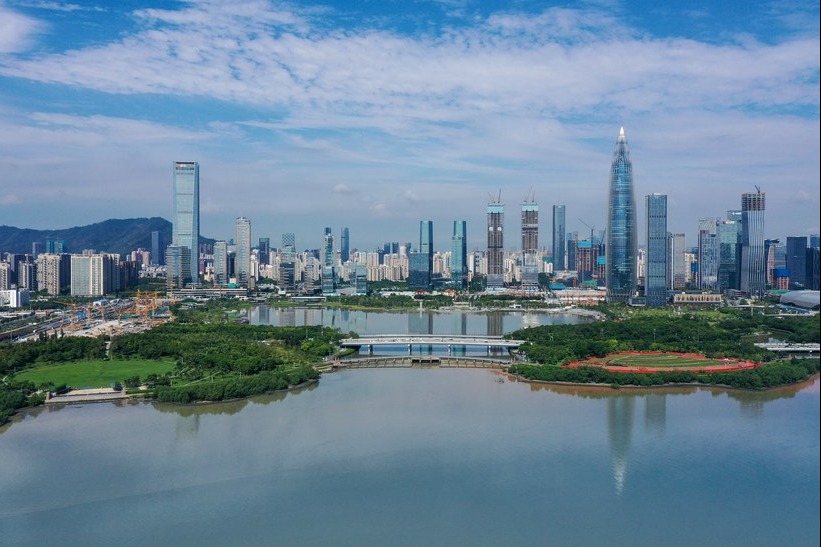
In the bustling labs and smart factories of Shenzhen, a palm-sized circuit board has set off on an odyssey that encapsulates the city's remarkable transformation. Once a humble link in a vast, low-wage assembly chain — the final stop of designs drafted in Silicon Valley and machinery imported from Germany — such a board now embodies the cutting edge of global manufacturing.
In Shenzhen, engineers today write its first lines of code, craft its schematic on locally developed software, and shepherd it through AI-driven production lines toward final assembly in a wearable device destined for Europe. It is no longer "build to order"; it is "invent and export".
Shenzhen's story is one of reinvention. Two decades ago, it thrived as a "front-shop, back-factory". Someone else supplied the blueprint, and it supplied the speed at a relatively low cost. But as the cost of labor increased and margins thinned, that model creaked under its own weight. Rather than concede its crown, Shenzhen rewrote its playbook, shifting from commodity assembly to innovation-led, high-value manufacturing.
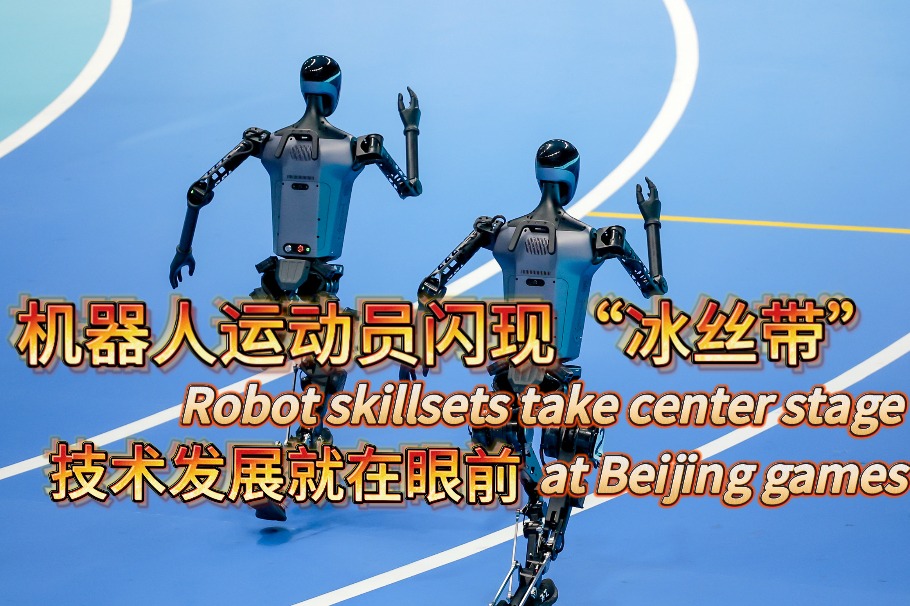
In today's Shenzhen, designs once created overseas are conceived locally. DJI's flight-control systems and UBTECH's humanoid robots have become global benchmarks, not only for their technical sophistication but also for the authority of design they project. Behind these household names lies an army of more than 11,000 specialized and sophisticated enterprises, especially small and medium-sized enterprises.
These enterprises, pioneers in smart hardware, industrial software and niche production technologies, have forged an end-to-end innovation chain. Even the smallest workshop can now assemble an "innovation factory", blending design tools, materials platforms and cloud-connected equipment rentals. The result: circuit board designs born and developed in Shenzhen, not imported from abroad.
This ingenuity now extends beyond design into the very mechanics of production. Take, for example, the transformed Foxconn facility in Longhua district of Shenzhen. Once a beehive of manual soldering and assembly, it now hums with robotic arms, automated guided vehicles and machine-vision systems.
Each board is populated by AI-guided pick-and-place robots, then, before shipping, its test data are uploaded to the cloud for real-time quality oversight by European clients. Underpinning all this is Shenzhen's policy to encourage the digitalization of enterprises and the digital infrastructure of platform giants such as Tencent Cloud and Kingdee. Manufacturing is no longer a matter of manual repetition; it is now an exercise in computational engineering, where efficiency soars, defects plummet and delivery times shrink.
Yet the true hallmark of Shenzhen's leap is not its factories' glass-walled modernity but its role as a rule-maker. Shenzhen no longer only follows global standards; it sets them. BYD, for instance, has opened its electric-vehicle platform to third-party collaborators, creating an ecosystem reminiscent of the Android model. Control remains firmly in Shenzhen's hands, while partner networks stretch worldwide. The circuit board that once arrived in Shenzhen as a passive component now serves as a universal interface, compatible with global norms yet anchoring a thriving local supply chain.
None of this would have been possible without bold institutional innovation. Shenzhen did not rely on subsidies; it built a governance model offering predictable policies, fast-track approvals and unfettered capital flows. The city now acts like an accelerator: ideas conceived in a café over coffee can swiftly evolve into market-ready prototypes. Spot an engineer boarding the metro with a prototype under one arm and a laptop under the other, and you can gauge how deeply manufacturing has permeated the urban fabric.
What Shenzhen has discovered is that manufacturing is not an end in itself but an organizing principle for the future. Its success rests on sustained policy patience, relentless structural adjustment and a fundamental rethinking of what "value" means in production. The question it poses to every aspiring industrial city is: "How do you turn a simple circuit board into a catalyst for systemic change?"
The circuit board, launched from Shenzhen, now traverses oceans to power devices, homes and daily life across the globe. Its journey is more than a tale of technological progress; it is a tribute to institutional ingenuity, urban renewal and collective ambition. As the world searches for the next frontier of manufacturing, it should look to not only novel techniques or breakthrough products but also the cities that dare to reinvent themselves, cities like Shenzhen where the blueprint for tomorrow is drawn in real time.
The author is the deputy director of the China Center for Special Economic Zone Research, Shenzhen University. The views don't necessarily reflect those of China Daily.
If you have a specific expertise, or would like to share your thought about our stories, then send us your writings at opinion@chinadaily.com.cn, and comment@chinadaily.com.cn.