Archives detail wartime labor atrocities
Records serve as rebuttal to Japanese right-wing forces' denial of crimes







The Heilongjiang Provincial Archives released a collection of 62 historical documents detailing the forced recruitment and enslavement of Chinese laborers by the Japanese army during its occupation of Northeast China.
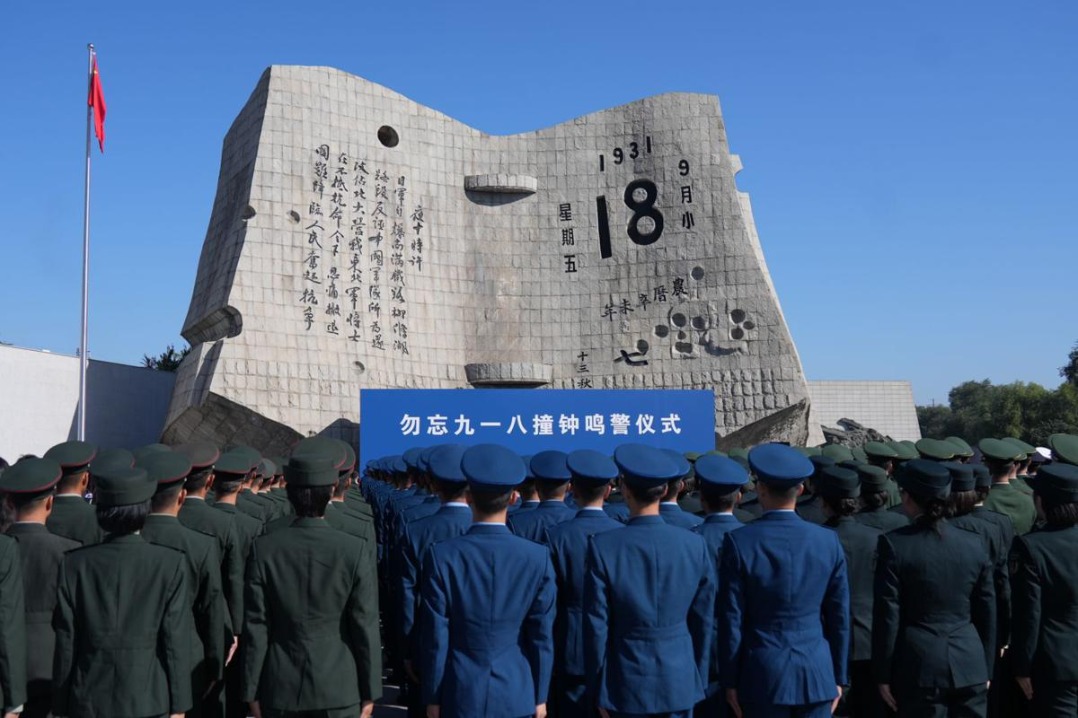
The collection, titled Forced Recruitment and Enslavement of Chinese Laborers by the Japanese Army during the Invasion of China, was made public on Thursday to mark the 94th anniversary of the Sept 18 Incident, which launched Japan's bloody invasion of China in 1931. Historians note that the conflict foreshadowed World War II and made China the first country to resist fascism.
On March 1, 1932, Japanese forces established the puppet regime of "Manchukuo" in the provinces of Heilongjiang, Jilin and Liaoning, and part of the Inner Mongolia autonomous region.
To sustain its war economy and colonial rule, Japanese forces enslaved and exploited large numbers of Chinese laborers under the guise of "supplying laborers" for road construction, logging, transportation, mining and military engineering.
Recruitment was carried out under strict administrative orders. Labor associations were instructed to provide workers within set time limits, effectively turning "supply" into forced conscription.
The documents, which date to the 14-year nominal rule of the Japanese invaders, serve as evidence of coercive labor practices, according to the archives. They cover policies of labor control, planning and execution of exploitation, as well as the inhumane treatment and resistance of workers.
Among the records are files on supplying laborers to Japan's notorious Unit 731 and forcing prisoners of war to build fortifications, directly exposing war crimes committed by Japanese forces.
The documents show Japan legalized labor recruitment through the so-called "Military Supply Requisition Law," issued by the "Manchukuo" government, granting the army sweeping requisition rights and empowering it to suppress resistance.
Chinese laborers endured grueling conditions — longer hours, intensified workloads, chronic food shortages, lack of warm clothing and unsafe living quarters.
Many attempted to escape, but arrests, collective punishment and even killings were common responses from Japanese troops and the puppet regime.
One report quoting returned laborers said: "Food is the hardest problem to solve. We do earthwork from morning till night, which requires strength, but our stomachs are never full." Another account read: "We worked in the mud during the day and had no warm beds at night. Our bodies remained wet all night, and many fell ill from the damp cold."
Wages were often withheld, and prisoners of war were treated with particular brutality. Captured Chinese soldiers in North and East China were reclassified as "special laborers" and sent to Northeast China for dangerous military construction work, in direct violation of the Geneva Conventions.
"The documents are not only crucial for historical research but also serve as a powerful rebuttal to Japanese right-wing forces that deny aggression and glorify crimes," said Nie Boxin, director of the archives arrangement department. "The release aims to help people remember the painful history, defend human justice, and cherish peace and oppose war."
zhouhuiying@chinadaily.com.cn

- Archives detail wartime labor atrocities
- Chinese police proposes international alliance to counter telecom, cyber fraud
- Karamay marks decades of sustaining energy security
- High-tech drives nation's innovation capabilities
- More countries urged to join efforts against online fraud
- AI medical system starts real-world testing