Market, govt can better coordinate amid tech revolution







The fourth plenary session of the 20th Central Committee of the Communist Party of China stressed that during the next five-year plan, China needs better integration of effective government and efficient market.
In the past few years, the contours of a new industrial order have become increasingly visible.
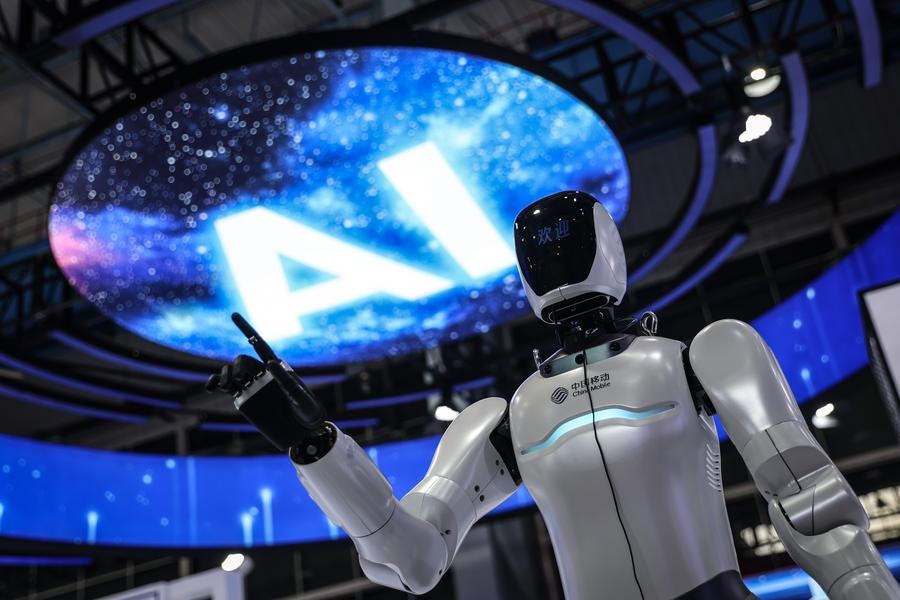
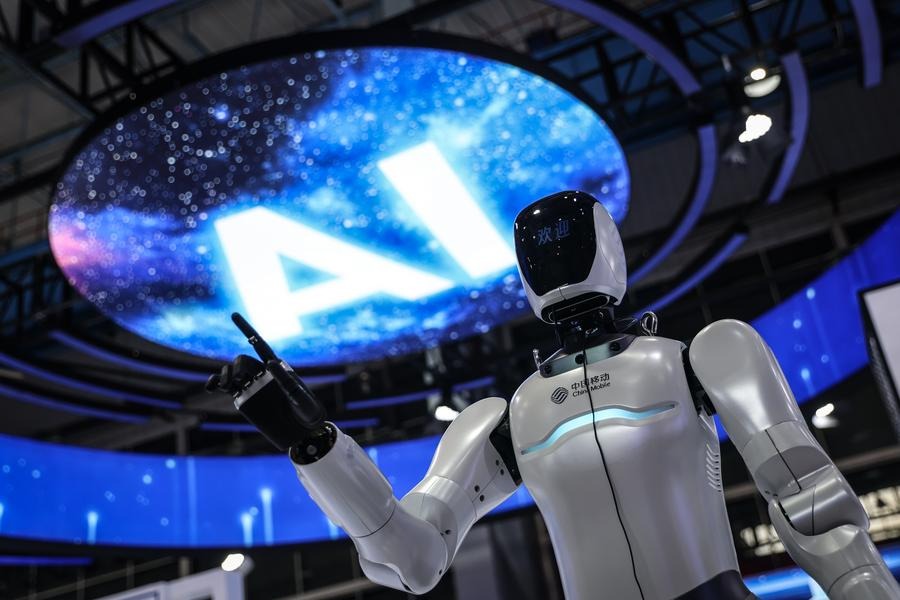
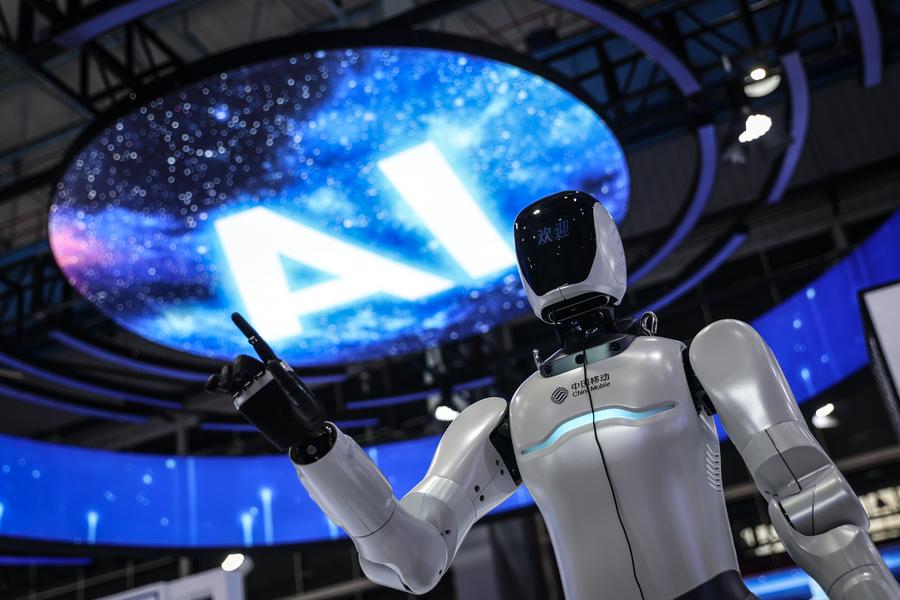
From semiconductors and renewable energy to advanced manufacturing and artificial intelligence, a wave of innovation has swept across sectors. The emergence of DeepSeek, whose large-scale models now rival the world's best in algorithmic efficiency and linguistic precision, exemplifies the country's progress. So too do breakthroughs in electric mobility, battery chemistry and industrial automation. It's a signal that the foundations of the Fourth Industrial Revolution are no longer anchored in the West but have spread across the globe, with China occupying a prominent position.
The challenge today is not simply to innovate, but to sustain innovation at scale. New industries require enormous investments in both physical and institutional infrastructure before private enterprises can thrive. If left to themselves, market forces don't provide these foundations, while excessive intervention by the government distorts the incentive structure. History tells us that markets are most effective when governments are capable, and governments are most capable when markets are dynamic.
An effective market presupposes a proactive government, just as a proactive government exists to make the market more effective. The government must act where coordination and public goods are essential while allowing competition to drive discovery and efficiency.
On the supply side, the government's role is not to dictate innovation but to provide an environment that lowers its costs and risks. Public investment in computing centers, data hubs and high-speed communication networks support private R&D in data-intensive sectors.
But the profusion of artificial intelligence has introduced a new constraint. Training large models consumes enormous amounts of electricity, and the expansion of computing clusters will sharply increase the demand for stable, low-carbon power. This will require the government to increase investment in energy infrastructure — from smart grids and renewable generation to long-distance transmission — ensuring that the digital economy's growth does not outpace the physical foundations that sustain it.
Government can also accelerate the spread of new technologies across society. In domestic markets, this means reducing information gaps and regulatory uncertainty in new and emerging industries such as autonomous driving, smart healthcare and robotics. Consumers tend to adopt new products more readily when they are sure about a technology and firms innovate more if they don't fear arbitrary sanctions. Public procurement and pilot programmes can serve as early testing grounds for converting technological feasibility into commercial viability.
The growth of China's electric vehicle industry is a good example of how proactive government action can empower markets to operate more effectively to transform technological potential into industrial strength. On the supply side, public subsidies, tax incentives and infrastructure investment — such as nationwide charging networks and battery-recycling systems — helped overcome the scale barriers that private firms could not surmount. On the demand side, the government purchased electric buses for public transport, offered generous consumer incentives, and introduced preferential licence-plate and traffic-access rules in many cities to encourage EV adoption.
Looking ahead, there is reason for cautious optimism. The Fourth Industrial Revolution rewards speed, adaptability and scale. Success in this new era depends less on resource endowments and more on institutional adaptability. In this respect, China has three structural advantages.
First, it has the world's largest pool of technically trained workers and scientists. According to a UNESCO and World Economic Forum estimate, China produces around 5 million STEM graduates every year, forming a deep pool of scientific talent. Second, it commands one of the world's largest market, allowing technologies to scale quickly and reduce costs through massive adoption. Third, it has a government capable of mobilizing resources for upgrading both the physical and digital foundations of the economy — from energy and transport to computing and education.
If these advantages are harnessed in the right manner, open competition and international cooperation, China could emerge as one of the main architects of the next industrial age. The balance of governmental capacity and market vitality is China's most valuable institutional asset. The Fourth Industrial Revolution will reward economies that are able to coordinate knowledge, scale and governance. China, standing at this intersection, is uniquely positioned not merely to adapt to this transformation, but to lead it.
The author is vice dean of the Institute of New Structural Economics at Peking University.
The views don't necessarily reflect those of China Daily.
If you have a specific expertise, or would like to share your thought about our stories, then send us your writings at opinion@chinadaily.com.cn, and comment@chinadaily.com.cn.