|
|

NPC & CPPCC Annual Sessions > Biz & Economy > News
|
Low-income housing fund to swellBy Tan Yingzi (China Daily)
Updated: 2009-03-12 07:44
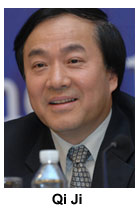
The central government will spend more than 40 billion yuan ($7 billion) this year to improve 2.6 million low-income urban families' living conditions. More than 33 billion yuan will go to low-rent housing projects, vice-minister of housing and urban-rural development Qi Ji said yesterday on the sidelines of the ongoing National People's Congress session.
"This figure (33 billion yuan) is several times that of 2008 and is 10 times that of 2007." In addition to the central government's fund, local governments will use their treasury bonds to support housing. This year, China will issue 200 billion yuan in local treasury bonds, mostly to be used for constructing infrastructure and improving citizens' livelihoods. "So this year, the housing security project will enjoy sufficient financial support," Qi said. The Ministry of Land and Resources will also ensure the land supply for low-income housing, he said. The housing security project also addresses other social groups' needs.
The government will build affordable housing for low-income families with some ability to pay and develop publicly leased housing for middle- and low-income families, such as those of newly employed and migrant workers. "We are striving to achieve the goal of adequate housing for all," Qi said. Premier Wen Jiabao said in this year's government work report that China should try to address the housing problems of 7.5 million urban low-income families and 2.4 million squatters living in forests, and reclamation and coal mine areas, in the coming three years. China should also expand the scope of pilot programs to renovate hazardous rural buildings. The report also said there were about 10 million low-income families with per-capita housing floor spaces of less than 10 sq m in 2005. Thanks to continuous investment in the housing security project, by the end of 2008, more than 2.53 million low-income families had improved their living conditions, moving into low-rent apartments or reconstructed squatter settlements. Every low-rent apartment's floor space should not exceed 50 sq m, and the average size of such apartments in most cities is about 40 sq m, Qi said. "Accelerating construction of low-income housing is also important to increasing investment, boosting domestic demand, and promoting stable and rapid economic growth," he said. The latest National Bureau of Statistics figures showed housing prices in 70 of China's major cities had fallen by 1.2 percent from last year, 0.3 percent less than the January figure. The price of newly built housing in Shenzhen and Guangzhou had respectively dropped by 16.3 percent and 8.9 percent during the period.
|
|||||||
       |
主站蜘蛛池模板: 嘉义市| 襄垣县| 会同县| 东光县| 安仁县| 石台县| 石河子市| 胶南市| 隆德县| 白银市| 定州市| 洛川县| 绵阳市| 达拉特旗| 肥乡县| 鄱阳县| 离岛区| 曲阜市| 汉阴县| 天峨县| 盐池县| 遂平县| 泰来县| 崇阳县| 防城港市| 阿克苏市| 蓬溪县| 额敏县| 灵山县| 泽普县| 和田市| 称多县| 樟树市| 兴文县| 孟津县| 皋兰县| 商河县| 勃利县| 元阳县| 溧阳市| 定日县| 曲阜市| 桃园市| 双鸭山市| 砚山县| 武冈市| 景洪市| 陕西省| 巴林左旗| 万盛区| 揭东县| 东乡| 晋城| 广灵县| 吕梁市| 株洲县| 隆德县| 镶黄旗| 大英县| 平遥县| 鄢陵县| 黑龙江省| 辉南县| 芷江| 荣成市| 襄樊市| 宁海县| 宁化县| 平泉县| 湾仔区| 武冈市| 运城市| 夏津县| 太原市| 青冈县| 彭泽县| 宿州市| 唐山市| 陕西省| 临漳县| 澄城县| 姚安县|