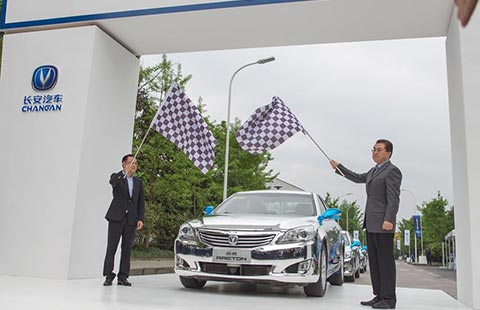
In industries such as pharmaceuticals, biofuels, electric cars and batteries, which are all technology intensive, Chinese companies could also benefit by manufacturing and registering their products in Denmark. This would give them an advantage in tapping the EU market, as EU consumers would recognize the product as having originated in Europe, experts say.
When it comes to future potential for collaboration in heavy manufacture, Rebsdorf points to offshore wind technology, an area where Denmark has considerable expertise, and which is a nascent industry in China. Another area is large wind turbines adapted to respond to China's average, lower wind speeds, and turbines which can withstand the typhoons that often hit southern China, he added.
"From the Danish side, we can find innovative solutions that fit the market in China, where the growth is largest in our industry," Rebsdorf said, referring to the fact that China is the world's largest market for wind power.
Sustainable solutions
On a public-private level, the greening of urban infrastructure is presenting new opportunities for commercial and research collaboration.
For instance, Copenhagen will launch in 2013 a pilot program testing Chinese-built, full-length electric buses by Chinese electric vehicle maker BYD, to help reduce noise and air pollution in the Danish capital.
Meanwhile, Danish temperature-controls manufacturer Danfoss has already carried out a restructuring of urban heating systems in Niujie community in Beijing, and will implement a modern district heating system in Anshan. The system distributes excess heat produced by electricity plants to commercial and residential buildings, thereby improving energy efficiency and cutting carbon emissions.
Furthermore, collaboration on Sino-Danish agriculture is expected to boom as the two countries jointly-undertake research on 'sustainable, intensive production', as the Danish Agriculture and Food Council puts it.
This involves improving resource efficiency, including minimizing impact of agriculture and animal husbandry on water sources, and in growing a Chinese market for organic products. Danish expertise in the area is concerned valuable given that Danish agriculture is highly intensive and subject to stringent environmental regulations regarding use of water, fertilizers and pesticides.
Dairy, pork and fur are the bulk of Danish agro-products exported to China, while Chinese organic fruit and vegetables are imported. Dairy is of especial relevance to the China market, and the two countries are collaborating on innovations in this sector.
For instance, Danish dairy giant Arla, and China's leading dairy, Mengniu Dairy Group, are developing a knowledge center on milk and dairy production, the China-Denmark Milk Technology and Cooperation Center, in Beijing.
Change for China
Over 50 Chinese companies were registered in Denmark as of 2012, with their investment in Denmark equaling 300 million Danish kroner ($51 million), according to Danish official sources.
But business-to-business collaboration is rising fast, with some $3.4 billion worth of deals concluded between Chinese and Danish companies in sectors such as renewable energy technologies, ports services, and breweries, during Chinese President Hu Jintao's state visit to Denmark in June.
Still, experts believe Danish businesses must adapt and learn from China if they are to stay competitive and remain relevant to Chinese consumers and producers.
"Danish businesses have to visit China, make thorough market research on the spot, and find out what Chinese customers want," said Tom Jensen, secretary-general of the Danish-Chinese Business Forum, in a recent interview with Xinhua.
This applies in areas where design is fundamental to the product, such as furniture and lighting, but also in areas catering to specific needs, such as planning of elderly-care homes and development of the appliances used in them, as well as training the personnel needed to run them, he added.
"There is a difference between what Chinese and EU consumers want, and Danes must be aware of that difference. They need to change or adapt their products to suit China's market," Jensen said.


Copyright 1995 - . All rights reserved. The content (including but not limited to text, photo, multimedia information, etc) published in this site belongs to China Daily Information Co (CDIC). Without written authorization from CDIC, such content shall not be republished or used in any form. Note: Browsers with 1024*768 or higher resolution are suggested for this site.
License for publishing multimedia online 0108263 Registration Number: 130349