 |
|
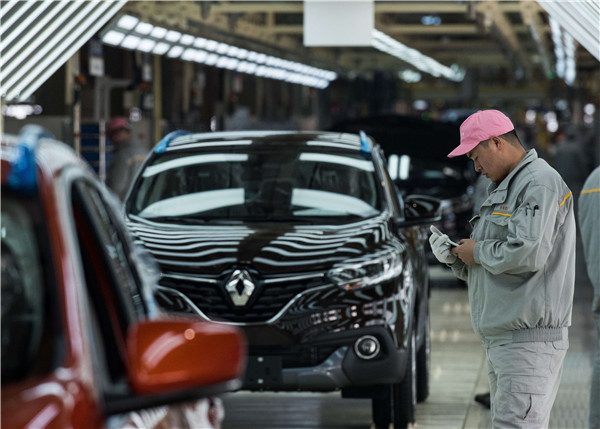
A Chinese employee working on the Kadjar car assembly line of France's Renault and China's Dongfeng Group factory in Wuhan, Hubei province. Renault was the last major producer that has opened a car factory in China.AFP |
Jiangxia district in Wuhan, capital of Hubei province, takes pride in its young car culture: streets here are named after Chevrolet, Buick and Cadillac. People introduce their hometown as "China's Motor City", and many young people expect to work in the automotive industry when they leave school or college.
The district is home to Shanghai General Motors' Wuhan factory, which opened last year and assembles 1,300 Buick Excelles a day, at full tilt, supporting an ecosystem of dozens of auto parts factories.
Just across the Yangtze River is a new Dongfeng Renault plant that opened in February. The joint venture plans an eventual annual capacity of 300,000 cars.
The riverfront is at the heart of the city's ambitions. Wuhan attracts foreign investment partly through ease of water transit and proximity to the inland market. The city was founded on steel and the car industry is seen as away of weaning the city off its over-reliance on a declining industry.
Once China's biggest steelmaker and the pride of the city, Wuhan Iron and Steel (Group) Corp is now under pressure to cut excess capacity like many others. Board Chairman Ma Guoqiang has said that as many as 50,000 workers "will need to find another job".
Thankfully for those about to be laid off, Wuhan is home to nine car factories, including joint ventures with Renault, PSA and Honda, plus dozens of auto parts-makers.
The auto industry now supplies 20 percent of the city's industrial output and employs more than 1 million residents.
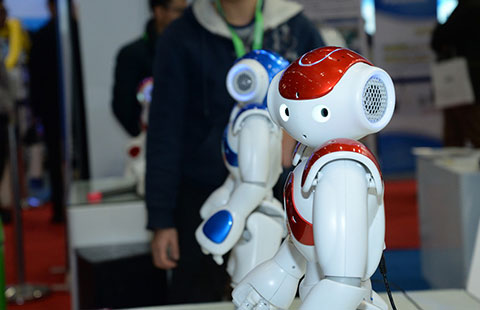
A personnel manager with Dongfeng Peugeot Citroen Automobile said that the number of assembly workers is actually falling as robots take their jobs, but more jobs are opening up among parts-makers and at vehicle storage facilities.
In the eyes of local people, the car industry is where the action is. "Wuhan is becoming a city of cars, attracting billion-dollar projects, and many smaller plants. I came back because I saw the potential here," said Kang Mansheng, 35, who works at a parts-maker in Jiangxia. Kang spent eight years as a driver and mechanic in eastern China but came back in 2015 with his wife and many colleagues as local salaries improved.
"Many people have had similar experiences. They have worked in car businesses in other cities and returned to Wuhan with experience and skills. They have faith in the future of the city," Kang said.
Apart from picking up the employment slack left by steel mills, the auto industry is a major customer of steel producers, and the city sees it as a stimuli to upgrading the steel industry.
WISCO now supplies steel panels to local car plants, 70 percent of DPCA's panels in fact, along with other marks such as Volkswagen and Land Rover.
Li Minghuan, a director of the DPCA technical center, said WISCO began supplying low-end panels in 2000 and is now a strategic supplier of DPCA. The two companies even have a joint R&D lab.
A spokesperson for WISCO's sales department said it sells steel to dozens of automakers in Wuhan and the surrounding area, greatly aided by low-cost water transportation on the Yangtze River.
Wuhan is not the only Chinese city switching to auto production. Upstream on the Yangtze, Chongqing has similar ambitions. Home to Changan Automobile and a new Beijing Hyundai plant, the southwestern city is working toward an annual capacity of 4 million cars by 2017. Other cities producing more than 1 million cars annually include Shanghai, Beijing, Changchun and Guangzhou, but overcapacity concerns are rising as the car market becomes saturated.
China sold more than 24.5 million cars in 2015, up 4.7 percent year-on-year, but that rate was down by 2.2 percentage points on 2014.
Yet there are still positive signs. Dong Yang, executive vice-chairman of the China Association of Automobile Manufacturers, cites low car ownership-only around 30 percent of Chinese families have a car-and anticipated future economic growth as mitigating factors against oversupply.


Copyright 1995 - . All rights reserved. The content (including but not limited to text, photo, multimedia information, etc) published in this site belongs to China Daily Information Co (CDIC). Without written authorization from CDIC, such content shall not be republished or used in any form. Note: Browsers with 1024*768 or higher resolution are suggested for this site.
License for publishing multimedia online 0108263 Registration Number: 130349