Translator recalls meeting Qian Zhongshu
 |
|
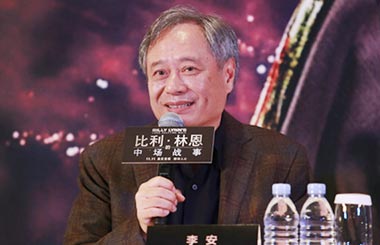
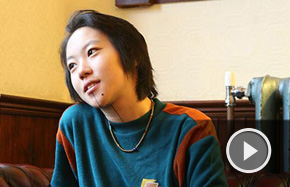
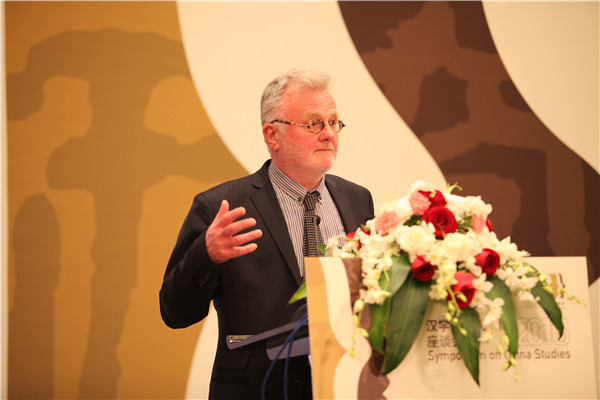
Duncan Campbell speaks at a forum on China studies in Beijing.? [Photo provided to China Daily] |
The late author Qian Zhongshu is best known for his satirical novel Fortress Besieged.
Qian's scholastic works, however, are sometimes difficult to follow because of the classical references.
Duncan Campbell, 61, a China scholar from New Zealand, is one person who has tried to take Qian to the world over the past 30 years by translating his writings.
In August, Campbell received the China Book Award for Special Contributions, a national honor for foreign writers, translators and publishers who have significantly helped in popularizing Chinese books and promoting cultural exchanges between China and the world.
His translation of a collection of Qian's literary criticisms, Patchworks: Seven Essays on Art and Literature, was published in 2014.
"All translation is difficult," Campbell writes in the translator's introduction of the book.
"More foolhardy an enterprise it is to attempt to translate the work of a man as erudite and broadly read as Qian Zhongshu."
Campbell started the translation project while he was earning his PhD in Chinese studies in the 1980s with mentor John Minford at Auckland University.
Minford has translated many Chinese classics, including Dream of the Red Chamber, The Art of War and I Ching.
"Once I said to him that I read an interesting article (titled) Chinese Poetry and Chinese Painting by Qian Zhongshu, and he said 'Why don't you translate it?'" says Campbell during a recent interview in Beijing.
In 1987, Campbell brought some of his early drafts during his visit to Beijing to meet Qian. The Chinese author died in 1998.
Campbell recalls the "unforgettable early December afternoon" when Qian regaled him with tales of the specific literary contexts of a number of his essays.
"He liked my translation," Campbell says of Qian. "When I went there, I started to speak in Chinese at first, but then I realized he speaks English beautifully.
"He was always laughing. He was a man of such learning, but he was just like a kid, very lively."
The translation project was then laid aside by Campbell, because he didn't think about publishing his work back then.
It was in 2014 when Qian's widow, Yang Jiang, also a well-known Chinese author and translator, gave the go-ahead for Campbell's translation to be published.
Other than Qian's essays, Campbell has translated works by Zhang Dai, a Ming Dynasty (1368-1644) essayist, and it is expected to be published next year.
The new book includes Zhang's travelogue about West Lake in Hangzhou, and other essays about pastimes of traditional Chinese scholars, such as playing musical instrument, Chinese chess, calligraphy and Chinese painting.
Campbell was among the first batch of foreign exchange students who came to China immediately after the "cultural revolution" (1966-76).
Campbell considered himself a Marxist when he came to China then. It was two weeks after China's founding father Mao Zedong's death in 1976 that Campbell arrived in Beijing.
Campbell first studied at the Beijing Language and Culture University and then transferred to the history department of Nanjing University in East China's Jiangsu province, where he studied classical Chinese and found himself fascinated by Chinese traditional libraries and gardens.
Later, he spent years in Peking University on research under the guidance of Chinese novelist Wu Zuxiang.
Campbell now teaches Chinese studies at Victoria University of Wellington.
He says there are more students interested in learning the language, history and culture than when he decided to first study Chinese.
"Initially when I came, I thought it was a detour," Campbell says of his first visit to China.
"Maybe spend two years having a good time, ... and go back to do something sensible."
But he was "captured" by what he saw in the country.