US-China investment flow may slow but has room to grow: report


Bilateral foreign direct investment flow between the world's two largest economies may be lower in 2017 compared to last year, when two-way FDI reached a record high of $60 billion, according to a report released in Washington on Wednesday.
But there is "huge room" for expanding FDI flow in both directions, said the annual report jointly prepared by the National Committee on US-China Relations and the Rhodium Group.
In 2016, Chinese FDI in the US tripled from the previous year to $46 billion; US FDI in China, by contrast, reached $13.8 billion, roughly the same amount seen in 2015, the report said. This year, according to the report, the two-way FDI is unlikely to reach the same levels as in last year.
"Our best guess is a moderate increase in US flows to China, but a notable moderation in the other direction due to Chinese capital controls and other short-term factors," wrote Thilo Hanemann, Daniel Rosen and Cassie Gao, co-authors of Two-Way Street: 2017 Update US-China Direct Investment Trends.
The lion's share of the two-way FDI was taken by real estate sector, followed by consumer products and services, information and com-munications technology, transportation and infrastructure and entertainment and media, it said.
Between 1990 and 2016, the cumulative value of US FDI transactions in China exceeded $240 billion, while Chinese companies had invested $110 billion in the US, meaning the US corporate footprint in China remains larger than that of Chinese companies in the US, the report says.
"The broad-based increase of Chinese activ-ity in the US and demonstrably strong interest of US companies to expand investments in Chinese growth sectors shows that there is room for annual flows the size of China's 2016 outlays in the US, in both directions, even with stepped up national security screening on both sides," it said.
The report suggested that it would be a good time for the US and China to work together in defining acceptable security-related restrictions to FDI flows, especially as both countries continue to discuss a bilateral investment treaty.
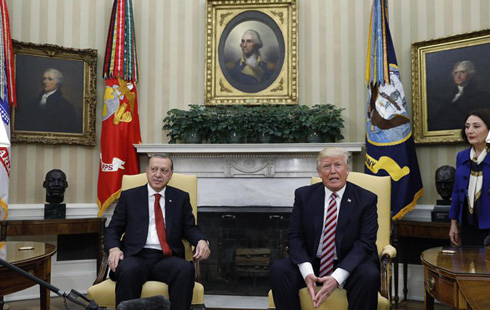
Following the Mar-a-Lago meeting between Chinese President Xi Jinping and US President Donald Trump in early April, Chinese Premier Li Keqiang said on April 10 that China is willing to work with the US to move forward on negotiations for a bilateral investment treaty.
A bilateral investment agreement would be helpful for the two countries, while speeding up structural reform and opening its market is China's best strategy to avoid economic conflict with the US, said a report released by the China Finance 40 Forum and the Peterson Institute for International Economics early this month.
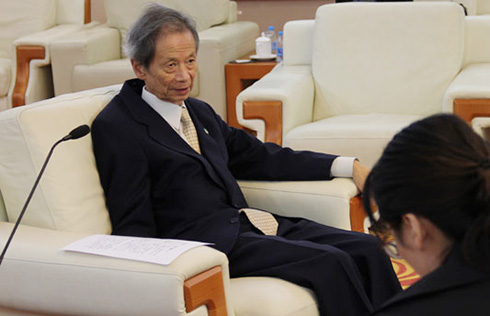
Stephen A. Orlins, president of the National Committee on US-China Relations, said, "Bilateral investment is a cultural as well as economic bridge between countries because it makes commerce a platform for the exchange of ideas."
Orlins, whose China-related investment experience dates back to the 1980s, said in the foreword to Wednesday's report that 30 years ago, when Japanese companies began investing heavily in the US, they encountered plenty of skepticism.
"However, the American public soon warmed to the notion of Japanese investment because of the hundreds of thousands of jobs it created," he said. "Rapidly growing Chinese investment in the United States over the last few years suggests Chinese capital may be poised to play a similarly influential role today."
The National Committee on US-China Relations and the Rhodium Group are scheduled to hold a similar briefing on recent trends and the future outlook of US-China FDI in New York on Thursday.