|
|
 |
 Raymond Zhou:
By jingo, they're mad!  Op Rana:
Consumerism and politics of waste   Ravi S. Narasimhan:
Lessons from SARS have to be applied  Alexis Hooi:
Beyond the death and destruction  No worries
By Xin Zhiming (China Daily)
Updated: 2008-12-01 07:49
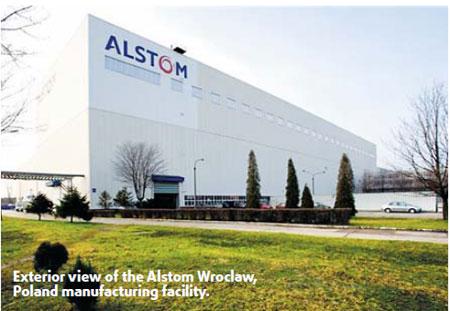 The sweeping financial turmoil has engulfed a number of business giants that once looked immune to crisis, but for Alstom crisis only means real opportunities. Largely unscathed in the crisis, Alstom SA, the French transport and heavy engineering firm and the world's third largest power plant builder, has vowed to expand its foothold in China's new infrastructure drive, according to Philippe Joubert, Alstom's executive vice-president and president of Alstom Power Systems. "The financial crisis is a global crisis and regions and sectors are more or less affected," Joubert says. "Asia and more particularly China, certainly are among the less-affected regions and infrastructure is also one of the less affected sectors. It is (in) a long-term cycle and resistant to a short-term crisis." China's economic growth dipped to 9 percent in the third quarter of this year. The country has taken a slew of expansionary measures - including a 4 trillion yuan stimulus package - to boost the economy. Infrastructure will be one of the major beneficiaries because more funds will go to the sector to maintain high-rate fixed-asset investment growth, which is one of the major pillars of the national economy. Massive funds are expected to be pumped into the country's infrastructure sector and the basic demand for energy will remain strong, he says. "We'll make use of the opportunity," Joubert says. "It would be very dangerous to think that we can stop expansion because of the crisis. On the contrary, we think it is an opportunity." Alstom's confidence is not only based on China's resolve, but its own financial prowess. The multinational saw its net profits rise 36 percent in the first half of the year thanks to higher margins from building and servicing power plants. It said in early November that it took in orders worth $20 billion during the first six months, up 20 percent year-on-year, which lifted its order backlog to two-and-a-half years worth of sales. In the next step, Alstom will try to accelerate commercialization of its CO2 capture and storage (CCS) technology in China by 2015 - an expensive and controversial move. CCS is an approach to mitigate global warming by "capturing" carbon dioxide (CO2) from fossil fuel power plants and "storing" it deep underground instead of releasing it into the atmosphere. CCS applied to a modern power plant could reduce CO2 emissions in the atmosphere by approximately 80-90 percent compared to a plant without CCS, researchers say. But there are potential risks. Capturing and compressing CO2 consumes much energy and would increase the fuel consumption of a coal-fired plant with CCS by 25-40 percent, according to various research reports. Moreover, long-term assessment about underwater or underground CO2 storage security is very difficult. The CO2 could leak from storage into the atmosphere, although with well selected and designed storage sites this is unlikely, researchers say. Alstom, whose equipment is used in more than 25 percent of existing power plants worldwide, currently has nine pilot plants in operation around the world to figure out how to minimize the potential risks. The industry does not have much time to wait, however. Global power generation now accounts for about 40 percent of overall CO2 emissions. It will double by 2030 from the level, with CO2 emissions increasing by two thirds, industrial estimates show. In China's case, it accounted for 65 percent of the world's new hydro power plants in the 2003-07 period. In 2007, China accounted for half of the newly established power plants. Adopting new technologies to help it cut CO2 emissions is a must and an opportunity for multinationals with better expertise, analysts say. China has set specific goals of emission cuts. It has also encouraged building big plants and discouraged small ones to improve efficiency, which is helpful in cutting emissions through increasing efficiency, says Philippe Paelinck, director of CO2 product of Alstom's global power sales. Alstom has increased spending to cater to the new trend. "We have doubled our spending in R&D in the past few years," says Joubert. "I think only the strong can survive. To adapt to the changes, one must have strong technological leadership." But the R&D of the new technology is costly and needs support from government policies, other corporate executives say. "Funding is a big challenge ... and it's very risky for R&D," says Paelinck. "We need both policy and market mechanisms to make the new technology." By far, 20 places have been found in China that are suitable for CO2 storage, he says, adding that the company would transfer the technology to China. "Technological transfer is critical. Without China, we can do nothing." "We've not offered the tech in China, but I think this idea should come to China as early as possible," he says. "It's much more than business. We believe in a future without carbon." By 2030, the world will need 20 large-scale CCS model factories and 480 big CCS facilities must be installed, Paelinck predicts. "It's a big industrial challenge." 
|
主站蜘蛛池模板: 辽源市| 钟祥市| 綦江县| 留坝县| 肃南| 孙吴县| 西乡县| 宁陕县| 汽车| 墨玉县| 海伦市| 西乌| 桂东县| 闵行区| 吐鲁番市| 夏河县| 周口市| 高台县| 绥棱县| 台山市| 鹤壁市| 大名县| 锡林浩特市| 英超| 塔城市| 邵阳县| 泰兴市| 天水市| 曲阜市| 藁城市| 普安县| 呼玛县| 衡阳县| 大化| 辽阳县| 华阴市| 宁南县| 顺昌县| 高雄县| 河西区| 明溪县| 修武县| 澳门| 浑源县| 彭山县| 象山县| 合水县| 沁阳市| 顺义区| 武冈市| 兴义市| 吉首市| 贵阳市| 安化县| 稻城县| 扎囊县| 渝中区| 无棣县| 曲周县| 永胜县| 七台河市| 桓仁| 宜兰县| 开封市| 耒阳市| 革吉县| 密云县| 沂源县| 莆田市| 沂源县| 鄂托克前旗| 临城县| 黔东| 文成县| 西青区| 东至县| 武邑县| 邛崃市| 朔州市| 丹寨县| 高台县| 榆中县|